
On July 21st, Philippe Léopold Louis Marie became the seventh king of Belgium when his father King Albert II of Belgium abdicated citing age and failing health. Minutes later, the father and son appeared on the balcony of Palais Royal in Brussels in the presence of Queen Paola, Philippe’s wife Queen Mathilde (d’Udekem d’Acoz), their four children and former Queen Fabiola, while a huge crowd cheered and shouted “Long live the king” from below. The new sovereign vowed to strive for the unity of the nation. Promise is a big word. Promises bind us to each other, and to a common commitment for the future.

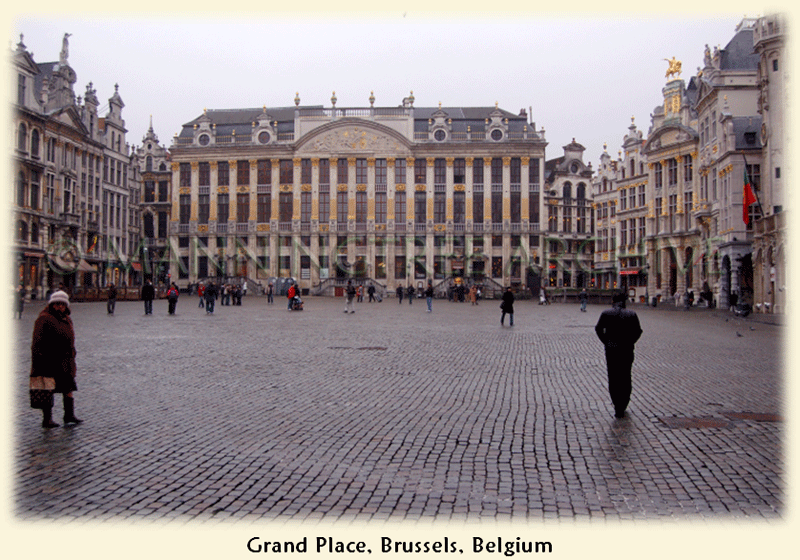
The sight of Palais Royal resurfaced memories of our visit to Belgium few years ago in fulfilment of a promise I made to Carina. Of the many attractions we saw there – the Grand Place (Grote Markt) and the baroque and gothic guildhalls and Town Hall surrounding it; the Sablon Square (De Zavel or Le Sablon); the Cathedral of St Michael and Saint Gudula; the Basilica of the Sacred Heart (Basilica of Koekelberg); the 1619 bronze fountain statue of a little boy by Jerome Duquesnoy called Mannekin Pis; to name a few, we had also taken time to see the Palais Royal from outside even though it was a wet day.


 Then again, few years prior to that visit to Belgium, we went to Vienna (Austria) to fulfil yet another promise I made for her birthday – to take her to the Vienna State Opera (Wiener Staatsoper) to enjoy Giuseppe Verdi’s “La Traviata” (1).
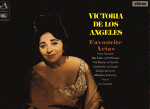
Now, “La Traviata” initially came to my attention when I purchased the album “Favourite Arias” of Spanish soprano Victoria de Los Ángeles (Victoria Gómez Cima, 1923-2005) back in the late eighties. This re-issue of excerpts from complete operas included Bizet’s “Carmen”, Gounod’s “Faust”, Puccini’s “Gianni Schicchi” and “Madama Butterfly”, among others.
Classical music was always close to my heart. In a way, all music tends to become classical as time goes on. Although living in Cochin didn’t offer the chance to go to a ballet or opera or jazz concert, European classical music was not inaccessible to me during my teens owing to radio broadcasts of Voice of America, or audio cassettes or gramophone records.

 Then there were opportunities to listen to it during visits to the friendly houses of a Fernandez or a Rozario or a Ferrero located in the vicinity of the Infant Jesus Church in Cochin or at Fort Cochin where, almost certainly, on my way to the Santa Cruz Cathedral or back on a Sunday morning I could also be elated over the ebullient and melodious classical repertoire wafting from the houses of the Anglo-Indians – pieces of music which I could not identify then, but gave me the impulse and motivation to learn by ear. All I had to do was open my mind to it.
Although I have not seen as many operas as Carina, we have over the years enjoyed few performances at Teatro La Fenice de Venezia and Teatro alla Scala in Milano where I would have also loved to enjoy some performances by the great Maria Callas (1923 – 1977) during those remarkable years when she sang there.
As for La Traviata, in spite of our many visits to Europe and England, it’s dates had always eluded us until we decided to fly over to Vienna to see director Otto Schenk’s version at the Wiener Staatsoper, reputed to be the house with the largest repertoire performed under the direction of talents of Gustav Mahler, Richard Strauss, Herbert von Karajan, Karl Böhm, Lorin Maazel and many others.

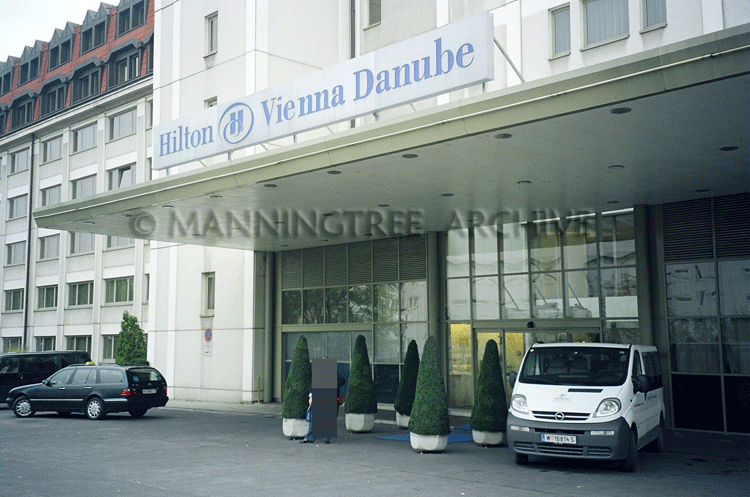
Having booked our tickets online through the Vienna Ticket Office, we had opted to collect them from their office at Brucknerstraße, instead of having them send to India or to Room no: 414 of Hilton Vienna Danube where we would be staying or to pick them up at the Box Office at the venue.


It was my first visit to Austria though I had long association with that country from 1993 onwards owing to my involvement in purchase of ship loads of Austrian Sawn Softwood for delivery at Hodeidah in Yemen where I was working for many years.

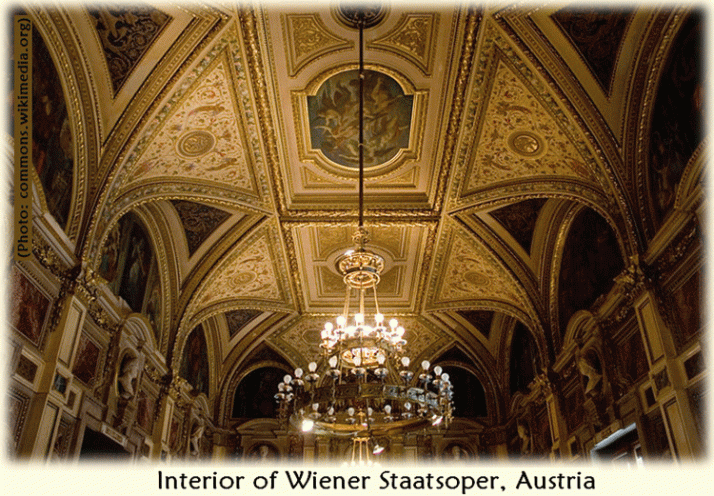
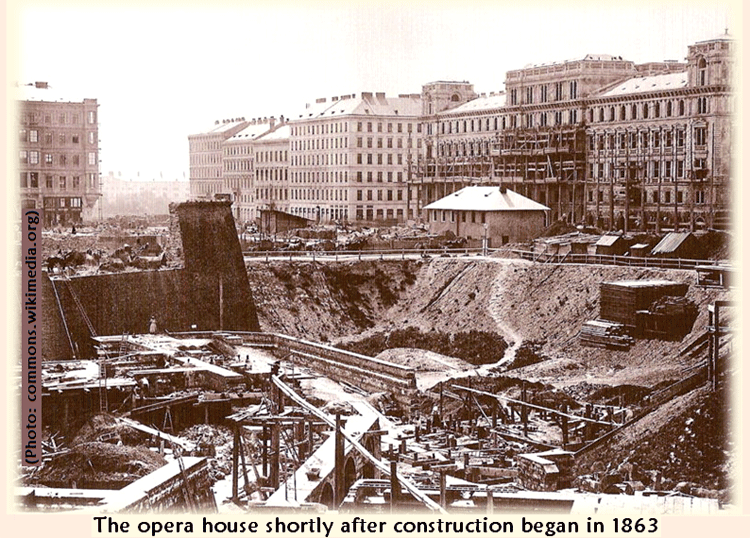
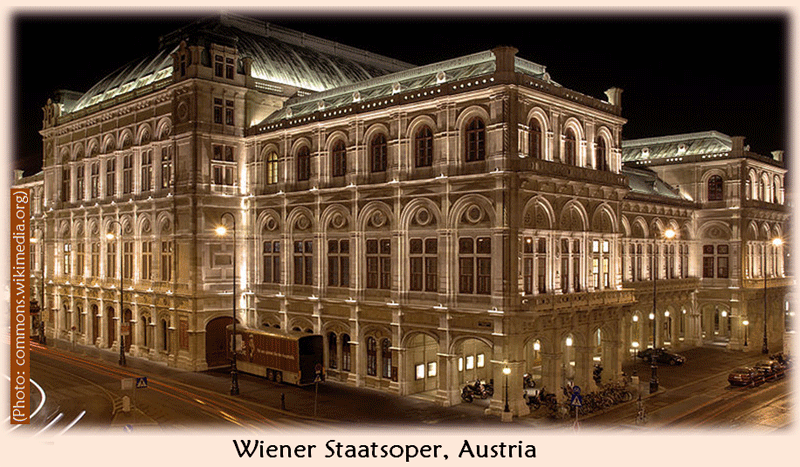
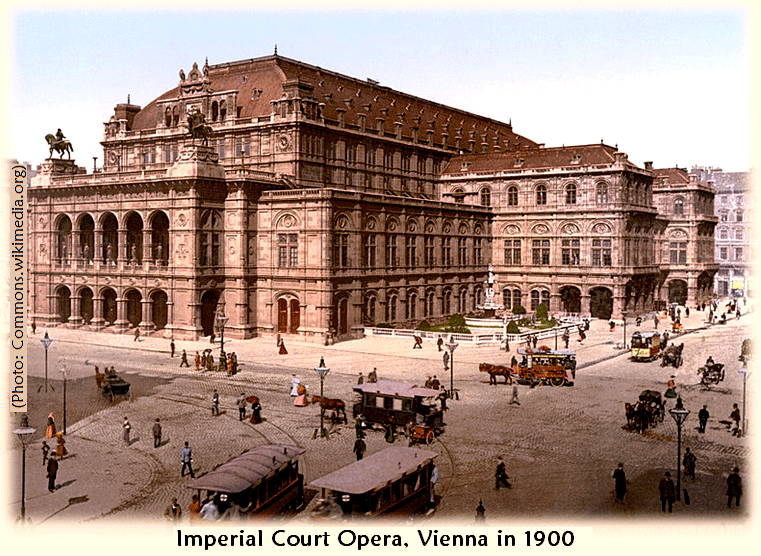
For us, the opportunity to watch an opera at the Wiener Staatsoper (VSO) was a wonderful experience. It is an imposing building in the corner of Kärntnerstraße and Vienna Ringstraße (Opernring 2) in the very heart of cultural Vienna. It was constructed in Renaissance style during the years 1861-1869 to the plans of Viennese architect August Sicard von Sicardsburg (1813-68) with interiors designed by Edward van der Nüll (1812-1868) using the Viennese “city expansion fund”.

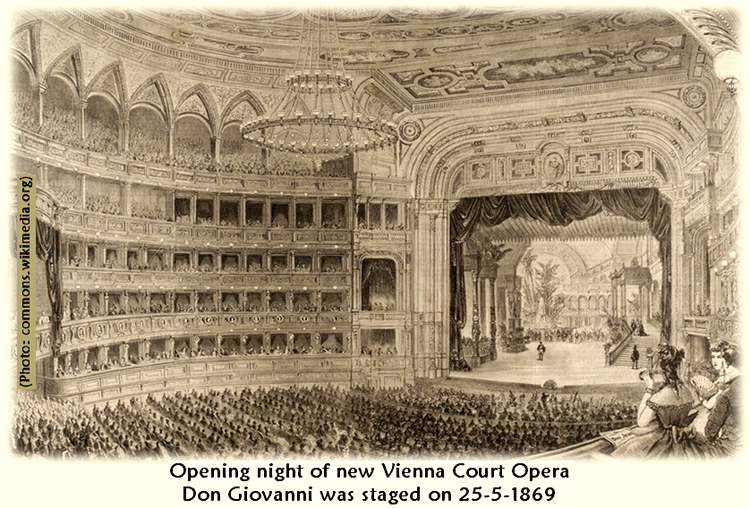
How wonderful it must have been to witness the arrival of Emperor Franz Joseph and Empress Elisabeth (Sissi) in their phaeton (Mylord) to inaugurate the Imperial Opera House on May 25, 1869 which was followed by the staging of Mozart’s “Don Giovanni”. This event had happened 250 years since Aleotti’s Teatro Farnese, claimed as the first proscenium-arch theatre of the Continent, was set up at Parma in 1618 although the first public opera-house was opened only in 1637 at Venice by composer Cavalli.

Originally called the Vienna Court Opera (Wiener Hofoper), it was renamed Vienna State Opera when the Habsburg Monarchy collapsed and Austria emerged as a republic. The VSO guided tour offers the opportunity of an extensive tour of the building including the entrance foyer, central staircase, Marble Hall, Schwind Foyer, Gustav Mahler Hall (formerly “Tapestry Hall”), the auditorium and Tea Salon (formerly the Emperor’s Salon) on the first floor. We can also see the medallions of the original designers, many paintings symbolizing the ballet, the opera and the ceiling painting (“Fortuna, ihre Gaben streuend“) adorning the staircase in addition to the allegorical statues featuring the seven liberal arts: architecture, sculpture, poetry, dance, musical art, drama; etc.

Apart from the impressive structural aspects of the building and its popularity for being a venue of the Wiener Opernball for many decades and certainly, the Vienna Philharmonic Orchestra; the opera house owes its progress to the artistic influence of its original directors: Franz von Dingelstedt (1867–1870), Johann von Herbeck (1870–1875), Franz von Jauner (1875–1880), Wilhelm Jahn (1881–1897) and Gustav Mahler (1897–1907).

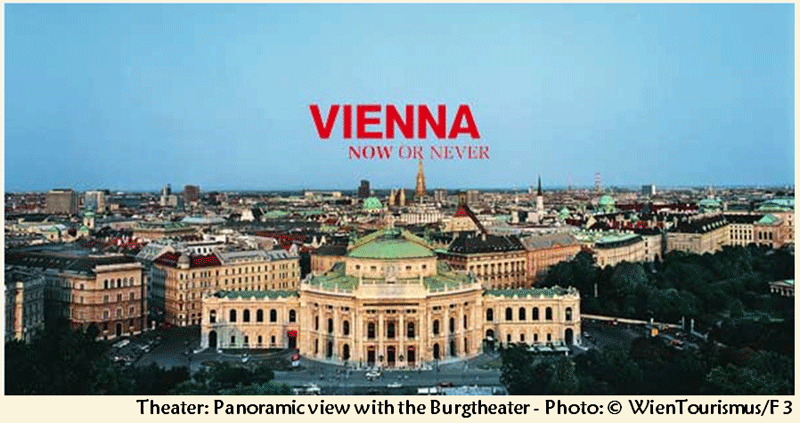
During World War II, the city suffered fifty-two air raids in which about twelve thousand buildings including St. Stephen’s Cathedral (Stephansdom), the Burg Theatre, etc, were destroyed and nearly eleven thousand inhabitants of Vienna were killed. The ugly reality was the auditorium, stage and almost the entire décor and props for more than 120 operas with around 150,000 costumes were destroyed in the bombings of March, 1945. Given that the theatre occupied a privileged position in Vienna and united public interest on it, the building was rebuilt based on a plan of Erich Boltenstern, the winner of the Opera House’s architectural competition who kept his design similar to the original. Hence, the façade, the entrance hall and the foyer that we see remain in their original style.

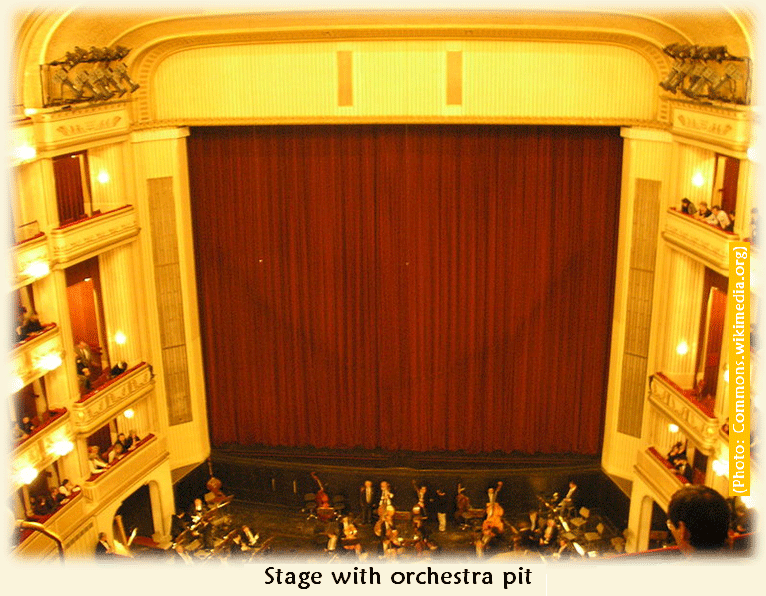
 On November 5, 1955, the Opera House once again opened its doors to the public with Ludwig van Beethoven’s Fidelio, conducted by Karl Böhm (1943–1945 and 1954–1956). Over the days in Vienna, we could enjoy glimpses of the grandeur of the building; the two statues of riders on horseback (representing Erato’s two winged horses that are led by “Harmony and the Muse of Poetry”) on the main façade of the loggia; the artistic marble staircase; the numerous statues and figurative embellishments inside and outside including “Die Zauberflöte” series of frescoes on the veranda and in the foyer credited to Schwind; the completely re-built horseshoe-shaped auditorium and the well-protected stage that stretched its entire width; the orchestra pit that could hold about 110 musicians; the ring of built-in ceiling lights made of crystal glass; the seating in traditional colours of red, gold, and ivory; the reinforced concrete side boxes covered with wood for acoustic reasons; and the largest pipe organ with 2,500 pipes – the core centre where Wiener Staatsoper had created a world-wide reputation for its first-class opera performances by nearly all great singers of international rank in the course of the past hundred years.
The Turkish taxi-driver, with a head full of dark wavy hair, who took us to the opera house, appeared to be an eternal sunny optimist – always smiling and cheerful. Right this moment when we went past the Wiener Prater (2 Bezirk), the theme from Tchaikovsky’s “Nutcracker” filled the taxi. The one that followed was from Mozart’s “Die Zauberflöte”. Obviously, opera means so much to the people of Vienna and also to those who came and made it their home.

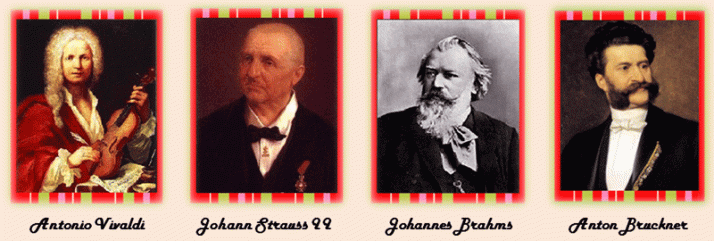
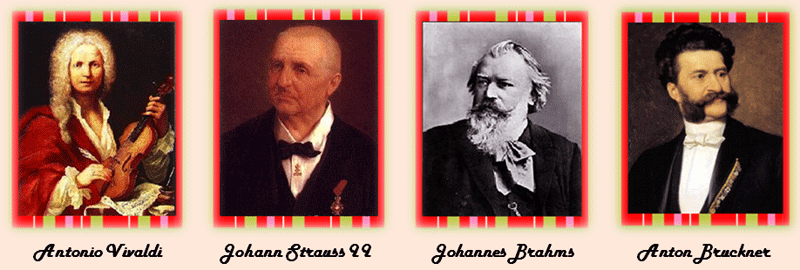
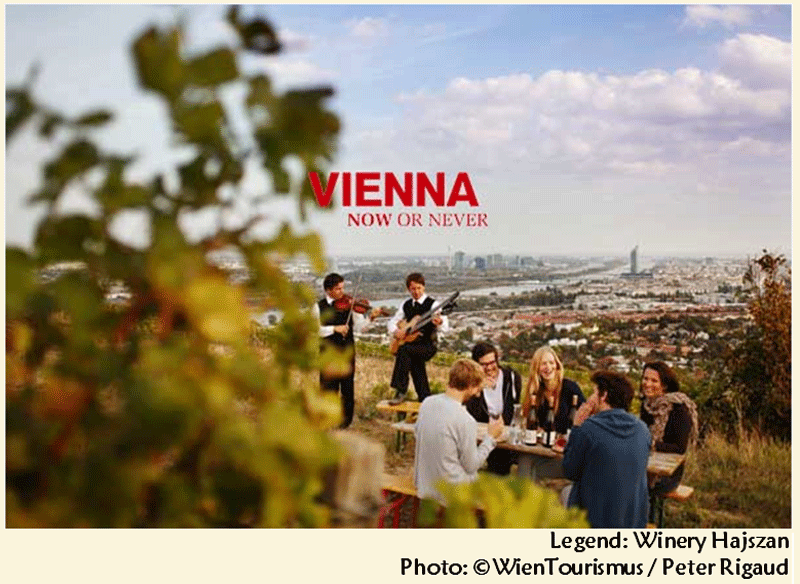
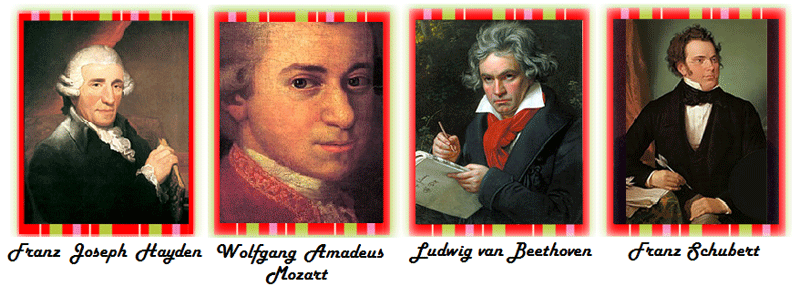
Indeed, music gives Vienna its core, and that is the beauty of this City of Music. It’s a city truly in love with artists. In its heyday, it had a string of greats such as Hayden, Mozart, Schubert, Brahms, Mahler, Strauss – enriching it with their contributions. Beethoven owed his first success to his piano-playing in Vienna. Vivaldi died in Vienna (2). A staff of FNAC, Milano once told me that the Viennese operetta is the chief root from which American musical grew. And then, Vienna is the birthplace of waltz. Wherever you go, you hear ‘the sound of music’.

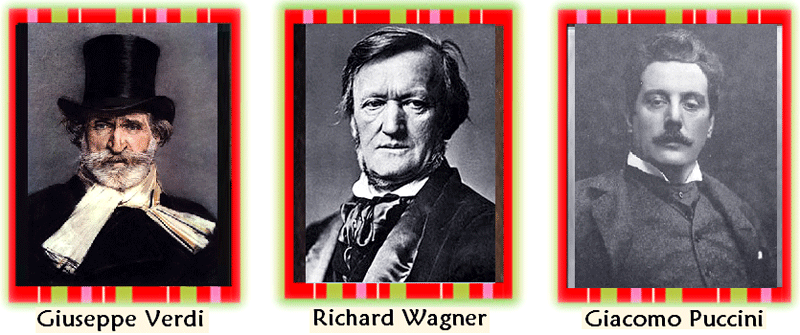
Although music is the main factor in opera, its effect and success depended on a combination of other arts and factors, namely, literature, poetry, design, costume, stage, painting, sound, lighting; and essentially the singer or the impresario, conductor, orchestra, chorus, etc. Human drama underlined the operas of Giuseppe Verdi, Richard Wagner (1813-1883) and Giacomo Puccini (1858-1924), Verdi’s successor.
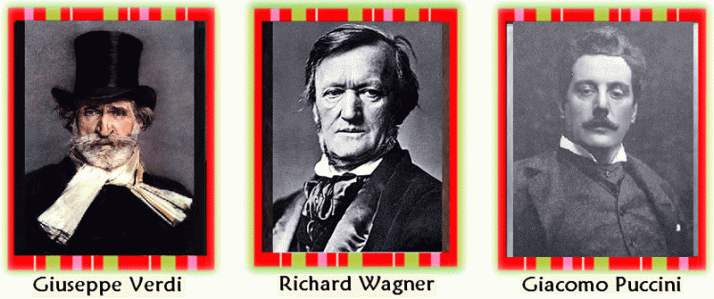
 With a repertoire of about 26 to 28 operas, Giuseppe
 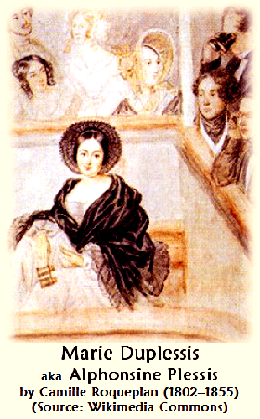 (Fortunino Francesco) Verdi (1813-1901) is undoubtedly the most successful and popular composer admired by audiences, critics and music scholars alike. Following the successful adaptation of French novelist/playwright Alexandre Dumas’ (Dumas fils, 1824-1895) novel “The Lady of the Camelias” (1848 – “La Dame aux Camélias”) as a stage play in 1852, Verdi immediately put music to the libretto (text) by Murano born Francesco Maria Piave (1810 –1876), transforming it into an opera titled “La Traviata” (The Fallen Woman). The female protagonist, Marguerite Gautier (3) (based on Marie Duplessis, (aka Alphonsine Plessis, 1824-1847), the real-life lover of Dumas) was also renamed as Violetta Valéry.
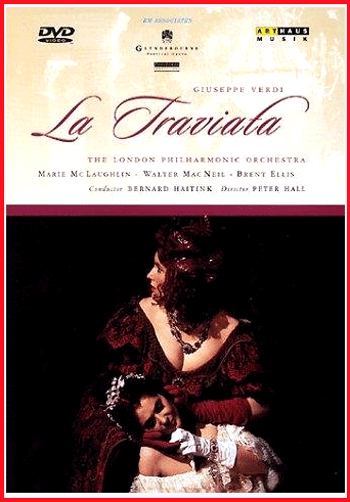
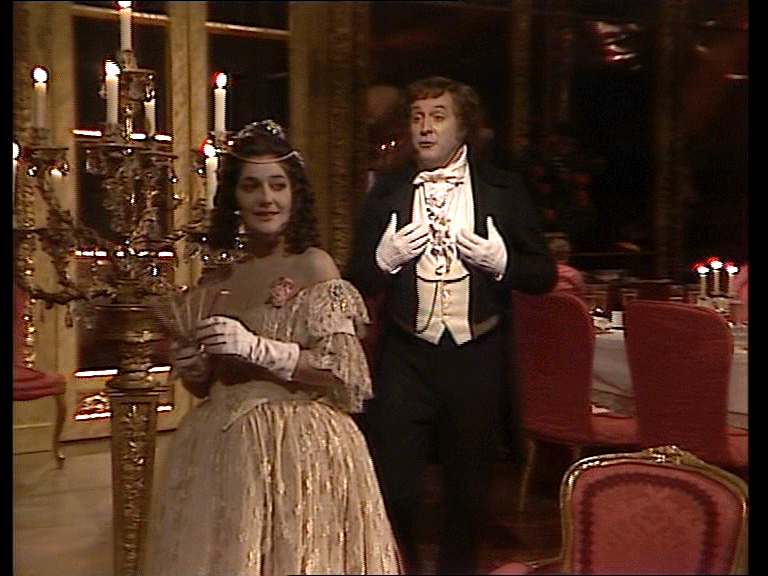
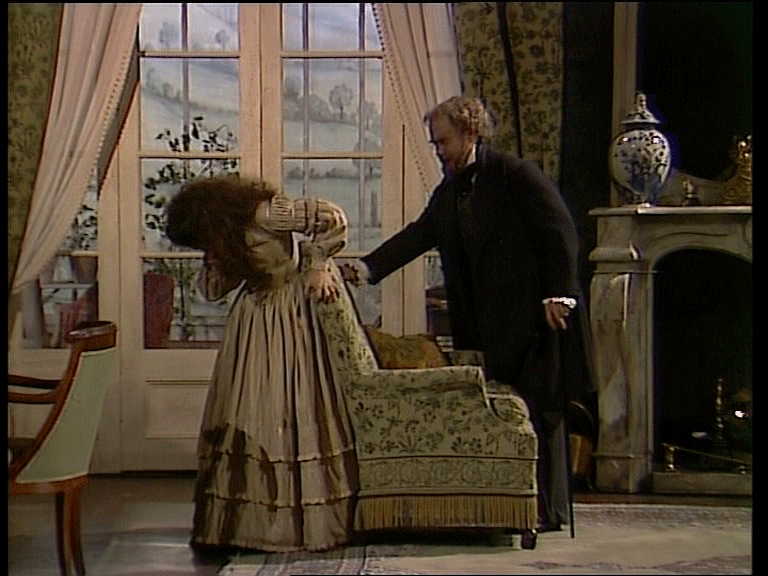
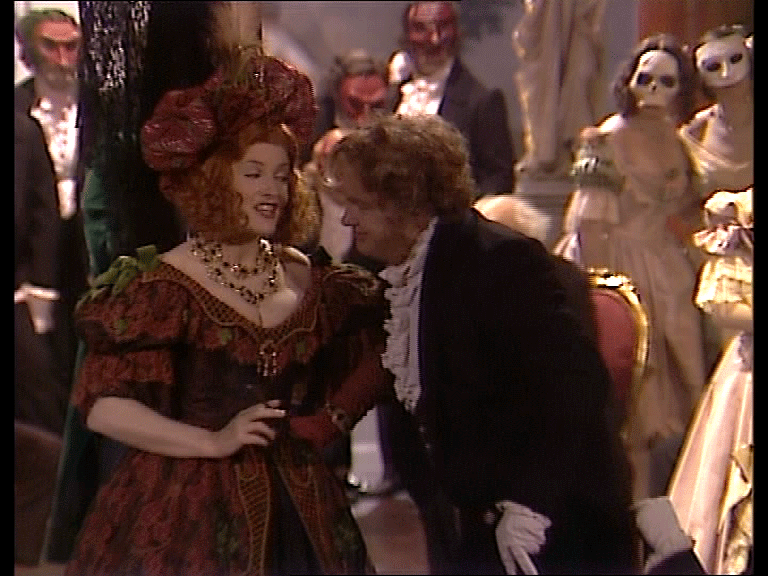
Verdi’s “La Traviata” in three acts features a wonderful poignant story laced with scintillating, tragic music. Since its first appearance on March 6, 1853 at Teatro La Fenice, “La Traviata” has held the stage continuously, just as “Rigoletto” (1851) and “Il Trovatore” (1853). “La Traviata” was not unfamiliar to us owing to a DVD in our collection – the Glyndebourne Festival Opera version (1988) directed by Peter Hall featuring Marie McLaughlin and Walter MacNeil (4). (Images from this version are reproduced under the “Synopsis” mentioned below).

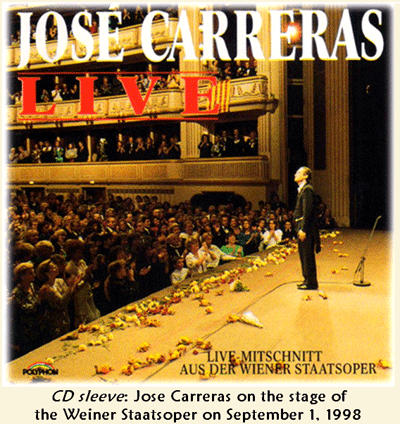
At the Wiener Staatsoper, the Maestro has by now stepped into the orchestra pit and the theatre reverberated with joyous shrieks and applause of the marvellous Vienna audience. Suddenly he turned to face the orchestra. Hush fell in the theatre as he raised his arms, readying for his electrifying volatile and expressive gesturing. A beat – and the performance began.
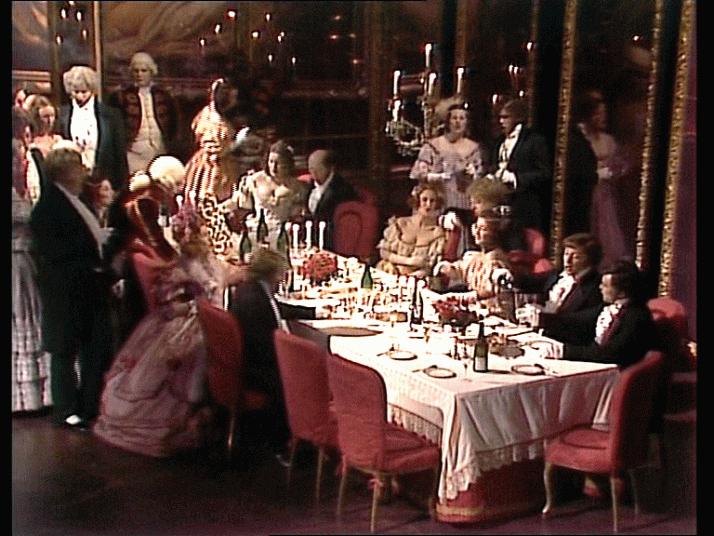
Synopsis: Paris and environs, around 1850. During a glittering party at the reformed courtesan Violetta’s house to celebrate her recovery from an illness, Gastone, the Vicomte de Letorieres, introduced Violetta to a clean-living young bourgeois Alfredo Germont whom she has long admired. Following a fiery drinking song (Brindisi “Libiamo ne’lieti calici”) by Alfredo, having felt dizzy and occasionally caught coughing, Violetta nudged the others, including her ‘protector’, the wealthy Baron Douphol, to proceed to the ballroom next door for dancing.

Soon Alfredo joined her and confessed his love for her (duet. ‘Un di felice, eterea’’). He had been living with this secret love for some time. Although Violetta wanted them just to remain friends saying that she cannot bear the burden of such heroic love, she nevertheless gave him a camellia which he should bring back to her when it has died. Alfredo realised that it would mean tomorrow. Evidently, his love has taken quick steps towards her heart.

Once Alfredo had left and the dawn started to appear in the sky, all the others bid her thanks and took their leave. Alone, in the quite of the room, she felt that she can’t outrun the darkness of her life and the tumult of lust and festivities surrounding it, even though she longed to fill it with light from the happiness of pure love which had eluded her till then (E strano! E strano! Ah, fors’è lui che l’anims ……. Sempre libera). Act I ends here.

Act II opens at Violetta’s country house outside Paris where Alfredo and Violetta were living together for some time. When Alfredo learns from Annina, their servant (De’ miei bollenti spiriti) that Violetta is to sell the property in order to support herself, thereupon, he proceeded to Paris to resolve this issue. Before long, she was visited by Alfredo’s father Giorgio Germont who asked her to give up his son since his humiliating relationship with Violetta will adversely affect the reputation of his family and marriage of his daughter (Pura siccone un angelo) who is as pure as an angel.

Once Germont has left, having persuaded her to renounce her lover (duet ‘Un di, quando le veneri’) due to social disapproval, the heartbroken Violetta wrote two letters – one addressed to Alfredo. She hides the letter for Alfredo when he took her by surprise on his sudden return from Paris. Veiling her feelings behind a passionate embrace for a moment, she broke away from him and she ran out of the room. Her letter was subsequently delivered to Alfredo through a messenger. Heartbroken from learning that she’s leaving him, the depressed Alfredo was consoled by his father who has just arrived. (‘Di Provenza il mar, il suol’) ……..

What a day that has been! Right up until the end, excitement had thrummed through us even though the performance was not long. The success of Verdi’s operas is resultant to his unique talent to establish character and feeling through melody, which the listener was able to quickly understand and feel. Immensely popular, “La Traviata” is today a staple of the standard operatic repertoire.

 The Italian version of “La Traviata” we saw was the 248th
  performance in this production and conducted by Hungarian classical conductor Michael Halász who had taken over the post of resident conductor at VSO in 1991. The Chorus was led by Ernst Dunshirn.
Our seats nos: 3 and 4 in the seventh row, right in the front, provided us with a clear view of the performance, the costumes, interior decorations, hand props, modes and manners though this vantage point didn’t allow us to catch some interplay between the conductor and musicians.
The opera music demands more vocal range and techniques. A considerable degree of musicianship is also required of the singers. Albanian soprano Inva Mula, with her beautiful, robust voice that cut through the orchestrations, led the cast as Violetta Valéry, the “Dame aux Camélias” with her self-sacrificing devotion in the face of tragedy.
Although Verdi has given some spectacular music to Alfredo (portrayed here by tenor Roberto Aronica), it is Violetta who dominates the show. The sort of spiritual quality Verdi injects into most of his heroines is also evident in Violetta.

 I can understand why the character of Violetta, who lived in her tender and morbid world, is a difficult one for any soprano, as some critics have pointed out. As British soprano Josephine Barstow expressed, “You have to sing Verdi with heart.” The brilliant opening act “Sempre Libera” requires great agility just as the other acts which also demand considerable dramatic vigour. Besides, there is the problem of attempting to portray a dying person, without compromising the musical aspect of the role. These are aspects of this opera that allows you to delve into its deeper
  depths. However entertaining an opera was, it would be meaningless if it serves only to entertain but failed to educate and stimulate the brain.
While the costumes were based on designs by Hill Reihs-Gromes, the credit for stage design went to Günther Schneider-Siemssen. The other members of the cast were: Zsuzsanna Szabó (Flora Bervoix), Waltraud Winsauer (Annina), Franco Vassallo (Giorgio Germont), John Wiedecke (Baron Douphol), etc. The main cast jointly appeared during all the three performances of this opera during that season, while Winsauer was almost a constant figure in the role of Annina from 1984 till 2008.
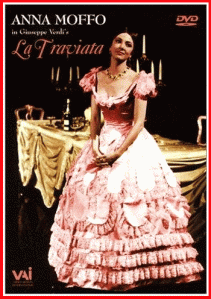
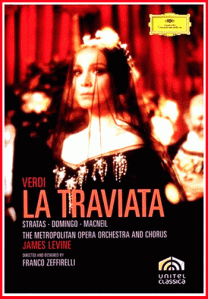
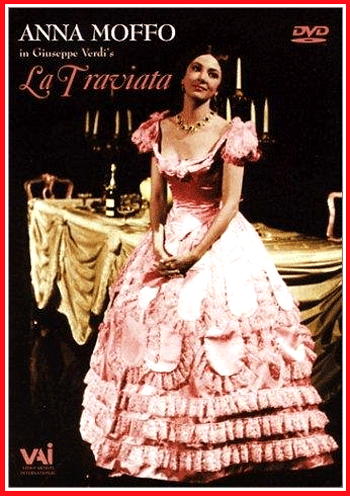
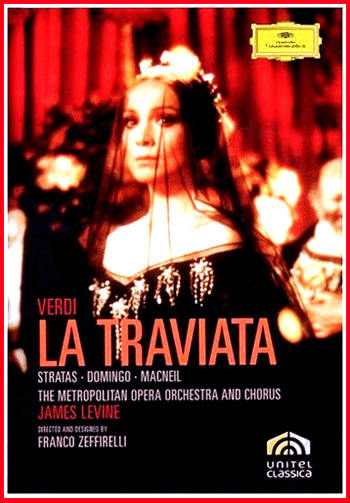
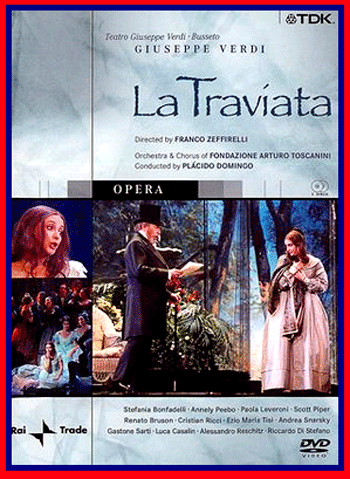
 Like Joseph Losey’s “Don Giovanni” (1979) and Francesco Rosi’s “Carmen” (1984), “La Traviata” has also spawned its film versions. Besides “The Lost One” (1947, original title: “La signora dalle camelie“) in English by director Carmine Gallone starring Nelly Corradi; and the 1968 film musical of Mario Lanfranchi, starring Anna Moffo and Franco Bonisolli; Franco Zefferilli’s production of “La Traviata” came out in 1982 starring Teresa Stratas and Plácido Domingo backed by the Metropolitan Opera Orchestra and Chorus.
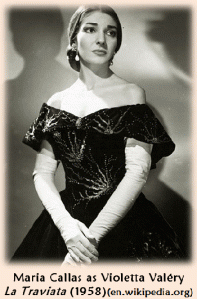
Like millions of feature films, there are good, bad and undistinguished operas. The excellent amongst these provide us with the true satisfaction of what opera is all about. There are millions of connoisseurs of opera, ever-increasing, who care for the arias, duets, ensembles, choruses, marches, ballets, and finales of the operatic spectacles. Its grand and exuberant style, its traditions and culture, its conventions and law have survived and still thrive on with encouragement from millions. Maria Callas reportedly did so much to build interest in this lyric drama.
In spite of the public interest in all things operatic, opera remains unawakened in many countries. It is also viewed with prejudice by some young and adults who would not go to symphony concerts or ballet performances or operas as they get easily stimulated by glossy mass entertainments, for instance, pounding music and the kind of dances that is rather physical exercise, in colourful clothes, for which most kids of today can easily display their forte.
Expansion of opera into developing countries where opera remains ignored offers great potential. Hindrances due to language have already been bridged in France, Germany, Russia, England, America, Canada, Mexico, Argentina, Brazil, etc. It also exists in varied forms in Japan, Korea, Thailand, China, ….

 Like many States of India, Kerala, not unfamiliar to the magic of theatre, has a wealth of traditional ethnic performing art forms featuring ancient, religious and contemporary themes. In addition to Kathakali, Mohiniyattam, Kalaripayattu, Oottan Thullal, Oppana, etc, there are also other versions of dramas including, the vanishing art, the colourful “Chavuttu Nadakam” (The Stomping Drama) which mainly features European history or Biblical stories, mostly centring on Emperor Charlemagne.
This coastal traditional art of Kerala with elaborate costumes, abrupt body movements to music, which owes its origins to the Christian missionaries who came to Kerala in the 16th century, virtually resembles the opera.
But progress in the field of performing arts like opera face hindrances since, nowadays, concern for culture takes a back seat while certain commercially viable disciplines are favoured in some countries.
As for India, the growth of traditional performing arts like Chavuttu Nadakam, and also opera, ballet, etc, should have had better chance of progress with the entry of corporate bodies into the global show biz. Besides, encouraged by thriving business, entertainment sectors like film industry, music promoters, etc, presently envisage tremendous improvement from global expansion. Yet another contributing factor is the spending power of the growing middle-class of India.
Keeping in tune with this, more avenues of opportunities are emerging as an increased number of TV channels, radio stations and print media are sprouting all over the place, triggering aggressive clamour for news, sensational and exclusive – especially from entertainment shows, celebrity gossip and catchy advertisements to fill the thousands of slots in television/radio and in pages of print media.

Some of the people I have spoken to here have not seen an opera and are ambiguous of its characteristics. Opportunities to enjoy such arts are not part of the itinerary of travel packages on offer for the vast amount of Indian tourists visiting Europe. Nevertheless, the encouraging part is that they are interested in knowing of it. Maybe those with vibrant operatic culture should more vigorously shoulder the task of making firm footing for global promotion of such traditional performing arts also and create opportunities for people to get acquainted with it – to generate interest in them to understand and enjoy those arts. But forget the disappointments – it is heartening to see that institutions like JT Pac, National Centre for the Performing Arts (NCPA), Kerala Sangeetha Nataka Akademi, etc, are trying to bridge this setback.
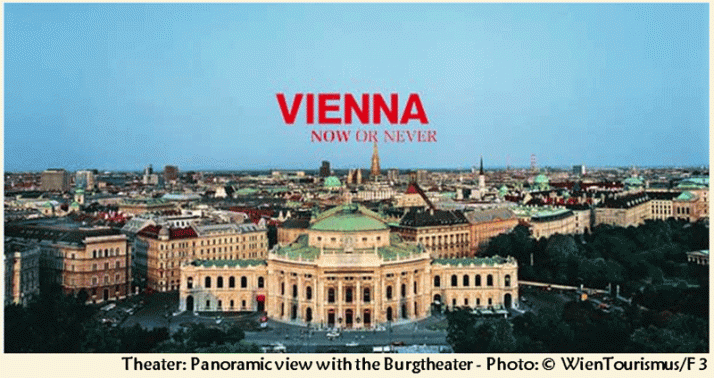 Late into that night, in the comfort of Hotel Hilton Vienna Danube, I sat by the window of our room writing down every detail and idea that came my way about our joyful tryst with Verdi, before the performance recedes into memory. As the conductor and composer Leonard Bernstein said, “Opera is not exclusively for the elite”. Like Luciano Pavarotti, and Mirella Freni, I cannot read music nor do I know how sentences work in Italian. Nevertheless, having seen the DVD and closely studied written materials of this opera and other classics in our possession innumerable times, the hindrances were easily surmounted, though I still find Wagner a bit heavy to stomach. Then again, for an occasional clarification, there was the expert sitting next to me, though her handkerchief was frequently making its short journeys up to her face to wipe away the emotions generated from the show on stage.
Now with our extensive collection of books, DVDs and other audio/video recordings of operas and its excerpts, our operatic adventure is still continuing.

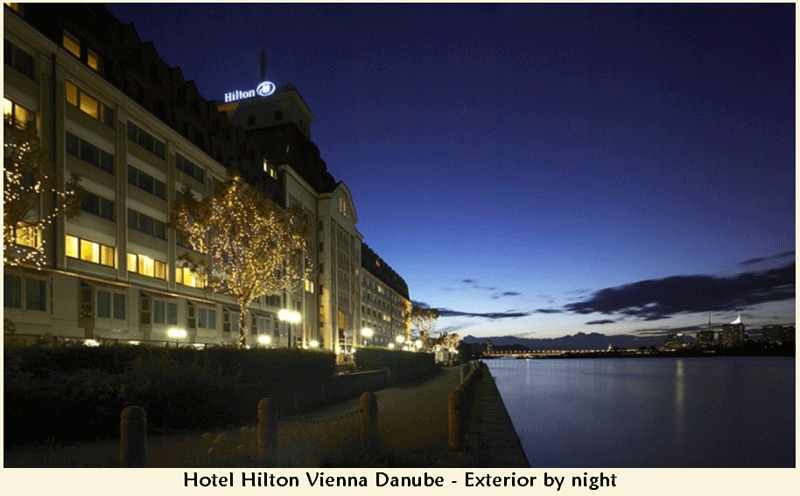
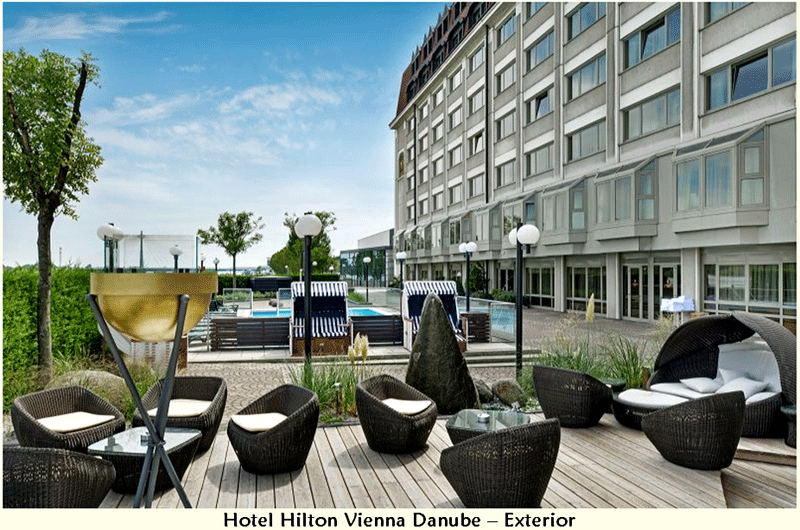
Hilton Vienna Danube is the only waterfront hotel in Vienna. It has large rooms with all amenities, superb service, and offers stunning views from the right bank of River Danube (Donau), the trade highway stretching from the German Black Forest and snakes through Central and Eastern Europe to touch the Black Sea on the coast of Romania.


From the window I could see the silhouette of the six-lane Reichsbrücke (Empire Bridge) cutting across the charming Danube to my left. The sight of Danube conjured up excerpts from Johann Strauss II’s “Le beau Danube bleu” in my mind.
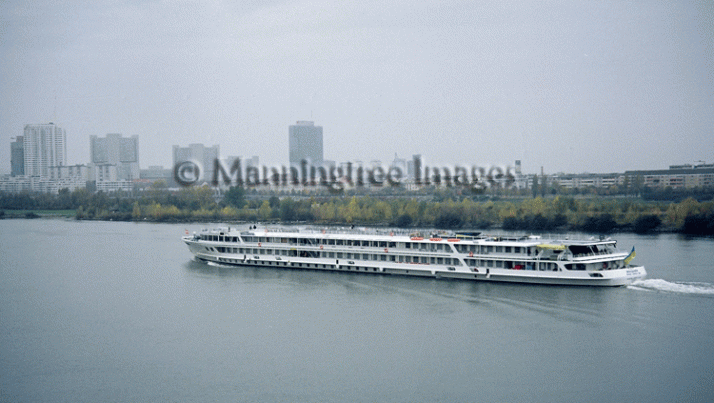
Even in the night, I could see light and heavy boats plying through the river time to time, even though swimmers, rowers and surfers and boats of Hundertwasser Tour or Grand Danube River Cruise were missing now. Beyond the river, I could see a string of lights of an incessant number of aircrafts in the dark sky, possibly somewhere above Pillichsdorf or Aderklaa, following an invisible path to make their U-turn, to position for landing at the Vienna International Airport (Flughafen Wien) to my right, which often induced queries from Carina about how “I am directing the air-traffic from my seat by this window”.
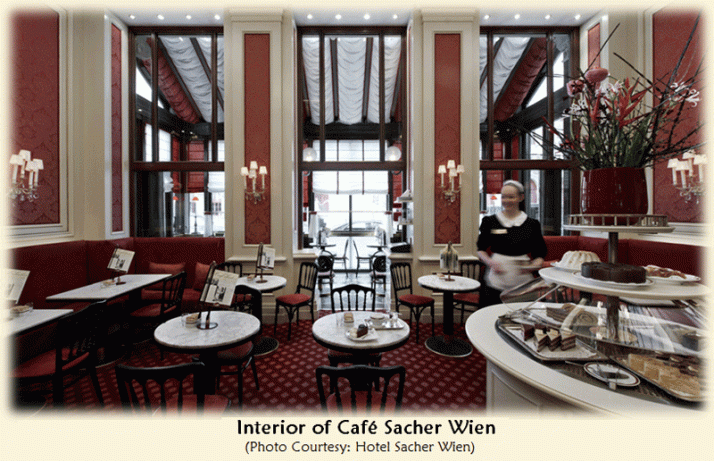
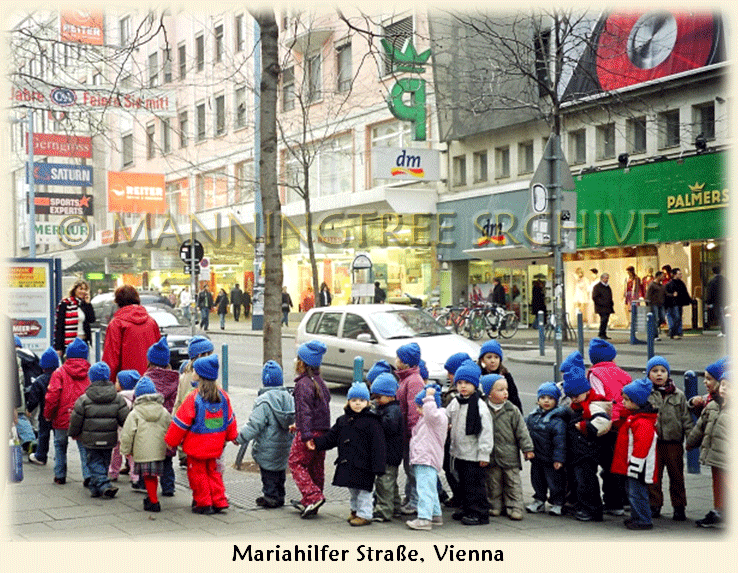
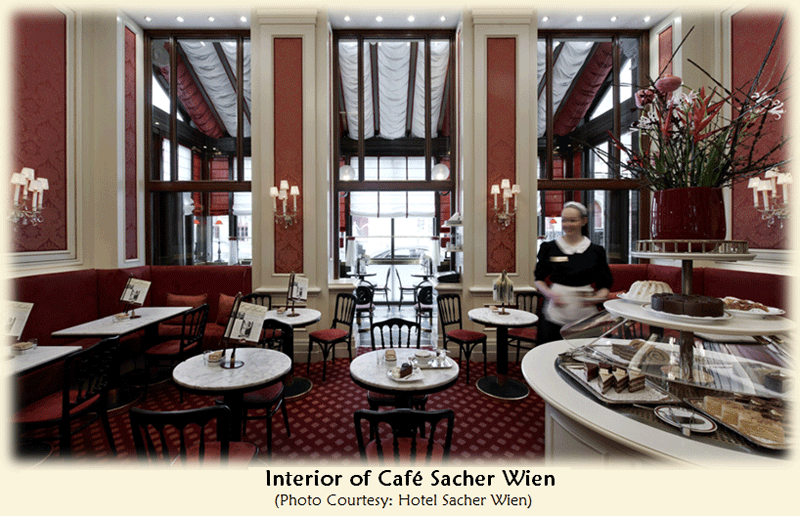
Tomorrow, despite the threat of rain, our daytrips would cover some ladies shopping at Mariahilfer Straße, and explore the book shops on Wollzeile near Stephansdom, followed by Sacher-Torte and Glühwein at Café Sacher Wien, a delightful place to be in and enjoy the original torte or an apple strudel or their good variety of cakes, coffees, food items, et al, in great ambiance and with friendly service.
It’s time to call it a day. Perhaps I would stay awake for a while before sleep hits me – as I sometimes do after reading a book or enjoying a movie past the zero hours. But then, I wouldn’t find it a reason to complain. As legend says, when you can’t sleep at night, it’s because you are awake in someone else’s dream. There goes my heart…. Until next time, Servus, Jo
 1) Wiener Staatsoper is closed from July 1st until August 31st and reopens with a performance of “La Traviata” on September 3rd, 2013.
2) Other major Composers who died in Vienna and their year of death: Antonio Vivaldi (1741); Christoph Willibald Gluck (1787); Franz Joseph Hayden (1809); Wolfgang Amadeus Mozart (1791); Ludwig van Beethoven (1827); Franz Schubert (1828); Johann Strauss II (1899); Johannes Brahms (1897); Anton Bruckner (1896); Gustav Mahler (1911), etc.
3) Actresses who had performed on stage in the most coveted role of Marguerite Gautier include Lillian Gish, Tallulah Bankhead, Isabelle Adjani, dancer/Impresario Ida Rubinstein and of course, the great Sarah Bernhardt, who also schooled Ida in this role.
4) DVDs and other audio/visual media of “La Traviata” including the Glyndebourne Festival Opera version (1988) directed by Peter Hall (from which images are shown under the “Synopsis” above) are available with main dealers such as amazon.com, TCM Shop, etc.
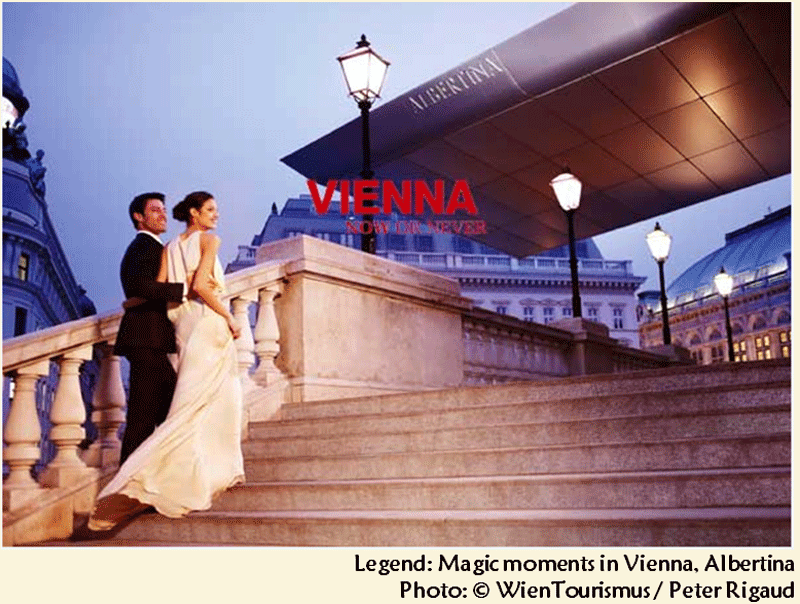
5) Reproduction of photos credited to “WienTourismus” appearing in this post was made possible through the permission of Vienna Tourist Board, Vienna, Austria.
6) Photo of “Café Sacher Wien” was reproduced here with the kind permission of Hotel Sacher Wien.
7) The three uncredited photos of Hilton Vienna Danube: courtesy of Hotel Hilton Vienna Danube.
8) This illustrated article is meant for the promotion of the opera. Please refer to “About” of this website for more details.

A glance backward: This article is dedicated to the memory of Maria Callas,
one of the towering figures of opera.
(© Manningtree Archive)


 Michelangelo’s original “David” displayed at Galleria dell’Accademia in Firenze
 Basilica di Santa Croce (Basilica of the Holy Cross), Firenze where Michelangelo’s tomb (designed by Vasari) is located right opposite to the tomb of Galileo Galilei (designed by Giulio Foggini). The cenotaph of Niccolò Machiavelli is on the same aisle in close vicinity.







































 Manningtree Archive
You must be logged in to post a comment.