
Not a Good-bye, my dear 2012, but a Thank You

(Artwork: JS/Manningtree Archive)
MERRY CHRISTMAS

LivingMusic: Nana Mouskouri – A Place in My Heart

It seems like only yesterday since I returned from Madrid in July, and today I am packing for yet another journey – this time back to Bangkok. The good side of packing is that it not only makes you take stock of the essentials you will need for the itinerary you have in mind, but also makes you realize that the next few weeks are not meant for a mundane or mediocre life. It will be days of life in hotel rooms, of room service, taxis, laptop, different timmings ……

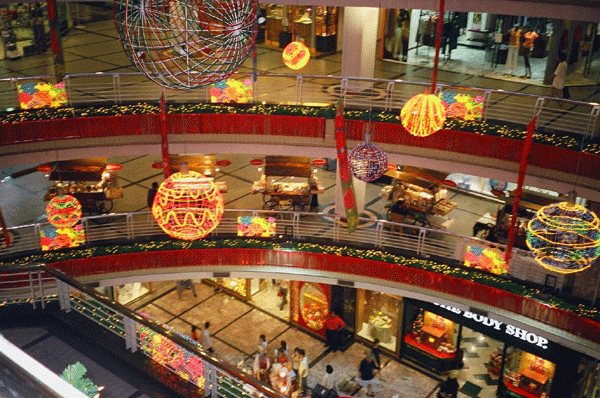
Bangkok is not a Mr. Stranger to me – once a Bang (village) of thatched houses amidst the kok (wild plum) trees that eventually took the form of “Bangkok”. It is home to many of my friends and to my business connections whom we make it a point to visit almost every year since the last eleven years.

The people of Bangkok have a certain energy and personality, a certain charm and graciousness. Thai tranquility is the result of their supreme tolerance of others.

True to its dictum as the Land of Smiles, we have had quite a good measure of momentous and happy moments there.
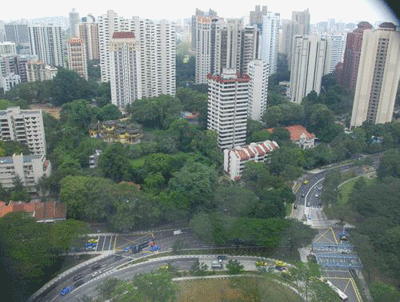
This would be our first Christmas in Bangkok even though we had a lovely time there for New Year back in 2006 having spent the Christmas of 2005 in Singapore. Being in Bangkok would mean that 2012 would be the second time since we moved into our present apartments that the Christmas decorations and the crib will not be set up.

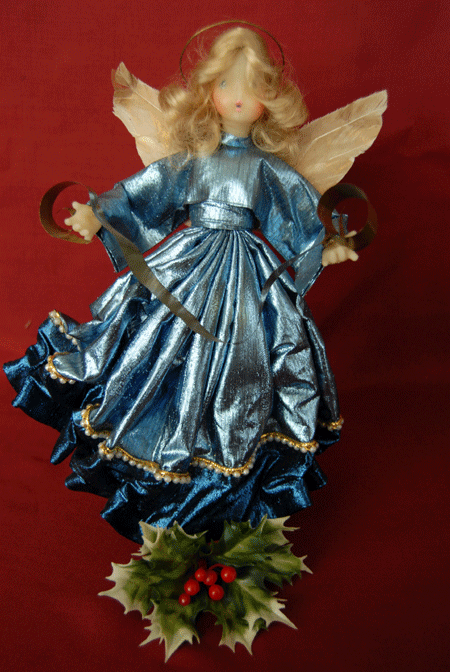
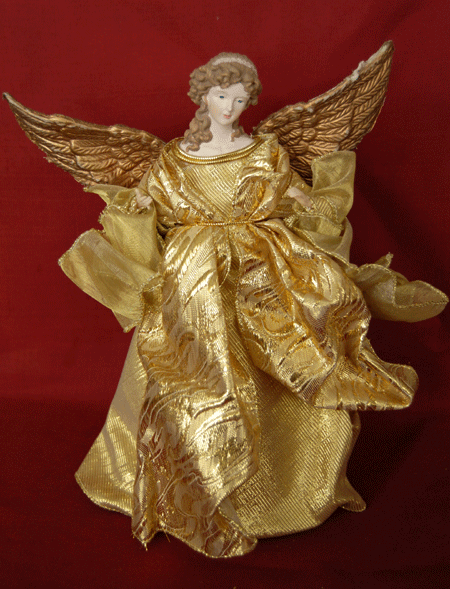
 I will miss the beauty that would have surrounded me in the festive decorations throughout our house, illuminated with the glow of candles and fairy lights. We will also miss making mince pies in our house, and tucking presents in secret places. However, the Christmas tree, stars and angels have all appeared in their relevant places.
Talking of angels, the other day I was playing Greek singer Panos (Panagiotis) Psaltis’ Aggele Mou (My Angel) while sorting out my suitcases. Now, that is a song with so much sadness within it that it tugs at your heart strings. In this poignant song that wafted out of my music system, Panos calls for an angel to come down to earth to give advice on how to heal his troubled heart.

Then again, many a Greek songs have a peculiar melancholic aura that hangs around your head for a while when you first hear them – at least for me. Of the few singers from Greece of the 1960s I like, how can I forget Nana Mouskouri or Demis Roussos (Forever and Ever) whose songs capture the flavour and spirit of Greece perfectly?
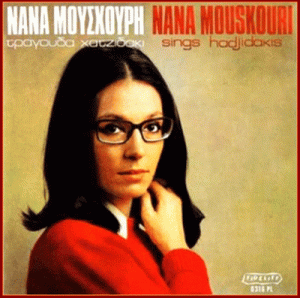

Carina has seen Nana Mouskouri (born Ionna Mouschouri) at a live performance at the Royal Albert Hall in London sometime back and, like the rest of the audience felt transported to Greece with Nana’s beautiful melancholic songs. The one song she liked in particular was the 1961 version of “White Roses from Athens” (Weiße Rosen aus Athen), which I too agree is a beautiful song.

Born to theatre usherette Aliki (Alice) and film projectionist Constantine Mouskouri in Chania, Crete in Greece on October 13, 1934, Nana Mouskouri’s education in music started at a very early age. Aiming for a career in the classical field, her lessons were rooted in piano, harmony and vocal. Conforming to her parents wish for her to become a classical artist, in 1950, she continued to pursue the same lessons at the classical Athens Conservatoire. In spite of this, when she heard the compositions of American Jazz music and blues, her interests took a turn to pop music and Jazz which would cast a strong influence in her musical career. She wanted to sing like Billie Holliday, Edith Piaf, Nat King Cole and Ella Fitzgerald.
 Making her radio debut in 1956, she became the leading female vocalist on Radio Athens. In 1958, she met the renowned classical musician Mános Hadjidákis who had provided music for the movie “Never On Sunday” (Pote tin Kyriaki). In Greece, Mános Hadjidákis and Mitzi Theodorakis are the great poets of song. Although her shift from serious music prevented her from sitting for her final exams as she was not keeping with her classical studies, she formed a small jazz group consisting of friends and started performing as a songstress at the Tzaki, a “tavern” in Athens and later in various nightclubs in the Greek capital.
 Moved by Nana’s artistry, Hadjidákis went ahead to compose pop songs for her. Having done her initial recording in Greece, Nana went on to win honours at the 1960 Festival of Mediterranean Song in Barcelona (Spain). Her impressive performance against highly professional competitors brought her a recording contract with Paris-based Phillips-Fontana and many offers. It was the beginning of a shooting star called Nana Mouskouri.
Nana was soon to become popular all over the world as one of the greatest Greek singers. But before all this, when she was thirty-three, she embarked on a tour with Harry Belafonte throughout America which turned out to be highly successful. Belafonte had been looking for a partner having decided to part from Myriam Makeba (yes, the one who sang “Pata Pata” in 1957). In her “Memoirs”, Nana writes about how she embarked on this tour.
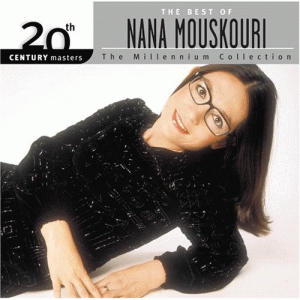 In order to audition Nana, whom Belafonte had seen on Eurovision, had sought the help of Quincy Jones and Irving Green to have her brought over to New York. Although Nana met up with Belafonte and his wife Julie for dinner at Trader Vic’s at the Plaza Hotel, the next day he was absent “due to a last-minute problem” when she appeared for audition at his headquarters on Sixty-Seventh Street. Taking stock of the situation, Nana had put all her heart into that audition, her voice resplendent with melancholy, nostalgia and dreams. The audience gave her a standing ovation after she sang half-dozen Greek songs followed by a couple of her favourite French songs. Even Belafonte, who in fact had posted himself in the adjoining room listening to her in order to avoid having to get rid of her if she disappointed him, turned up in the audition hall to cheer her at the beginning of her last song. The next day, she won the part – stepping into the shoes of Myriam Makeba.
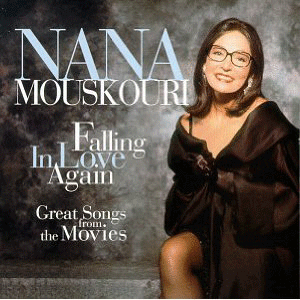 In 1962, Quincy Jones produced her first U.S album titled “Nana Mouskouri in New York” which also became a great success. That album featured a dozen songs including “That’s My Desire”, “No Moon at All”, “Smoke Gets in Your Eyes” (written by Jerome Kern and Otto Harbach for the operetta “Roberta” (1933)), “I Get a Kick Out of You”, “But Not For Me” (Written by George and Ira Gershwin for musical “Girl Crazy” (1930)), “Almost Like Being in Love”, etc.
The voice is the most natural instrument that exists. It is with vocal music that the history of music had begun. Nana has a voice that is flawless and perfect, surprisingly mellow, far reaching and dynamic. Without a trace of an accent, she had sung in Greek, German, Italian, Spanish, French, Dutch, Hebrew, Maori, Welsh and English, perfectly at ease as a native of the country whose language she sings. This is one quality that would act as an important factor in her success and propel her into a life surrounded by musicians, assistants, sound engineers, technicians, press officers and a private secretary.
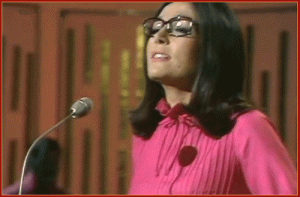 Winner of numerous gold and platinum records, Nana’s beautiful voice and songs sours beyond the national boundaries, winning her endless admiring listeners from all over the world. She had earned this acclaim by simply being herself, her style devoid of any allegiance to that of any other renowned singer. Europe’s answer to the American songbird Barbra Streisand, Nana’s records met up with good sales in Continental Europe and the UK while in Germany, they were once constantly appearing in the top of the hit-charts.
 During a career that spans half a century, Nana has recorded over 1,500 songs, selling more than 300m records. When she sings, she appears to dig deep into the depths of the lyrics, her voice blending them into magical melodies. Sometimes described as “the voice of dreams” and “the voice of nostalgia”, her songs sparkle with that inimitable Mouskouri touch like the unmistakable tones of a bouzouki. In “A Little Paper Moon” (Hartino to Feggaraki), Nana whispers in confidence of the emptiness of life when her beloved is not with her; “Never On Sunday” (Ta Pedia Ton Pirea) provides a glimpse of the life of people in the suburbs of Athens. Then there is: “Where Has My Little Boy Run Away” (Pou Petaxe T’Agori Mou), “My Love is Somewhere” (Kapou Iparhi Agapi Mou); “You Were Sweet and Kind” (Issoun Kalos); “My Dear Little Mother” (Manoula Mou); “Behind the Rose Bushes” (Pisso Apo Tis Triandafilies); “Hello Love”; “Dance Till Your Shoes Fall Off”; “Only Love”; “Love Minus Zero/No Limit”; “Even Now”, “The Last Rose of Summer”; “Feelin’ Groovy”; “Land of Dreams”; “Christos Genate”; etc…. the list of songs are endless. With an essentially pure yet complicated voice, her songs are delivered with a proud modesty, always striving for that perfection regardless whether the lyrics she sings are tragic poetry or pedestrian commercial phrases.
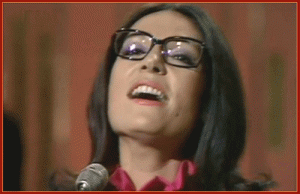 As a Goodwill Ambassador for UNICEF, she had helped raise funds to help children. In March 2010, having served as a member of the European parliament for five years from 1994 until 1999, she offered her annual pension of 25,000 euros to tackle the crippling economic crisis of Greece, pledging it until debt-laden Greece climb out of its economic black hole.
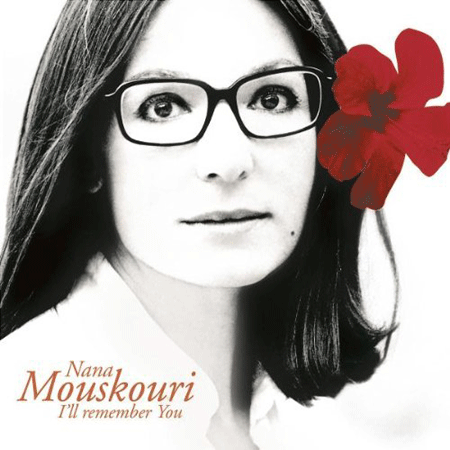
There is always music in our house. I have always found it wonderful for relaxation – even just a little background music when I work would provide me with the emotional charge. I have a couple of Nana’s albums (LPs) and for the rest of her songs, for the time being I will have to depend on the Internet.

“At Christmas, play and make good cheer, for Christmas comes but once a year,” wrote Thomas Tusser four hundred and fifty years ago. Now that Christmas is around the corner, its message of peace and goodwill is loud and clear. The joys of giving and sharing; of cards and Christmas trees; of family reunions and good friends meeting once again – that’s all part of the essence of Christmas. At this time of hope – of joy – of love, I will be remembering many of the happy days; of days of laughing conversations; and other treasured times of good and bad now past. And I would welcome that peace which comes down to earth during this time of the year to find a resting place in my heart.

But what is Christmas time without Christmas songs? For every Christmas we add new decorations to our existing collection. Likewise, we fondly carry over a tradition of choosing one main Christmas music album for each Christmas season. Last year, it was the Sinatra family.
 The year before, we were entertained by the album of cherished carols by The Hamburg Students’ Choir who had made those recordings on the Christmas Eve of 1955 during a service attended by British Armed Forces in Hamburg.
This year it will be Nana Mouskouri who will provide an overall mood which is encompassingly mellow. I do not have “The Christmas Album” of Nana but that would be available at MBK or elsewhere in Bangkok. I am sure, Nana’s “The Christmas Album” would provide the perfect musical accompaniment for this Christmas season, especially since it contains the German versions of “Silent night” (Stille Nacht heilige Nacht), and “O Christmas tree” (O Tannenbaum) and “O come all ye faithful” and “Hark the herald angels sing” in English.
 Lobby of The Mandarin Oriental Hotel, Bangkok
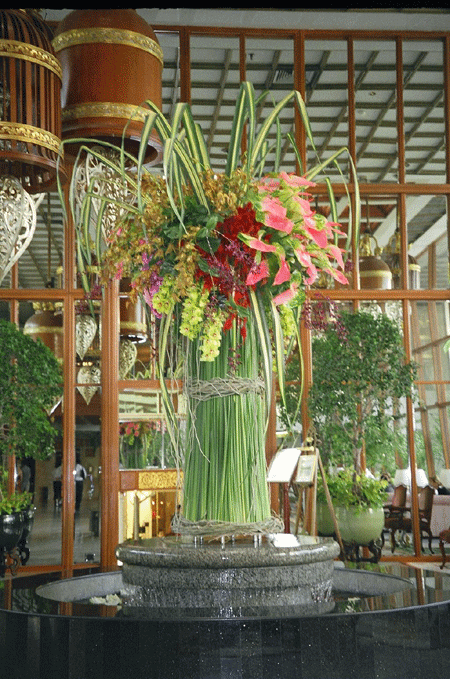 Now that we are leaving the well-padded perimeter of predictability of our home to be amidst the many activities in the fascinating Krung Thep, the “City of Angels” (Bangkok), I wonder when I will be able to make my next post. But I would think of this break as the rose bush that is cut back in the winter so that it may grow strong in the spring. However, the one thing I know for sure is that I will find time to visit the blogs of my great circle of friends and enjoy the company of each one of you during this wonderful season of the year.

Moon in the sky softly creeping
Over the town from above
And I lie awake hardly sleeping
So lonely for only your love
Even now, each night, I remember
Days of summer when blossoms filled each bough
In the cold, gray days of December,
My darling, I miss you even now
When will I see you again?
Come to my arms where you belong
My world will be empty till then
For you are the words to my song
Even now, each night, I remember
Days of summer when blossoms filled each bough
In the cold, gray days of December,
My darling, I miss you even now
In the cold, gray days of December,
My darling, I miss you even now
Ciao, Jo
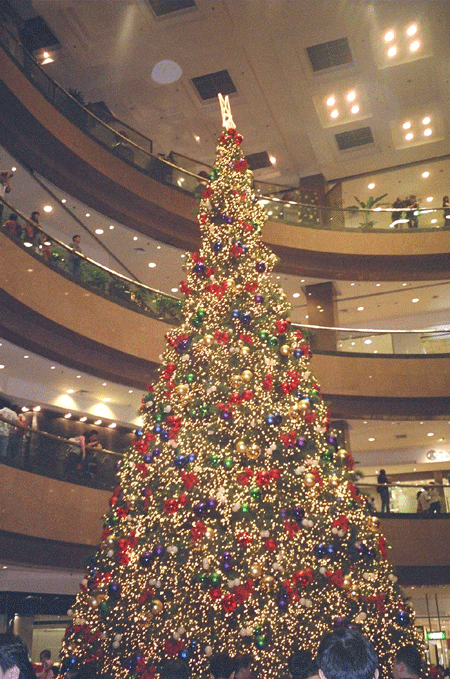



(Lyrics of song: “Even Now” by Nana Mouskouri can be heard in YouTube: http://www.youtube.com/watch?v=qA2MYrElKco )
(Music albums of Nana Mouskouri are available with main dealers such as amazon.com, HMV, etc)
(Text and all photos (except of Nana Mouskouri and album sleeves): © JS/Manningtree Archive)
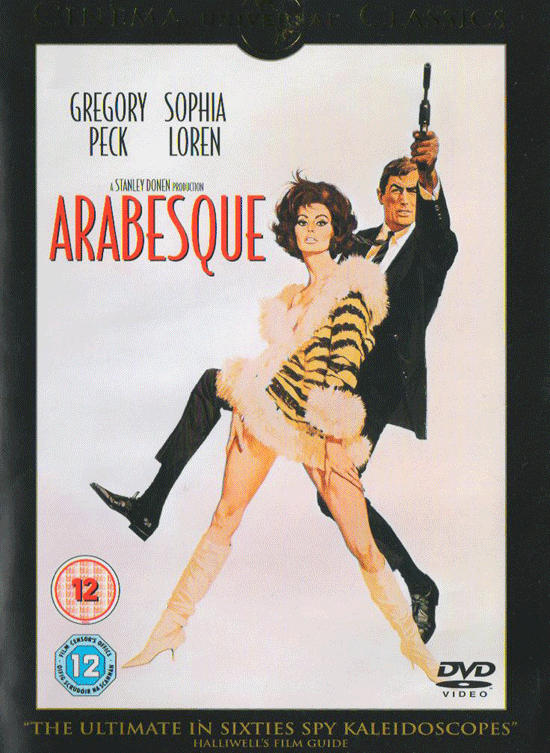
StarChoice 16: ARABESQUE
(Aka: Arabeske, Arabeska, Arabeski – Colour – 1966)
When American director Stanley Donen decided to cast debonair actor Cary Grant (born Archibald Alexander Leach – 1904-86), his co-partner of Grandon Productions, in the romantic comedy-thriller “Charade” (1963), Donen sought a helping hand from its leading actress Audrey Hepburn to rope in Grant since he was a bit conscious of his 25 years age difference with Hepburn. Although Grant had long wanted to work with Hepburn, it would be only after certain modifications were effected in the original script of Peter Stone from his own novel, that Grant would be suitably convinced to accept the role. The film would be his third collaboration with Donen, seventieth movie and 30th anniversary of his entry into movies. Grant’s 59th birthday also fell during the filming and he had a new love in actress Dyan Cannon.

Set in Paris, Peter Joshua’s (Grant) help is sought by Reggie Lampert (Hepburn) to locate $250,000 in gold stashed away by her murdered husband while three sinister men are also on the look out to recover it. In the process, Joshua and Lampert fall in love. When the audience saw Hepburn’s doe-like eyes gazing at Grant, the age suddenly ceased to matter.
Donen had directed Hepburn in “Funny Face” back in 1957 which featured a plot notably different from that of its Broadway musical version. Hepburn had acted in that with 58 year old Fred Astaire, 30 years her senior whom she had expressly insisted to cast as her leading man by using it as a precondition to her participation in that movie.
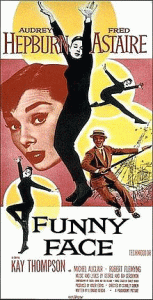 Casting men of higher age with Hepburn would become a regular case in her career, being one of the reasons Grant originally refused to act with her in “Charade”. Anyhow, “Funny Face” brought Donen nomination for “Outstanding Directorial Achievement in Motion Pictures” by the Directors Guild of America and for a “Golden Palm” at the 1957 Cannes Film Festival.
“Charade” was fervently made by Donen in tune with his close friend Alfred Hitchcock’s “North by Northwest”, one of his favourite movies and when it was released in December 1963, two weeks after the assassination of President J. F Kennedy, it turned out to be a huge financial success. The film also spawned a series of stylish thrillers, that even in 2002, director Jonathan Demme remade it under the title “The Truth About Charlie”.
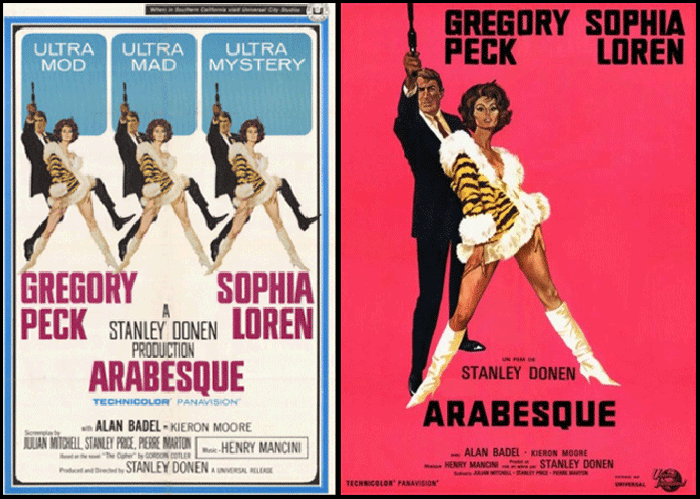
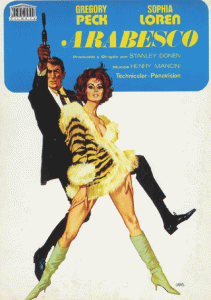 The film’s success inspired Donen to make yet another breezy, romantic thriller in 1966 titled “Arabesque” with Cary Grant in the leading role. Understandably, Grant flatly refused the role, well aware that he was of the tender age of 62 by then. He wouldn’t have minded acting with Loren, lined up for the movie, even though their brief affair during the 16 weeks they were in Spain in 1956 filming director Stanley Kramer’s “The Pride and the Passion”, according to a biography of Grant, didn’t lead to the altar. The search for a leading man ended when Grant himself recommended the casting of 50 year old, 6’ 3” Gregory Peck in the role of Oxford professor of languages with Italian siren Sophia Loren as the leading lady.

Gregory Peck (more details ref. my review of “StarChoice 14: The Million Pound Note”) had completed his performance as David Stillwell, a New York accountant suffering from amnesia in director Edward Dmytryk’s black and white suspense thriller “Mirage” (1965), and was available for the filming of “Arabesque”. “Mirage” was based on the novel “Fallen Angel” by Walter Ericson (aka. Howard Fast who wrote “Spartacus”). The script of “Mirage” written brilliantly by Peter Stone as a follow-up to “Charade”, helped the casting of Peck in “Arabesque” easier for Donen.
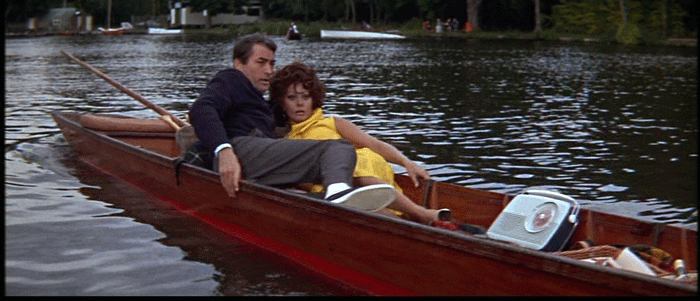
Unlike in “Mirage” in which Peck with his distinctive low-pitched voice was trying to figure out his past, in “Arabesque” which is shot in Technicolor, Peck would appear as Professor David Pollock, a man on a clock trying to decipher a secret inscription.
 Produced by Donen under the banner of Stanley Donen Enterprises, Ltd and presented through Universal Pictures, “Arabesque” opens with the arrival of Professor Ragheeb to keep up with his appointment with Mr. Saeed for an eye check up. Ragheeb was surprised to learn from Sloane that Saeed has taken to flu and Sloane is looking after his appointments. Even though Ragheeb’s eyes were found to be in good order, Sloane went ahead to put drops into his eyes to dilate the pupils. Moments later, Ragheeb was dead. Sloane extracts a piece of paper hidden inside one of the temples of his spectacles which had a series of signs inscribed on it.
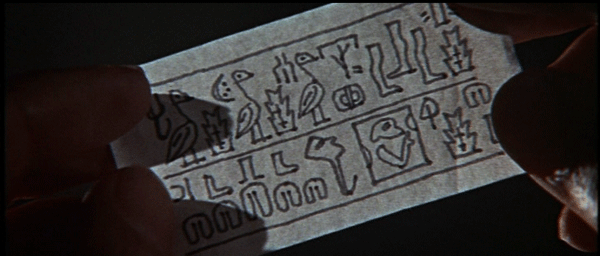
Cut to: a class room at the Oxford University. David Pollack, the visiting American professor, was explaining about Hieroglyphics from a display sign that could be from the reign of the great Pharaoh Ramses II. In the dark room, we could make out the figure of Sloane watching the professor conclude his lecture and inform the class that Professor Ragheeb will be back tomorrow.
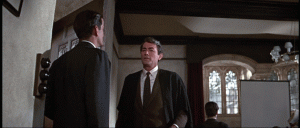
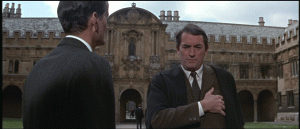
Sloane introduces himself to Pollack as “Major Sylvester Pennington Sloane of Her Majesty’s 42 Highland Fusiliers”. Now retired, he is the private secretary to Mr. Nejim Beshraavi – yes, “The Nejim Beshraavi” of the shipping lines, who would like to meet Pollack in London for which a car is now waiting.


Having refused to go with Sloane for keeping up with the routine of his Wednesdays, Pollack was later jogging through the park when he was forcibly pulled into a mysterious black Rolls Royce inside which he meets up with His Excellency, Mr. Hassan Jena, the Prime Minister of a Middle Eastern country whom Pollack admired. Apart from the driver, the other passenger who made the introductions was Mohammed Lufti, Jena’s Ambassador to Great Britain.

Necessary apologies were offered to Pollack by Jena for having used unorthodox method for making his acquaintance. He had two requests for Pollack. Officially, Jena is not supposed to be in England and has not seen Pollack. His visit is to be kept a secret. Jena believes that his fellow countryman, Nejim Beshraavi, the richest and the most powerful citizen, has reasons to approach Pollack with a business proposition. Pollack confirms this and adds that he had already turned him down. Having established that, Jena confirms that Pollack’s association with Beshraavi could be valuable to the cause of freedom since Beshraavi is opposed to Jena’s programmes and could create violent oppositions to it in the near future. As for his second request, Jena would like Pollack to re-establish contact with Beshraavi to find out what his intentions are and when he intends to act. Since the assignment carries a certain amount of risk; Beshraavi respects no one’s life but his own, Pollack was offered the choice to simply walk away from this proposal. However, Pollack elects to shoulder the job for Jena.
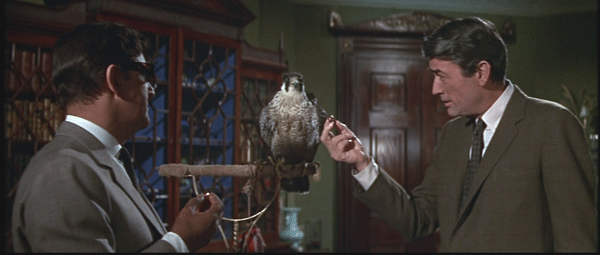
Pollack meets up with Beshraavi in the library of a house in London near the Zoological Gardens where Beshraavi also introduces to Pollack his “excessively loyal” Peregrine falcon called Hassan, named after his beloved Prime Minister Hassan Jena since Jena and the falcon share so many sterling qualities.


Producing the piece of paper he had obtained belligerently through Sloane from Professor Ragheeb, he asks Pollack to decipher it. At a glance, Pollack expresses his opinion that it is a copy of a Hittite inscription dating back to the Second Millennium.
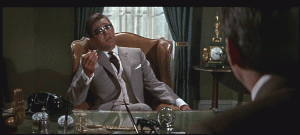 Pollack being an expert in deciphering messages written in Egyptian hieroglyphics (ancient languages), Beshraavi is prepared to pay $30,000 to him to stay in his house and decipher it by 8 pm. When Pollack was attempting to decipher the inscription while enjoying the famous Quality Street twist wrap sweets, he meets up with the exotic Yasmin Azir, the mistress of Beshraavi who is a captive in her own house.
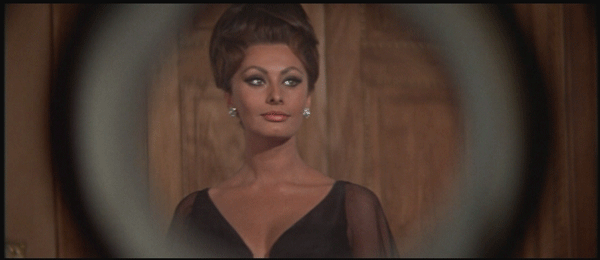
Yasmin’s attempt to lead the conversation to the cipher was shortlived. Still in a sociable frame of mind, her further conversation was cut short by the arrival of Beshraavi who asserts to Pollack his proprietary interest in Yasmin.

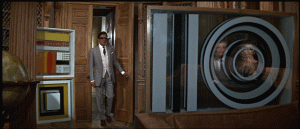
During dinner that night with Pollack, Beshraavi, and his friend, the banker Beauchamp, Yasmin, in an adventurous mood, secretly slipped a note into Pollack’s hand which was discovered by all, due to the sloppiness of Pollack.


Explaining to Beshraavi with a cool exterior that it’s just a prescription, he manages to retire to his room. Once Yasmin had also left the dining room, Beauchamp shares a gossip with Beshraavi which he had heard at the Exchange that when Prime Minister Jena arrives in London the day after tomorrow, he will sign a treaty which specifies Anglo-American finance in return for a promise that Jena’s country uses only English and American tankers.
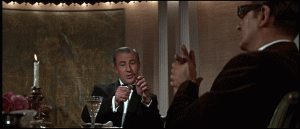 Even though this would mean that Beshraavi’s ships will be laid up for good, Beshraavi was confident that there will be no treaty signed.
Meanwhile, David finds that Yasmin had slipped into his hand not one, but two papers: one was a newspaper clipping about Professor Ragheeb’s death due to “fall from eighth floor window”, while the other was a handwritten note directing him to meet up with her at the “first room top of the stairs.”
 When Pollack finally meets up with her, having disposed of the papers, Yasmin informs him that Ragheeb was murdered by Beshraavi’s men and they would kill him too if he didn’t keep out of this. Once again, their conversation was interrupted by the arrival of Beshraavi.
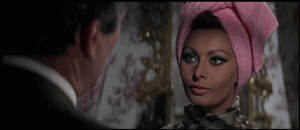
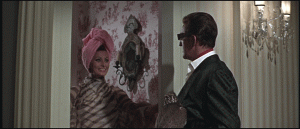
With Beshraavi inside the bedroom, Yasmin was forced to take a shower despite the masculine compliments of Pollack who was hiding behind her.


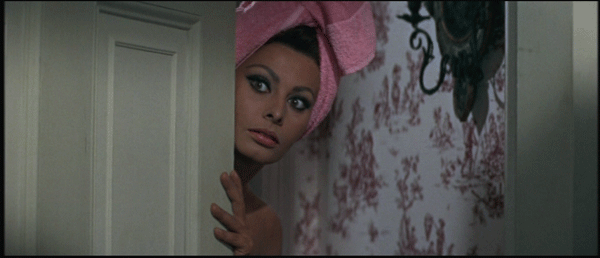
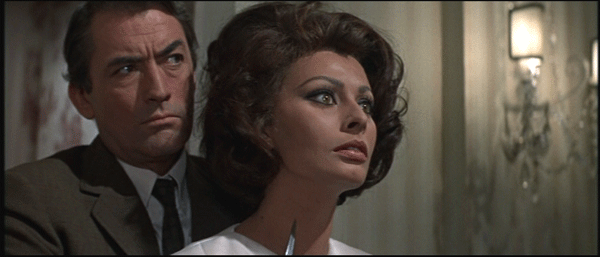
Soon a chase was on to locate the missing Pollack during which Pollack escapes with Yasmin on the pretext that he had kidnapped her. They were chased by Beshraavi’s thug Mustafa to the Zoological Gardens, down the Monkey House, past the caged animals into the aquarium wing where a fight eventually ensues between Pollack and Mustafa. Pollack was saved by the timely intervention of a man in trench coat and hat who later identifies himself as Inspector Webster, CID whose department had been watching Yasmin’s house since Beshraavi started staying there. Then again, when a zoo official demands to see his identity card, Webster shoots him with a silenced gun. Pollack’s mind always travelling, was now perplexed: Whose side is Webster on? He is not with the authorities, or with Beshraavi. He can’t be with Prime Minister Jena. Then Webster clarifies that he is with Yasmin and they all want the cipher. The chase is on……
 Loosely based on the novel “The Cipher” by Gordon Cotler and screenplay by Julian Mitchell, Pierre Marton (Peter Stone) and Stanley Price, ”Arabesque” would provide Stanley Donen with his second box office success in a row. Before Donen diversified into chic comedies and thrillers when musical films lost popularity by the end of the 1950s, Donen was a dancer/choreographer. Once hailed as “the King of the Hollywood musicals”, he had tried to create a direct continuation from the Fred Astaire-Ginger Rogers musicals. During the course of an illustrious career, he would co-direct “On the Town”, “Singin’ in the Rain” with Gene Kelly, helm sole directorship of movies such as “Royal Wedding”, “Seven Brides for Seven Brothers”, “Funny Face”, “The Pajama Game”, “The Grass is Greener”, etc. The last surviving reputable film director from Hollywood’s Golden Era, Donen had shifted his home base from America to England after the production of “Indiscreet” in 1958, where he will remain until the early 1970s.


With Peck’s talent in “Arabesque”, Donen was able to bring out good characterization of the protagonist Pollack and used the antagonists and the plot to challenge Pollack at a greater pace, even though Peck falls short from the comic charisma of Cary Grant. In shooting action scenes, mainly during the run through the cornstalk field, Peck also had difficulty due to an old leg injury from a horseriding accident.

Donen has expertly dealt with the shower scene limiting the frames showing Peck staring at Loren’s body parts too long that would create the risk of Pollack crossing the line of decency and become interpreted as a pervert. Peck also seems to know that casual glances are more sexy than staring.

In 1966 when “Arabesque” came out, having been elected the National Chairman of American Cancer Society, Peck would take a three year break from acting to devote his time on humanitarian causes. His next appearance would be in director J. Lee Thompson’s “Mackennas’s Gold” in 1968, a role reportedly offered to Clint Eastwood who turned it down to make his “Hang ‘Em’ High”, co-produced by Eastwood’s Malpaso Productions.
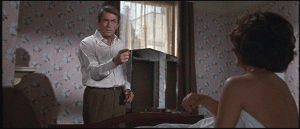
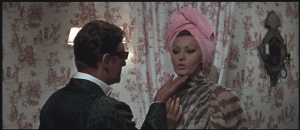
Apart from Sophia Loren, this rollicking adventure film also stars Alan Badel, Kieron Moore and George Coulouris. British stage/screen actor Alan Badel of “Salome”, “Magic Fire”, “Children of the Damned”, stars as the sinister Beshraavi.


Born in Rusholme, near Manchester in September 1923, Badel had graduated from the Royal Academy of Dramatic Art in 1939 winning a Bancroft Gold Medal. Moore began his stage career with the Abbey Theatre in Dublin were he displayed his ability to speak Gaelic. His portrayal of Romeo to Claire Bloom’s Juliet at the Old Vic Theatre in London in 1952-53 was well noted. Badel’s performance as the sinister Negim Beshraavi in this film conveys the perfect subdued menace the role calls for.
 Once described as “handsome in a slightly eccentric fashion”, Irish stage and television actor Kieron Moore (Kieron O’Hanrahan – 1924-2007) of “Anna Karenina”, “David and Bathsheba”, “The Green Scarf”, “The Thin Red Line”, with his dark Latin looks and brawny build, stars as Yussef Kasim. He was discovered by Sir Alexander Korda who whisked him out of the cast of Sean O’Casey’s Irish play “Red Roses for Me” in London.
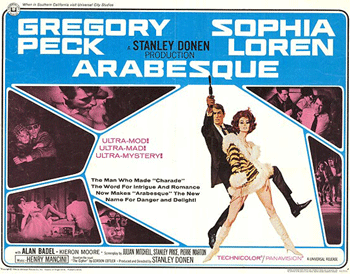
While acting in American films from 1930 to 50, British character actor George Coulouris (1903-89) was often cast in explosive roles. He had gained his training in acting at London’s Central School of Speech and Drama along with fellow students Laurence Olivier and Peggy Ashcroft.
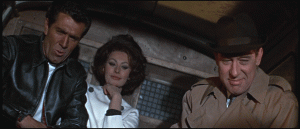 Having performed in movies such as “Hotel Berlin”, “King of Kings”, it would be after his performance in “The Skull” that he would be cast in “Arabesque”, in the role of Professor Ragheeb. Coulouris won a National Board of Review “Best Actor” award in 1941 for his performance in “Citizen Kane”.
The other supporting actors are: John Merivale (Major Sloane), Duncan Lamont (Webster), Carl Duering (Prime Minister Hassan Jena), Ernest Clark (Beauchamp), Harold Kasket (Lufti), Gordon Griffin (Fanshaw), Larry Taylor (Mustafa), etc.

The film is photographed in Panavision by Kensington born Christopher (George Joseph) Challis (1919-2012), a good friend of Donen who would use Challis on six of his films during Donen’s British period in the 1960s. Challis was a technician on early British colour movies such as “The Drum”, “The Four Feathers”, before he became second unit cameraman on “The Thief of Bagdad”. He owes his knowledge in cinematography mainly to Georges Périnal and Jack Cardiff and would later become an essential member of the Archers production company of directors Michael Powell and Emeric Pressburger which enabled him to experiment with creative cinematography. Although Challis received several nominations for BAFTA award for Best British Cinematographer, including for “Those Magnificent Men in Their Flying Machines” (1965), he finally won it in 1967 for “Arabesque”.

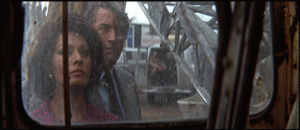
To heighten the mystery of this thriller Challis’s camera work is full of dazzling styles that played with focus and disorienting camera angles, especially during the scenes when Pollack was in a drugged stupor. Very often images are shown through reflections on the body of the Rolls Royce, on glass of the low table, on the round side panel, through the aquarium glass, etc.

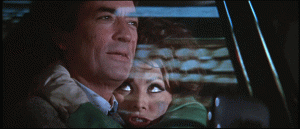
Apparently, Challis’ camera angles consistently favoured Sophia Loren, focusing attention on her chiseled facial features and statuesque figure looking luscious in gorgeous outfits of tailored cuts and rich materials.
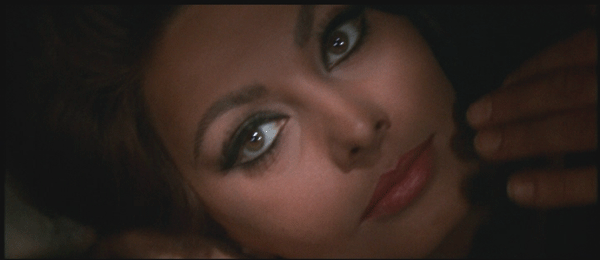
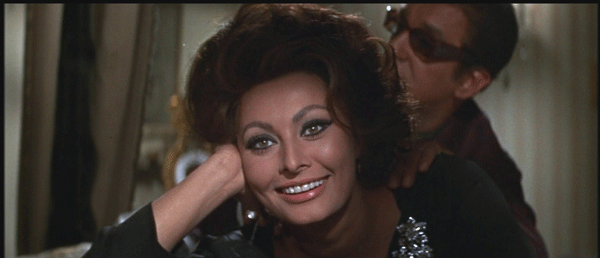
While the Art direction is done by (George) Reece Pemberton (1914-77) who specialized on TV series; make-up for the movie is carried out by British make up artist William (Bill/Billy) T. Partleton (1911-75) of “Christopher Columbus”, “The Prisoner”, “Sink the Bismarck!” fame. The film is edited by Frederick Wilson (“The Prisoner”, “Sword of Lancelot”). You may note the replica of a golden palm on Beshraavi’s desk – which could have acted as a perfect model for one of the prosthetic hands of the evil drug-lord Han of Bruce Lee’s “Enter the Dragon”.

 American composer and songwriter Henry Mancini (Enrico Mancini – 1924-94) who had provided music for Donan’s “Charade” repeats his stylish music in this movie, as well. Educated at the Juilliard School of Music, Mancini was the arranger and pianist with the post-war Glenn Miller Band before coming over to Universal in 1952. He had composed music for “Touch of Evil”, “Days of Wine and Roses”, “Hatari”, “The Pink Panther”, “A Shot in the Dark”, “What Did You Do in the War, Daddy?”, etc. Audrey Hepburn’s song “Moon River” in “Breakfast at Tiffany’s” was composed by Mancini to the lyrics of Johnny Mercer which won the Oscar for Best Song.

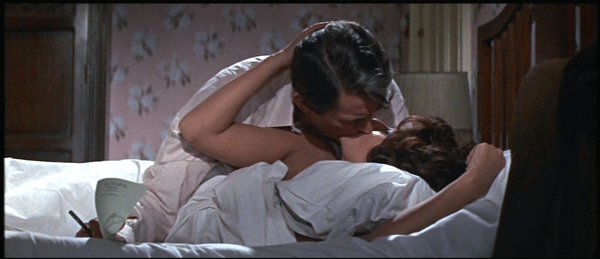
For the opening music of this movie, Mancini has provided a continuous procession of tones in a time honoured way laced with Middle Eastern tones to the stylish James Bond-ish title theme. There are several other themes, one of them is a powerful dotted rhythm, and another full of graceful charm, including the rapid running passages of the solo violin notes during the chase scenes to the Zoological Gardens, which are quite noteworthy.

During the 1960s, Italian screen goddess Sophia Loren (Sofia Villani Scicolone) was basking in international stardom for sometime. She was avidly sought after by film makers such as Alfred Hitchcock, Joseph Levine, even, Arthur Miller, to the intense promotion by Carlo Ponti (1912-2007), her romance in blossom. Prior to her appearance in “Arabesque”, Loren had appeared in director Michael Anderson’s “Operation Crossbow” (aka: The Great Spy Mission – 1965), Daniel Mann’s “Judith” and Peter Ustinov’s “Lady L” (both in 1966) and was slated to appear with Marlon Brando in Charles Chaplin’s “A Countess from Hong Kong”. Chaplin had seen Loren in “Yesterday, Today and Tomorrow” and was enthralled by her.

Even though, both “Judith” based on an unpublished (later published) novel by Lawrence Durrell modified according to Loren’s suggestions, in which she acted as an Austrian Jewess Judith Roth who, after surviving Nazi concentration camps, visits Israel in 1948 to track down her Nazi husband who had betrayed her; as well as, “Lady L”, in which she acted with Paul Newman and David Niven, both had fizzled out at the box office. However, for movie audiences, the statuesque Italian leading lady Loren whom writer Lawrence Durrell once described as “A sweet creature, great dignity and style”, symbolized Latin female sexuality.
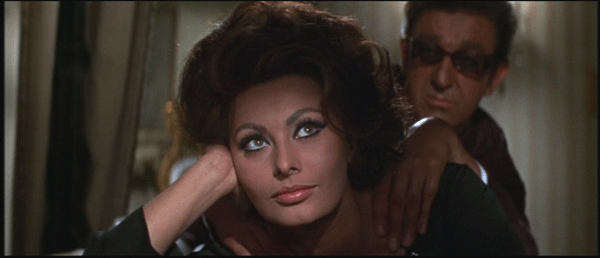
Although the 5 foot 8.5 inches tall Loren is one of the most beloved and recognizable actresses of the movie world who had worked with a long string of reputed directors and actors. But naturally, there is a small catch.

Actresses like Elizabeth Taylor, found the “Italy’s sensuous beauty” as their competitor. According to biographies of Liz Taylor and Richard Burton, being scared of “Miss-what’s-her-name” acting with Burton in “The V.I.P.s”, Elizabeth had pulled strings to have herself cast in the role. On another occasion, when Burton told Liz Taylor that Loren might take a role in “The Comedians” which offered a few numbers of love scenes with him, that picture was released with Liz in the role intended for Loren. Liz had even agreed to act in it, her seventh film with Burton, for half of her customary salary of $1 million thus enabling Burton to receive more salary than Liz for the first time, i.e. $750,000. In 1959,
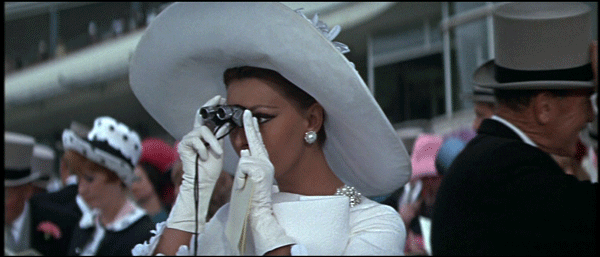
Peter Sellers had fallen head over heels in love with Loren when they acted in “The Millionaires” though Loren’s fundamental choice was Carlo Ponti, her keeper of the flame.


When Donen approached Loren for “Arabesque” which scheduled to start production in England by the end of April, 1965, he did not have a script ready to show her. However, Loren was well aware of the works of Donen and furthermore, she always wanted the opportunity to work with Gregory Peck.
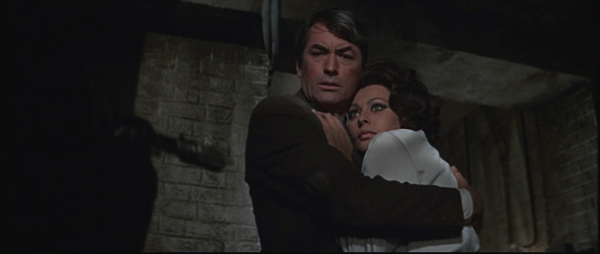
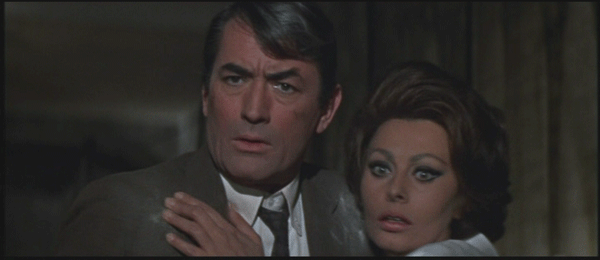
 Besides, Loren would be available in London after finishing her work in her second film for M.G.M “Lady L” by late April. For Loren and Ponti, January 1965 had brought fresh happiness when the French Premier Georges (Jean Raymond) Pompidou (1911-74) granted them with French citizenship which automatically enabled Ponti’s then estranged wife Giuliana to sue for divorce under French Law after six months of being a French citizen. Measuring up to the new citizenship, the 31 year old Loren was only happy to star as Lady Louise Lendale in “Lady L” shot in Paris, Nice, Monte Carlo with some scenes in Switzerland and England under the direction of Ustinov with whom Loren had worked as an uncredited extra in director Mervyn LeRoy’s epic film “Quo Vadis” (1951) starring Robert Taylor and Deborah Kerr.
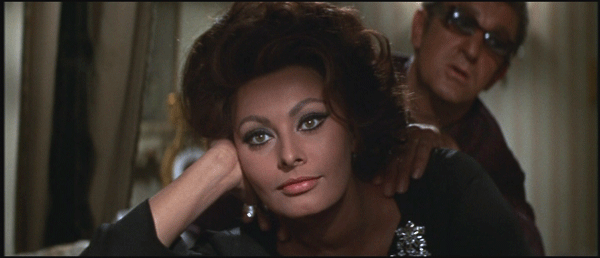
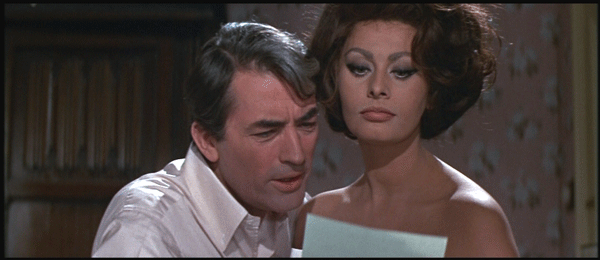
Following the completion of “Lady L”, Loren was put up in a Georgian country house in Berkshire near Ascot for the shooting period from May to August in order that she has easy access to the locations at Ascot, Oxford, Pinewood Studios in London and other locations in the English countryside including at the Crumlin Viaduct, Caerphilly in South Wales while it was being dismantled. Caerphilly is, of course, amongst other things, famous for its cheese.


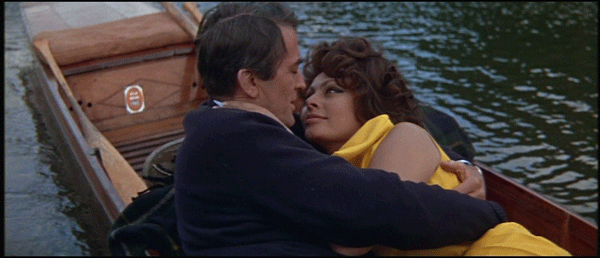
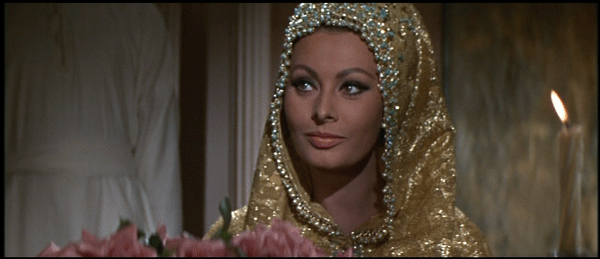
Sophia Loren has carried off the role of Beshraavi’s mistress Yasmin Azir with a quite charm and verve as Yasmin plays all the sides against each other, while her real loyalties will be revealed only at the end of the movie.
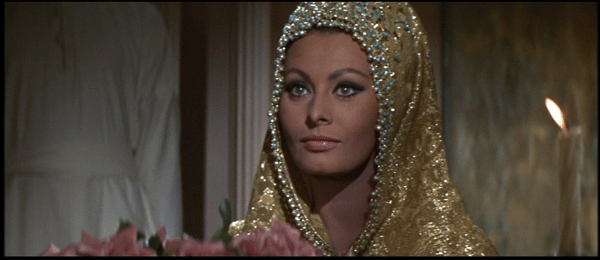
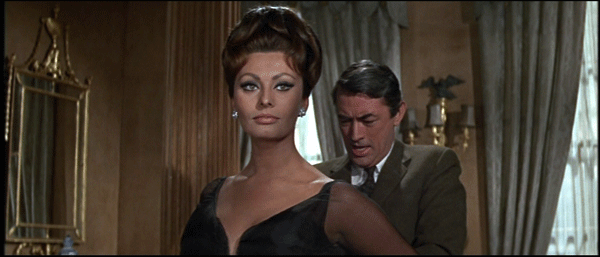
One time driving a Mercedes-Benz 230SL, she breezes through the movie as a Femme Fatale with her breath-taking beauty and stunningly alluring body elegantly attired exclusively by Christian Dior’s Marc Bohan who prepared a stylish wardrobe and related footwear (all of which would add to Loren’s personal wardrobe after the filming) on generous funding from Universal. In 1961 Marc (Roger Maurice Louis) Bohan had succeeded Yves Saint Laurent, who was called up for military service, at Dior where he would continue till May 1989 when he was replaced by Italian Gianfranco Ferrè setting stage for Ferrè to parade his exquisite flair for fashion.

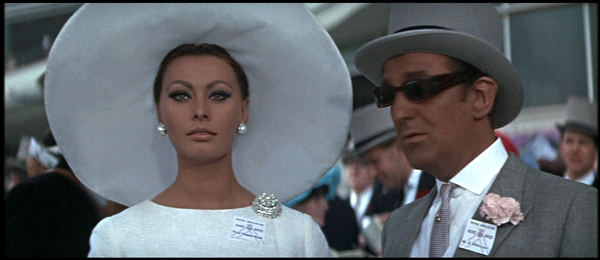
With Sophia Loren’s taste usually excellent, if a bit expensive, Bohan wouldn’t have found a more willing patron than Loren who knew what it takes for star build up.
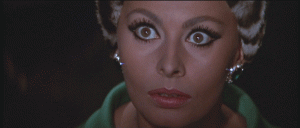 “Arabesque” was nominated for BAFTA Award 1966 for Best Costume Design (Colour) but lost to Julie Harris of “The Wrong Box”.
While Cinematographer Challis was very much impressed by the professionalism of Sophia Loren, she can also be game for fun. One of her biographies related an incident during the shooting of the shower scene when Peck had to hide next to her while she took the shower.

To put her at ease, Peck had told her not to feel embarrassed, that it’s all in the game. With her unflinching beautiful hazel eyes, Loren asked him what makes him think she would be embarrassed, then readily took the shower naked to Peck’s regal silence.
 Ironically, both “Arabesque” and “Lady L” were released in May 1966 while Loren’s “Judith” was still in its release screening. Serious moviegoers found “Arabesque” a bit imperfect, and Loren was at the receiving end of resentment for adverse characterization of the Arabs in the movie.
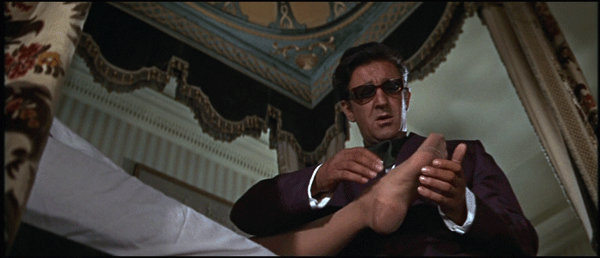
Nevertheless, with the presence of an impressive star cast consisting of Peck, Loren, Badel and production crew of Donen, Challis, Mancini and of course, James Bond title designer Maurice Binder’s psychedelic visuals gracing the main titles, “Arabesque” is still fun to watch. Put your feet up and enjoy. Until next time, Ciao, Jo
 (PS: The DVD of this movie is available with main dealers such as amazon.com, TCM Shop, etc)
(Text: © JS/Manningtree Archive)
As the Advent begins…..
(Photo/art: JS-Manningtreearchive)
Viva Italia – 4: Amore Piazza San Marco, Venezia – Com’ era, dov’ era
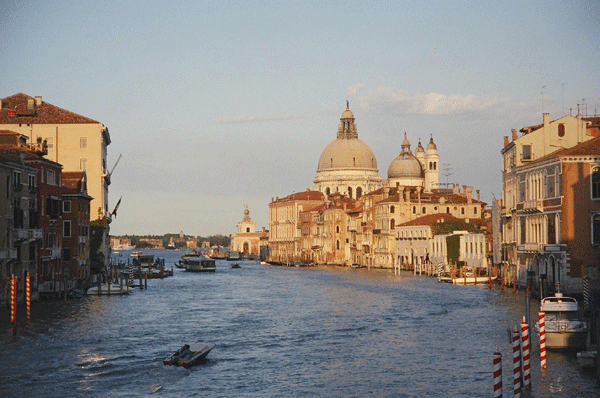
It breaks my heart when I think about the recent floods in Venezia which submerged the stone pavements of one of the greatest urban spaces in Europe, Piazza San Marco (St. Mark’s Square) and water gushed into the Basilica di San Marco (Basilica of St. Mark). With water levels reportedly rising to a critical level of 59 inches above normal, they say it was the “sixth-highest level since records began in 1872”. Even though floods are no stranger to Venezia since this phenomenon occurs almost annually as a consequence of eustasy (rising sea level) and subsidence (lowering of the land), the frequency of the floods are rising. It not only brings about great inconvenience to the Venetians but also inflicts immeasurable damage to the Piazza, to the bell tower, the underground passages and all around damage and instability to an area that was once proven as the best part of the Rialtine islands due to its harder soil.
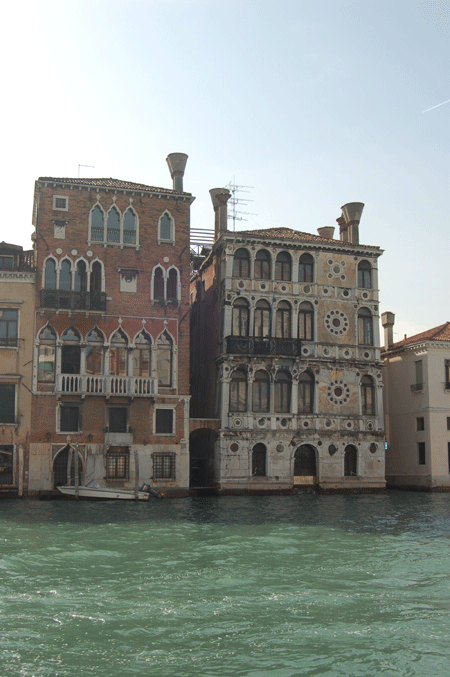
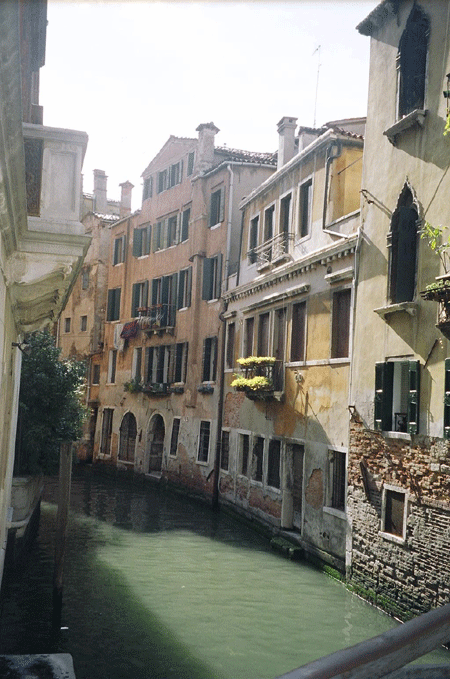
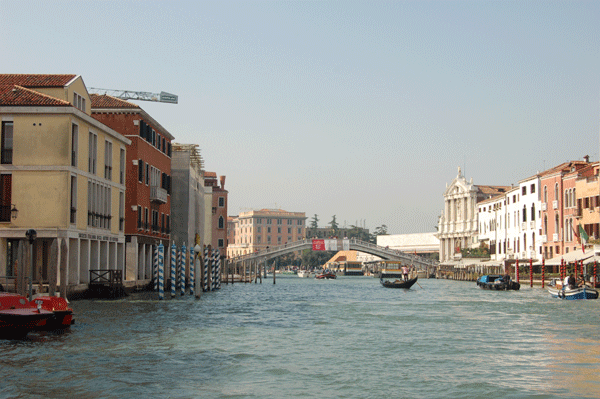
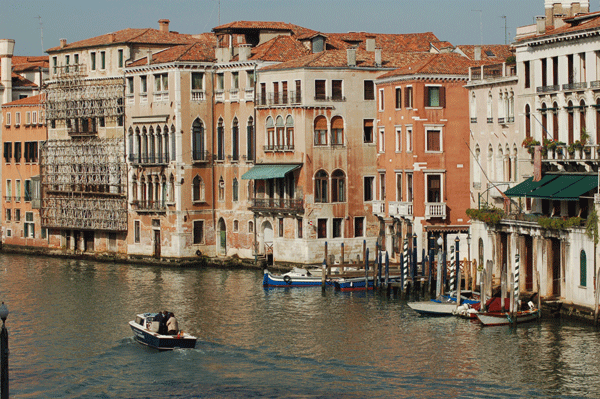
Although, other tourist destinations of Italy like Firenze and Roma definitely registered better in flow of the tourists owing to the floods, I believe, this time, shops like Carlo Pazolini (Via Sestiere, San Marco) must have done brisk business in sale of waterproof footwear. Moving pictures of tourists wading through the water with plastic bags covering their legs and carrying suitcases on their shoulders flashed on televisions across the world. Whilst the rain hammered over the canals, the landscape had become dreary and you could see numerous traghetti (Ferries) and vaporetto (steamers) plying at a dull pace through the misty Canale Grande.

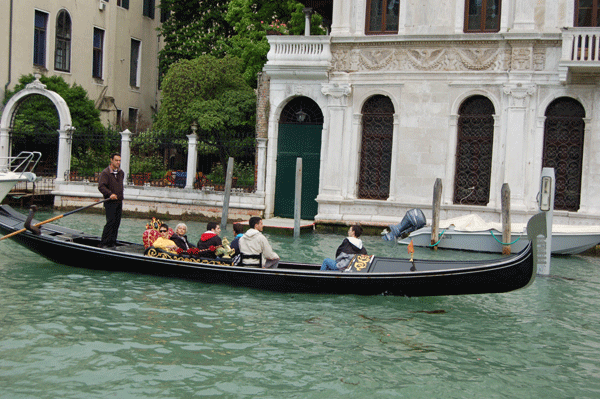
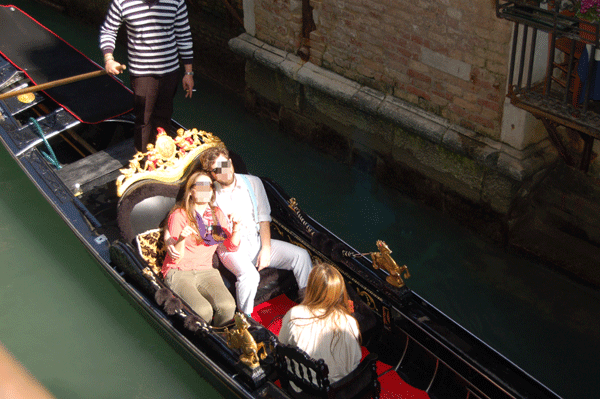
The gondoliers who normally look quite cheerful standing up (its second nature to them) on their black Triton looked wet and sullen. It should come as no surprise to find those who do not fancy walking around hours in wellingtons or over makeshift wooden walkways rather prefer the other non-waterlogged Campos of Venezia, off the beaten path, or walk around through the numerous alleyways with Italianized street names (the English names of artists and writers were changed during World War II), exploring whatever they are interested in.
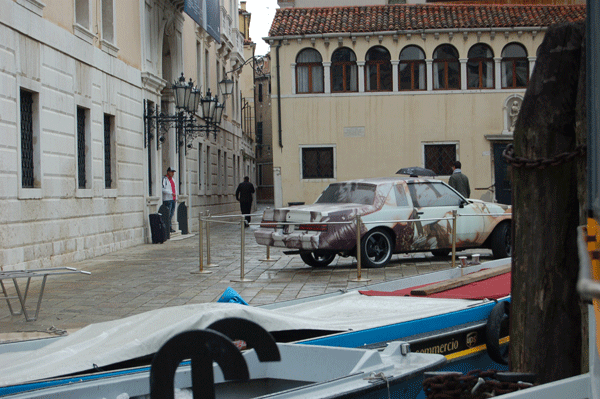
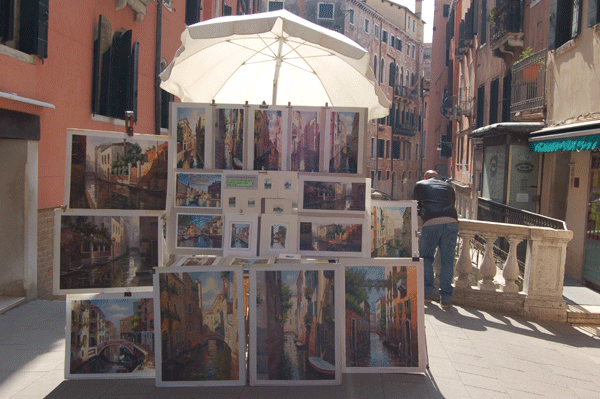
With its intricate network of big and small canals, countless bridges, there is a mystic quality in Venezia that draws you there, at least more than once. Whenever we are in Italy, especially in Padova, we would hop the short distance to Venezia to spend a day or two at this once principal gateway between the West and the East on which their commerce and wealth was raised.
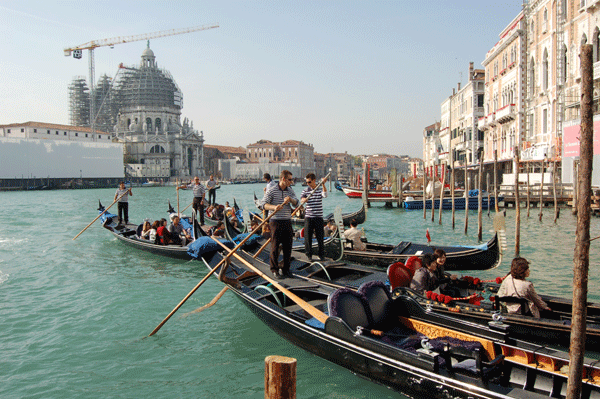
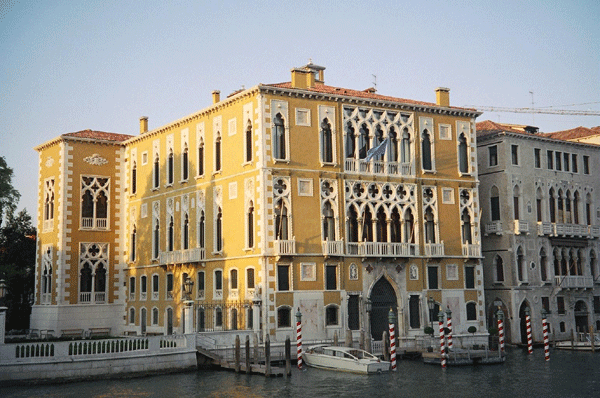
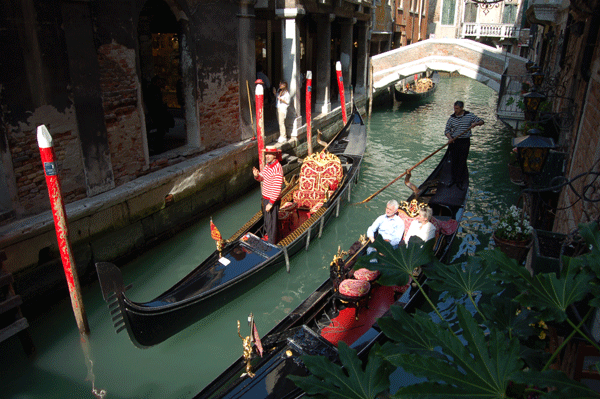
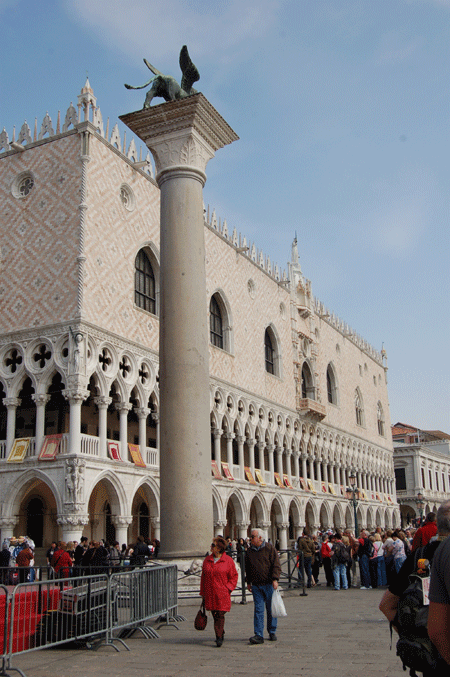
According to tradition, Venezia was founded by Italian refugees fleeing the mainland for the safety of the islands occupying the Venetian lagoons when the Lombards attacked their cities in the late 6th century. They built houses on the muddy patches of land and made most of the abundance of fish and salt of the lagoons. It was in 697 AD that an alliance was finally formed by the communities scattered throughout the islands and elected their first doge – the ruler. By 12th century, Venezia had become a thriving city rooted on maritime trade and the city’s symbol would become a statue of the winged lion of San Marco, booty from the sacking of Constantinople.
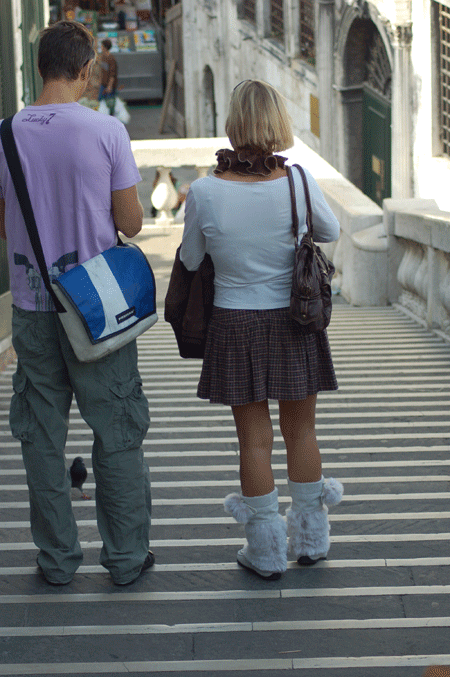
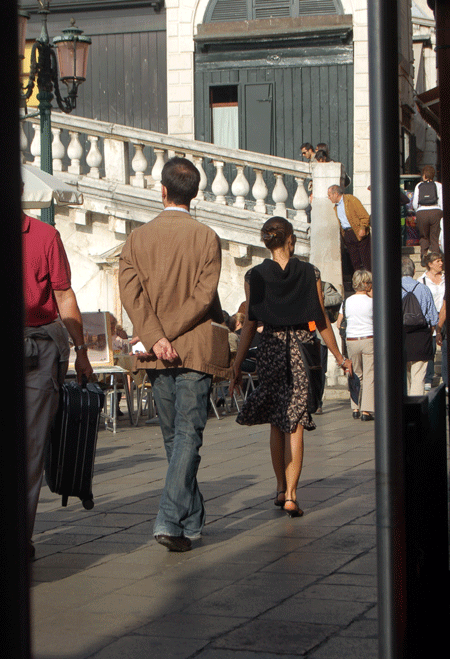
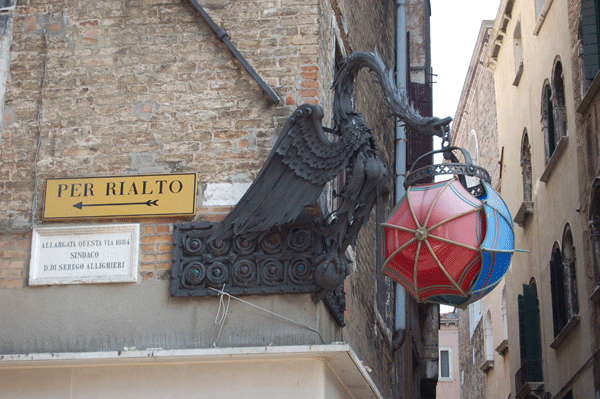 Presently, there are two Venezias: one of the canals and the other, of the streets, which we had explored numerous times. There is an immense wealth of important art in Venezia.
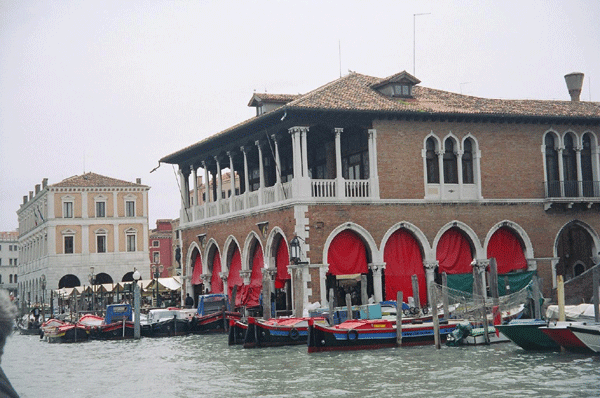
I had an early breakfast one day before going for a morning stroll through the beautiful streets of Venezia to the busy fish market, one of the city’s heritage sites, at the foot of the Rialto Bridge where fish was being sold for more than 1,000 years. This market was scenes of protests during last year when it was under threat of shifting for expanding the docks for the cruise ships. As I passed the market-workers coffee stalls, I could hear a Veneziano greet his friend in Venetian dialect: Come, let us go have a glass!.
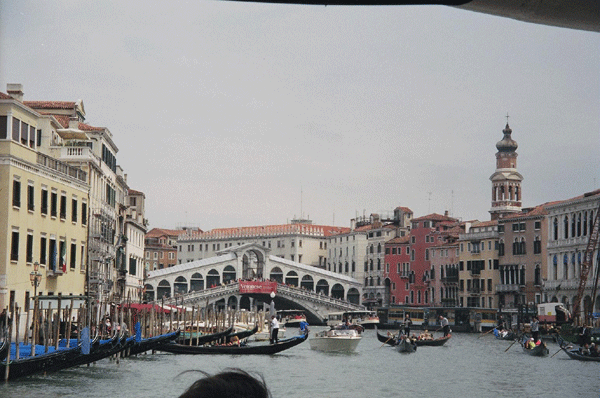
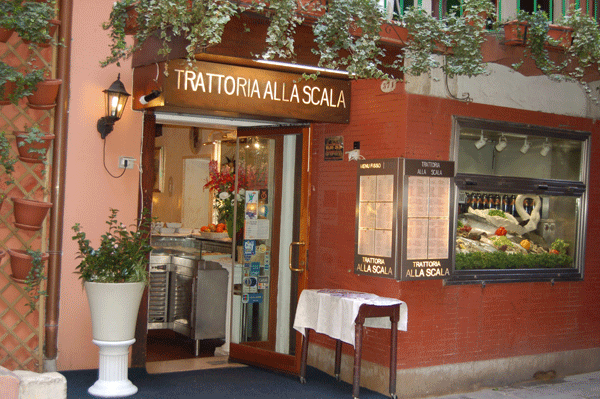
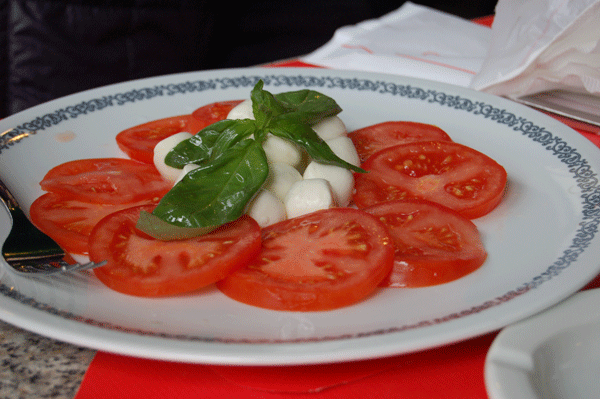
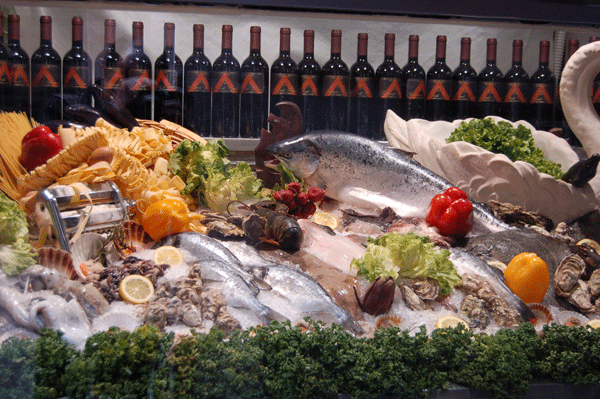
Hither and thither, your eyes could catch charming bits of ancient architecture, patches of brilliant colours, little shops and shrines. Though some of these alleyways are rather obstructed by scaffoldings supporting the rundown structures, here you could come across many bàcari, simple stand-up bars, that offer modest selection of wine and cicheti, traditional snacks made of local meat and fish: polpette: fried meatballs with a mixture of veal, potatoes and spices, or fried calamari or boiled octopus, etc. You could squeeze in next to the locals as they ate cold slices of polenta topped with mortadella or pickled fish, or halves of Mozzarella di Bufala with cherry tomatoes, basil and olive oil. During mornings, you could enjoy an Ombra or Ombretta which is the Venetian custom of having a small glass of wine in the morning. I tried that at the seafood Trattoria “Alla Scala” located at Corte Lucatello between Rialto Bridge and Piazza San Marco.
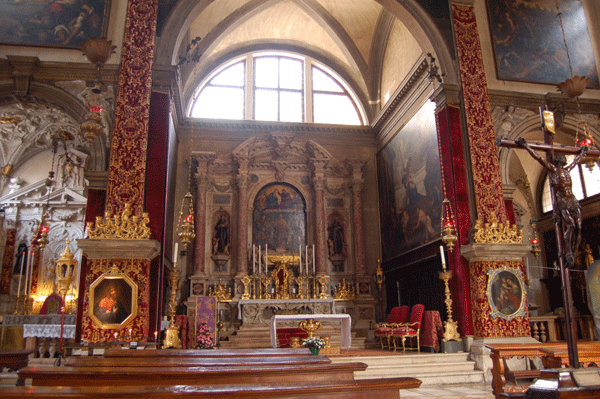
Having spent half an hour at Chiesa di San Giuliano (dedicated to San Zulian/Julian who was martyred with his wife Basilissa in 304 in Alexandria) with its beautiful interior designed by sculptor/architect Jacopo d’Antonio Sansovino (1486-1570), I finally decide to give my legs further rest at Caffé Florian at Piazza San Marco, the only piazza in Venezia since all the others are called “Campo”.
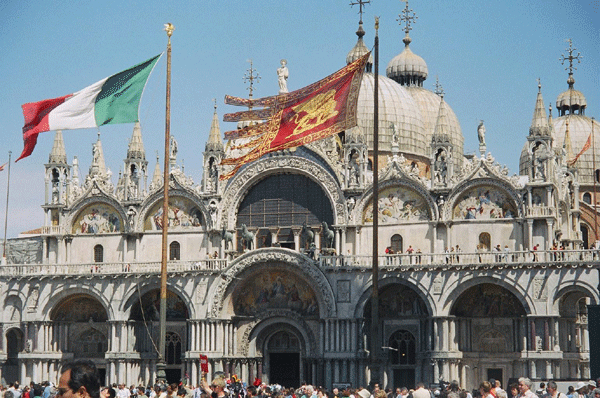
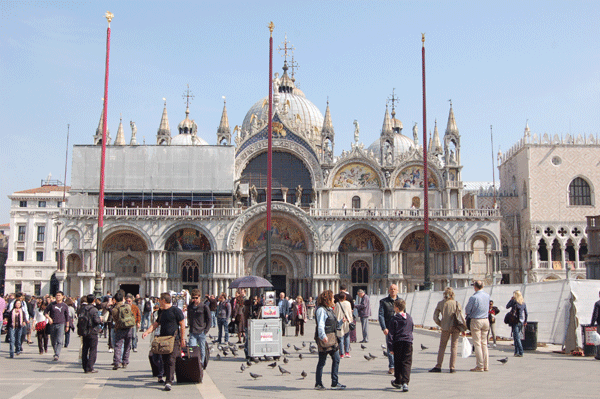
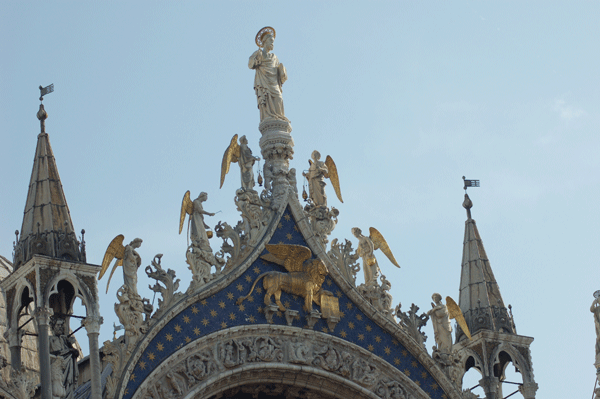
As I stepped into the Piazza now inundated with tourists, the ornate Basilica di San Marco stood at the Eastern side like an opulent backdrop to it. Sometimes called “Chiesa d’Oro” (Church of Gold), this place of historical association and worship for Venetians is the repository of the remains of San Marco, the second Evangelist and traditional author of the Gospel of Mark. His remains were secreted out of Alexandria (Egypt) in 828 and brought to Venezia hidden in salted pork to hoodwink the Muslim guards though it is believed that the head of the Saint remained in Alexandria. Looking at the basilica from the Western side, I could see Palazzo Ducale to its right – both the edifices richly decorated with vermilion, blue and gold.
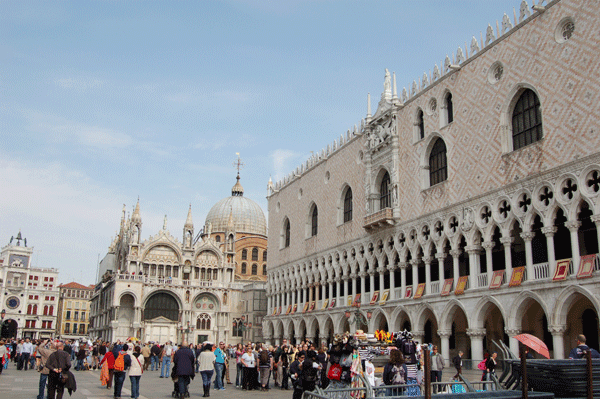
To my left, on the Northern side is the 152 meter long Pietro Lombardo’s Procuratie Vecchie (Old Procuratie) with Torre dell’Orologio (Clock Tower) situated at its end. Legend has it that the men who made that famous clock were blinded to prevent them from making another one for somebody else.
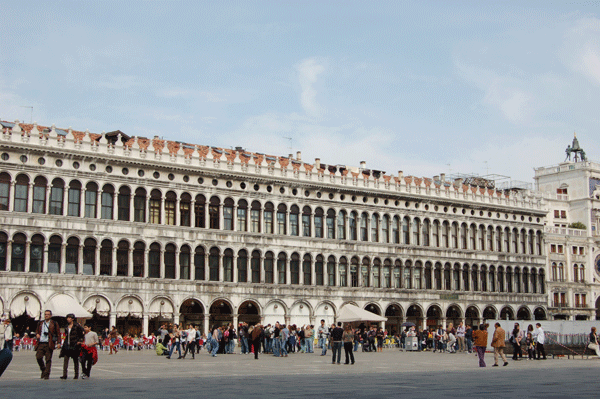
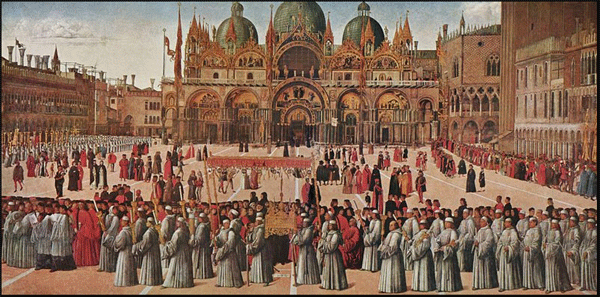
Procuratie Vecchie’s ground floor now houses the shops while offices occupy the upper floors. On the Southern side starting from the Campanile down is Procuratie Nuove (New Procuratie) designed by Vincenzo Scamozzi, which appears weaker compared to Sansovino’s (yes, the one who designed Chiesa di San Giuliano mentioned above) better design for Piazzetta’s Libreria Vecchia. Construction of Procuratie Nuove began in 1583 and completed in 1640 after removal of Hospice Orseolo and some other buildings, setting the Piazza San Marco to its present boundary. You can see some of the demolished buildings in the painting “Procession in Piazza San Marco” by Bellini posted here.
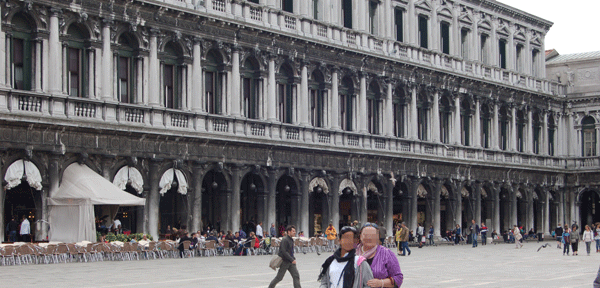
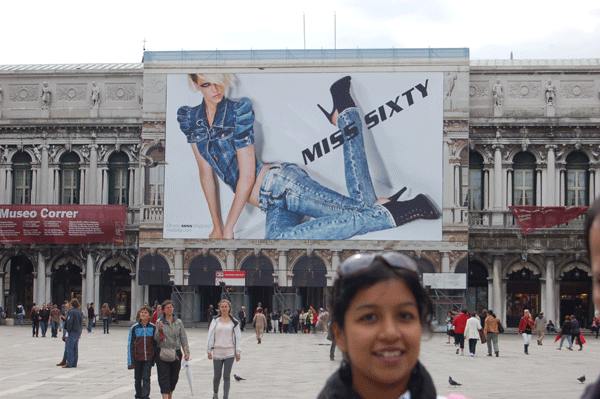
This structure was the Royal palace during the Kingdom of Italy under the rule of the House of Savoy in 1861. Presently, the upper floors are occupied by the Museo Correr which features the art and history of Venezia. On its ground floor is where Caffé Florian is located, my present destination. Lining the Western side, where I am standing, is I’Ala Napoleonica (Napoleonic Wing) built on the site of one of the oldest churches of Venezia, the Church of San Giminiano, to extend the Royal Palace.
The highest structure in the Piazza is the Campanile (Bell Tower) of about 99 meters (320 feet) height – the eyes of the city watching over the lagoons. The construction of this tower is said to have begun in 912 opposite the Porta della Carta of Palazzo Ducale, but that structure was lost on the morning of July 14, 1902 when the tower gently collapsed, destroying the Loggetta and the Northern side of the Libreria Vecchia though, by the Grace of San Marco, as Venetians believe, not a single person was hurt except a caretaker’s cat who was actually rescued to safety but ran back to retrieve something – no doubt its nine lives were up. The Basilica di San Marco and Palazzo Ducale (which is not built on piles but rests on a stratum of stiff clay) situated few feet away were, at that time, only breezed with the onrush of debris and dust which made the Venetians claim that “San Marco has been a good fellow”. The construction of the present bell tower upon the same foundation that was found to be strong enough, had started immediately and completed by 1912.
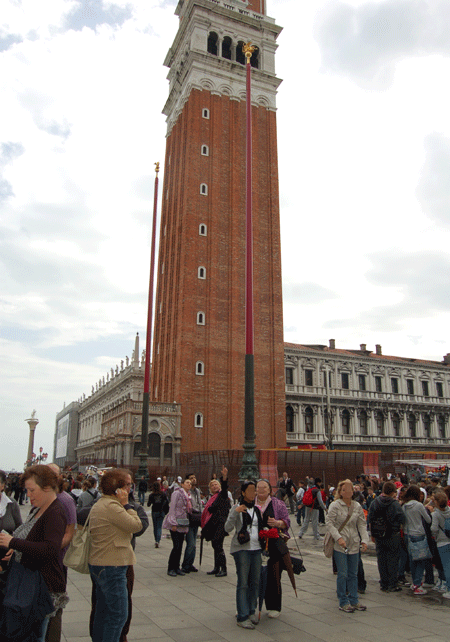
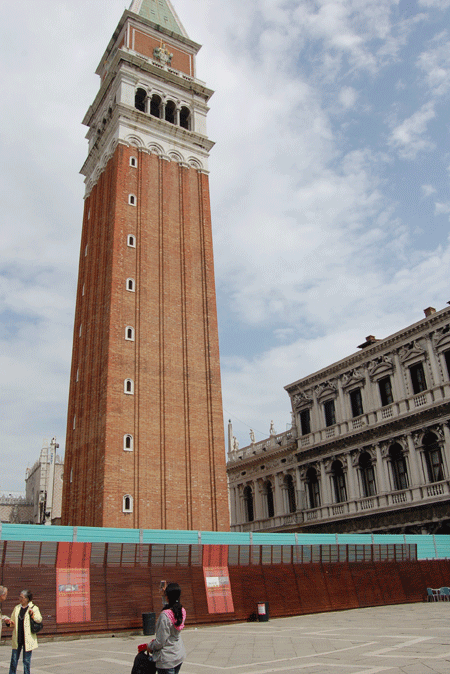
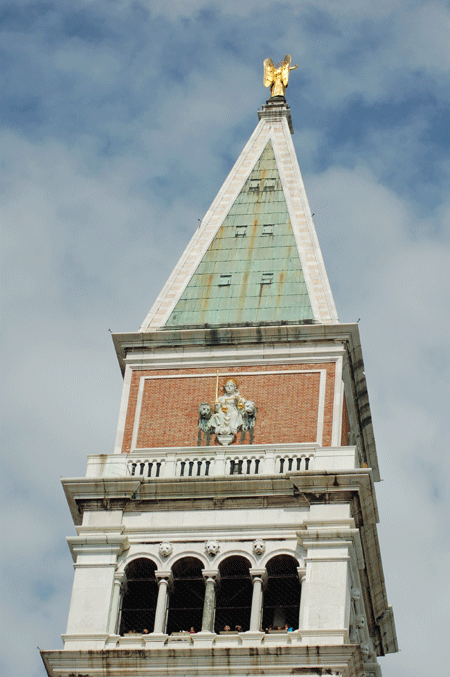 I have often seen large queues of tourists waiting to pay Euro:8 for the ticket at the entrance of the Campanile to go up the giant brick square shaft through the lift or a spiral ramp. There, you can experiment your photographic genius on fabulous views of Venezia, the stripped dome of the 17th century baroque church of Santa Maria della Salute built in gratitude for surviving the plague, located at the entrance to the Canale Grande; or look north to the Alps, or at the Adriatic in the south. At the apex of the bell tower which now houses only the largest among the 5 five bells, is the golden statue of Archangel Gabriel fixed on a rotating weathervane that moves to the direction of the wind. When the tower collapsed, the angel had fallen right in front of the Basilica, miraculously without so much of damage. Except for Marangona (named after carpenters), the other four bells were destroyed when the historic tower collapsed. In earlier times, each of the bells had a special purpose, of which Maleficio (Renghiera), the bell of evil omen, tolled for the execution of criminals.
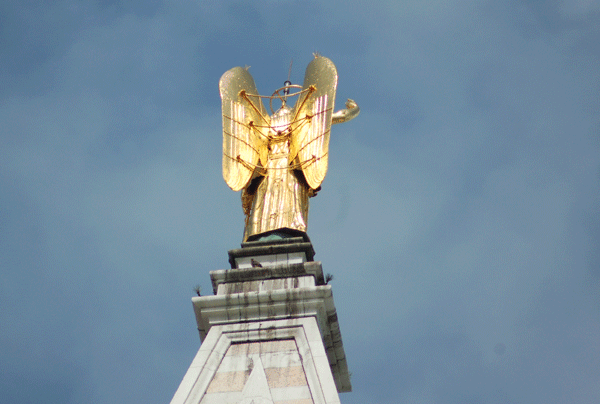 During the days of war, the Venetian kept vigil on the sea from its bell chamber, at times gaping at burning ships or just looking at the masses of red-tiled roofs, chimneys to the mainland and beyond. It was from here that some of the powers that be of Venezia watched Niccolò and Matteo (Maffeo) Polo set out on a journey to the East in 1260 and again with Niccolò’s son Marco Polo and two
  missionaries in 1271. If the writings of 16th century travel writer Giovanni Battista Ramusio (1485-1557) is true, they had also watched Marco Polo command a galley against Lamba D’Oria (1245-1323), captain of the Geonese fleet when he arrived with 70 galleys to attack Venezia at the naval Battle of Curzola near the island of Korčula (now in Croatia), on September 9, 1298 in which Polo was captured. During our time, tourists used to carry a glass of wine to the center of the Piazza and stare at the magnificent Basilica while la Marangona bell of the Campanile struck the midnight hour – perhaps there is another tradition behind that….
The 320-foot Piazza represents the central place of the city life of Venezia.
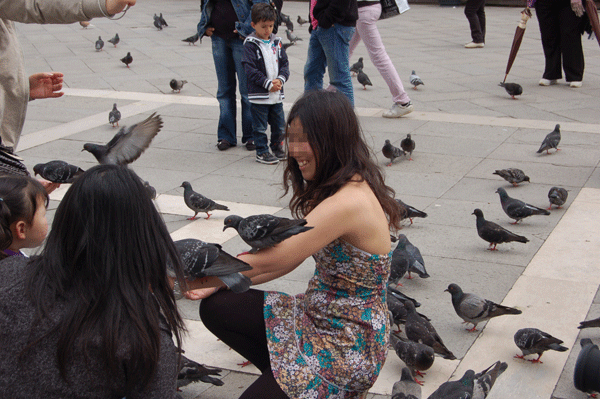
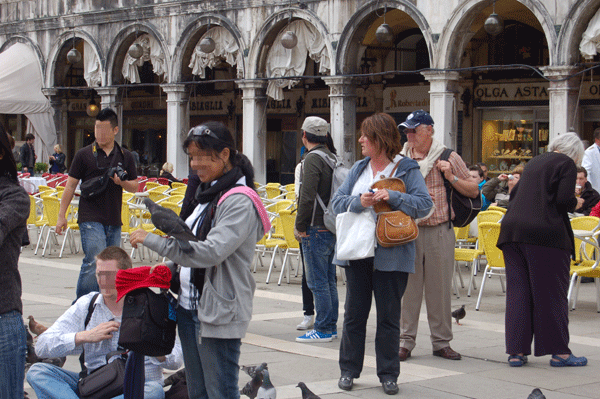
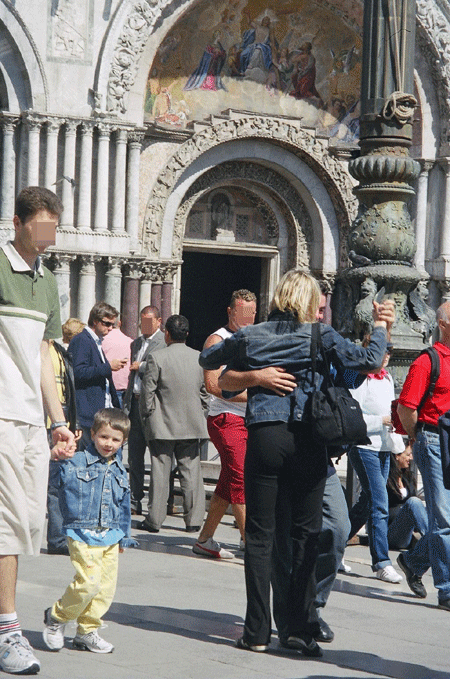
We had spent countless hours walking around there amongst the throngs of people of many tongues in different costumes, the children enjoying the thrills of the massive number of fluttering pigeons, feeding them, laughing at the possibility of getting smeared by their droppings.
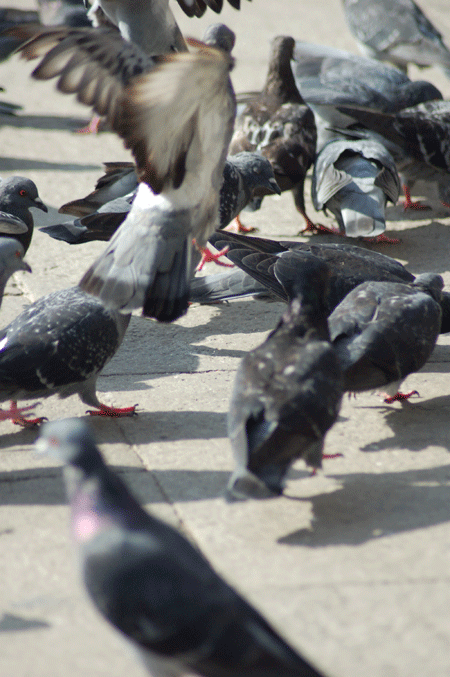
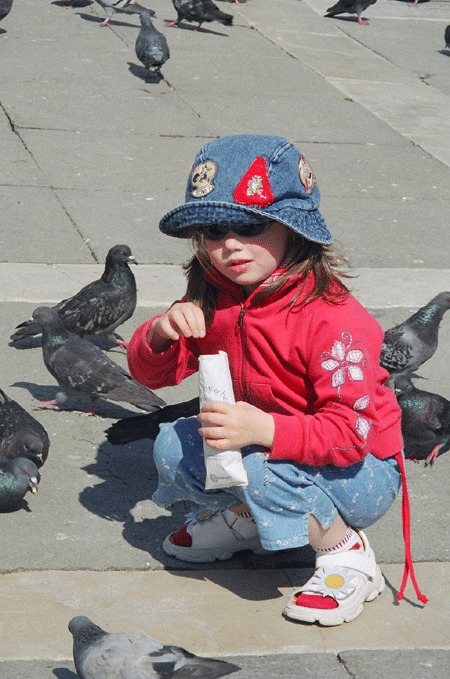
Once upon a time known as Broglio or Garden, this area was a grassy field consisting of a third of today’s space. I understand that a large elder tree stood on the site of the Campanile beyond which a river ran to the Canale Grande. In 1176, that area was filled up by the orders of Doge Sebastiano Ziani (1172-78) who also demolished the fortifications that existed there and paved the Piazza westward to the present boundary. As I stated above, the church of San Giminiano which existed at the South-West end would be demolished only during Napoleon I’s era.
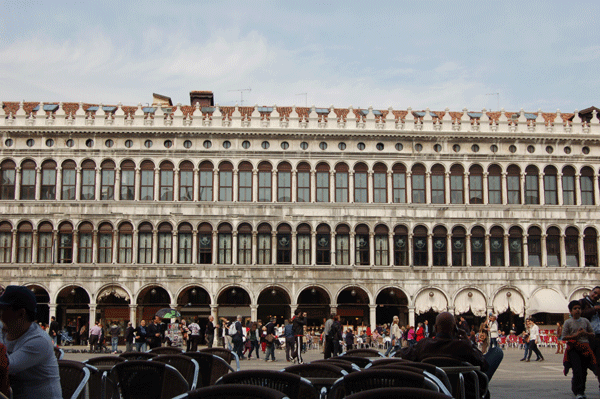
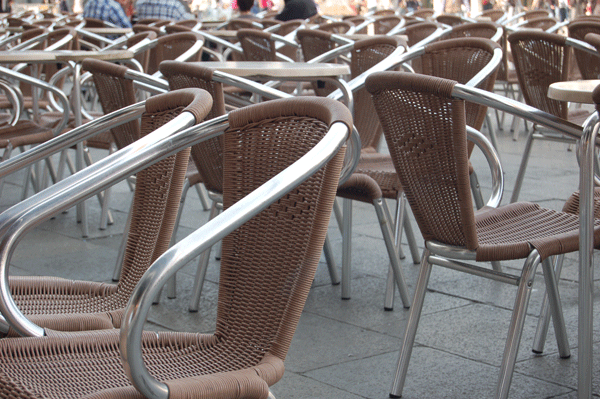
No doubt, the hand of commercialism has now taken its grip on the Piazza, its corridor alleyways and spilling over to the outdoor seatings of the cafés. Over the last many years, I have noted a sort of deterioration in its cleanliness.
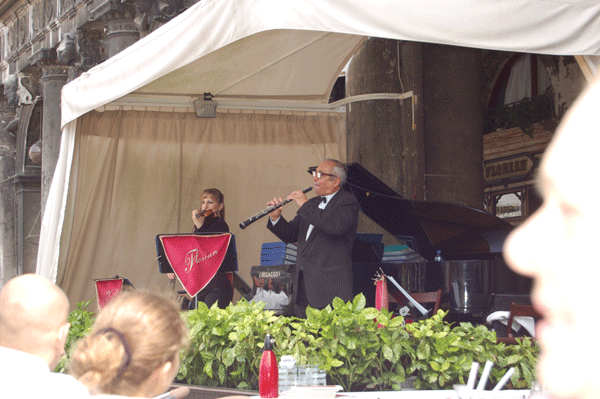
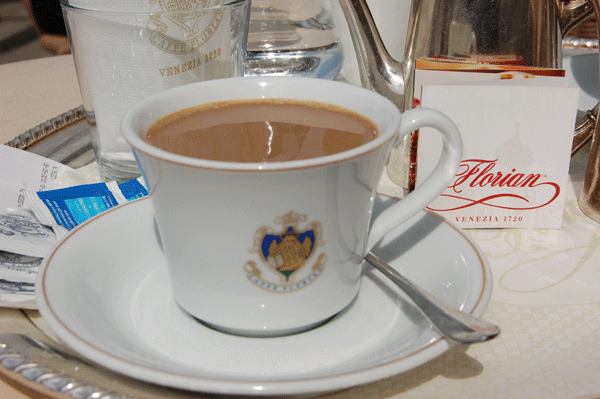
 By now I have joined with my wife Carina at “Caffé Florian” where she had reached a couple of minutes earlier. Many a times we have sat at the outdoor tables of one of those cafés lining the sides of the Piazza, more often at “Caffé Florian” enjoying coffee or glasses of red wine and hors d’oeuvres, listening to the bells of the Campanile. I could see a boy sitting with his parents at the adjoining table enjoying a delicious looking tiramisu. Desserts are elegantly served in the northern part of Italy while, in comparison, the Southern versions are more sweeter. The boy was wearing a Venetian style black and gold Baroque half-mask which reached till the tip of his nose.
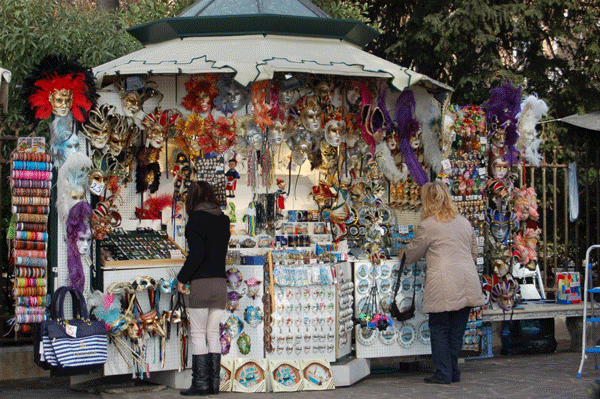
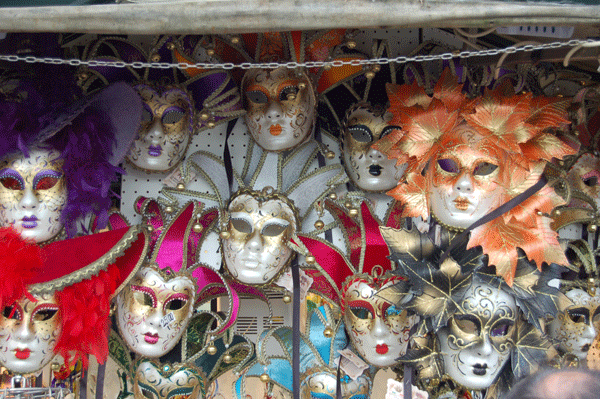 How wonderful it felt to sit there and have a cup of steaming hot coffee, take loads of pictures or enjoy watching people from different nations mill around amidst legions of pigeons barely parting for their feet. Some indulged in taking pictures, posing for cameras, their faces gleaming with happiness just for being there. I also found people in thoughtful concern, possibly fussed over the damage those protected pigeons inflict to the buildings that surround the piazza, a primitive, quite beauty brimming with history.
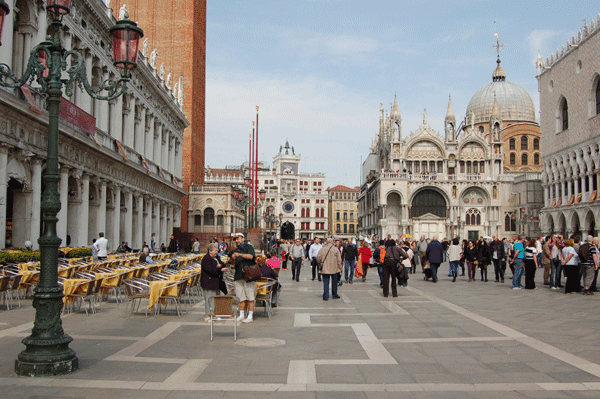
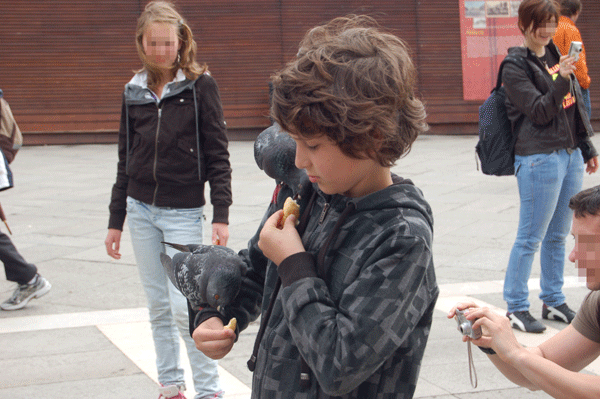
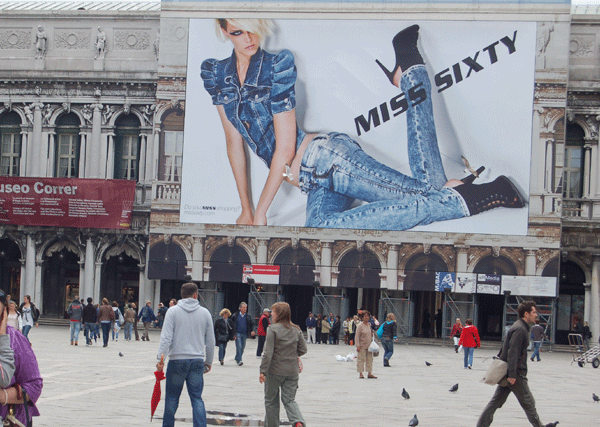
What’s more, those pigeons strutting about the feet are also historically connected to Venezia through Doge Enrico Dandolo who, we are informed, sent news to Venezia through a carrier pigeon about his victory over Constantinople. Or else, maybe they are unhappy at Venezia for having allowed those huge advertising hoarding of modern beauty products to obstruct the wonderful views of ancient architecture and works of art lining the Piazza. Or perhaps, knowing of the past splendor and prosperity of Venezia, they may be thinking of how wonderfully brilliant those buildings must have once looked and how much they are now in need of occasional cleaning/restoration.
 It is the Venetian merchant Pietro della Valle (1586-1652) who introduced the coffee beans to Venezia. He is documented as the person who first imported the ancestors of the Persian cat into Italy in 1626. The most renowned of the coffeehouses that sprouted in Venezia is the famous Caffé Florian founded in 1720 by Floriano Francesconi who shortened his name to Florian as Venetians usually do. Located in the Procuratie Nuove of the Piazza, it had gained supremacy due to its position to the Molo (the main landing stone quay by the Piazzetta that was once the official landing spot) where sacks of coffee beans arrived together with silk, etc transported by the Venetian galleys.
The decorations in the interiors of many residences, hotels, and restaurants (including Caffé Florian) that featured silk fabrics is from the tradition that goes back to the times when luxurious and precious textiles for display at spiritual services were brought from the East by Venetian traders and pilgrims. Ever since, It had played an important part in the development of design and style in the Romanesque art. Spiraling into a symbol of the city and a stage for social communication, Caffé Florian became part of the cosmopolitan Venetian lifestyle, a place populated by aristocrats, merchants, artists, the famous, and now later ….us.
 Of the many famous patrons who enjoyed its interiors furnished in purple satin, painted panels, mirrors, etc, I could easily think of Giacomo Girdamo Casanova sitting there enjoying biscotti and liqueur in female company. After some search, I came up with some of its famous patrons: George Gordon, the English poet, Lord Byron, Antonio Canova, the sculptor, Alfred de Musset and his lover George Sand (Aurore Dupin), Goldoni, the Venetian playwright, Goethe, Alexandre Dumas, Charles Dickens, Henry James, Marcel Proust, Pirandello, Rousseau, Stravinsky, Modigliani, Wagner, etc. When Wagner regularly visited Florian during breaks from writing the second act of “Tristan and Isolde”, the band would suddenly switch to his music. Silvio Pellico and Daniele Manin used to sit there and discuss politics when Manin played a major role in the history of Venezia. During the Austrians military siege in 1849 when Venezia suffered bombardment from guns, the Austrians’ attempt to use a fleet of large balloon bombs did not work out. Fortunately, the Piazza was left undamaged from cannonballs as it was out of range of the Austrian guns. The Piazza also witnessed the assault on the Campanile by armed Venetian separatists to proclaim “independence of Veneto” during the night of May 8/9, 1997.

Fast forward to 20th century and the list of patrons becomes endless…. And through it all, I could picture Aristotle Onassis sitting there in early summer of 1957 after having met Maria Callas at that year’s party of Elsa Maxwell. Years later in early 1970s, Christina Onassis and friends would be there. Some time in 1955, Katherine Hepburn met Rossano Brazzi there in David Lean’s Summertime. Ernest (Papa) Hemingway was there…Prince Charles and Diana might have been there when they visited Venezia in 1985… My mind now drifted to the outdoor band playing Louis Armstrong’s “What a wonderful world”.

 Facing Caffé Florian is Gran Caffé Quadri, the haunt of the Austrians during their rule of Venezia in the 19th century. Originally known as Il Rimedio in 1638, it switched to the present name when Giogio Quadri purchased it by late 1700s. After changing hands in 1830, I heard, it went to the Alajmo family playing host to personalities such as Lord Byron, Alexandre Dumas, Honoré de Balzac, Wagner, etc. We had had a sumptuous dinner there last night when Carina preferred Fegato alla Veneziana and polenta while Bianca had Bigoli col Tocio. I was happy with Isogliole in Crema di Gamberi. We had had dinner here last year when Andrea was here. All these main courses were served on Murano plates we enjoyed to the joy of charming service and delightful music of the 121 San Marco Band. I forgot the name of the wine. Italians are wonderful people – the wine they offered last night had tasted just fine for the occasion.
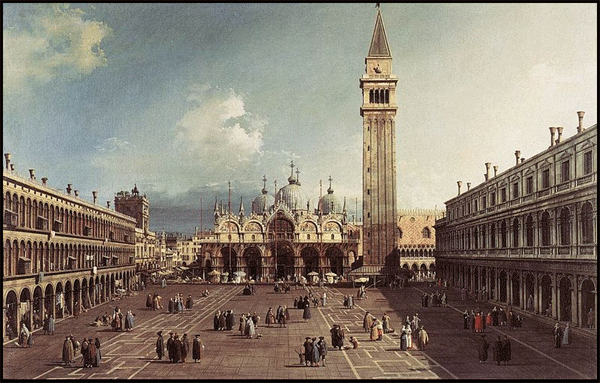
Thinking of all those illustrious personalities brings to my mind the picture of the bustling Piazza of those days: populated by a pageant of signorine in gorgeous costumes, signore in regular suits from which the vendors stuck out like sour thumbs, fashionable youth, the horse or mule-carts, sentry marches, bull-baitings, band performances, the beautiful solemnity of candle-lit processions, the constant religious activities in front of the Basilica and Palazzo Ducale, the aristocrats and wealthy traders socializing at the Caffé Florian. During summer nights, the Piazza would become livelier – a great deal of repetition ….
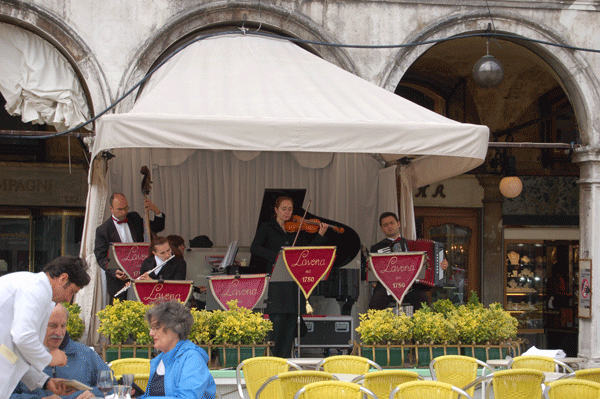
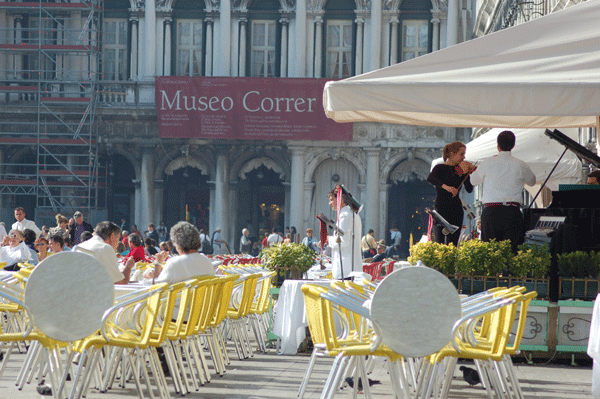
Being the main hub for tourists, the shops and the restaurants in its vicinity have been indulging in ways to turn a handsome profit offering outdoor seating with bandstands where quartets played during April-October. However, the outside concert has a tradition that goes back to more than hundred years. In olden days, there were wine sellers situated at the base of the Campanile and they used to move their carts keeping up with the shadow of the Campanile when they sell cool wine during hot summer months.
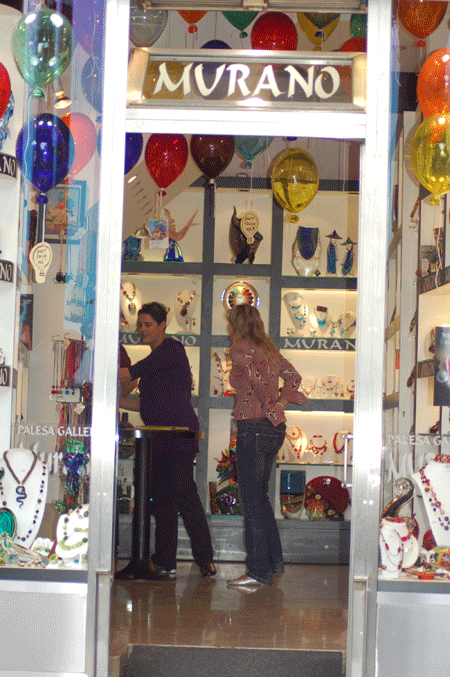

The best time to browse through the shops lining the Piazza is in the morning just after the opening time when the Piazza is fairly devoid of many tourists. Then you can conveniently feast your eyes on the wide variety of touristy artifacts intermixed with Chinese reproductions. In between all this, especially on the further left side of the piazza near to Torre dell’Orologio, there are good displays of genuine Murano glass works that could give your heart a break. Besides the Basilica, the other places of interest in the vicinity are the Palazzo Ducale, the Correr Museum, etc. If you care to explore the side streets, there are some small shops dealing in antique crafts, old books, paintings, set amongst clean cafés catering at reasonable price.
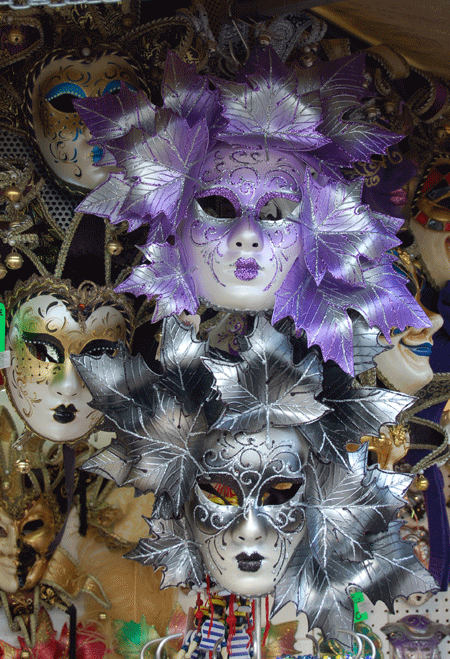

The waiter of Caffé Florian was charming and chatty as he noted our selections for the lunch. Insalata Mista with cheese Gnocchi ordered by Carina, As for me, I decided on Triglie all’Orientale, Red mullet in Eastern style. Veneto being the land of great wines, we had a Schiopetto Podere dei Blumeri Rosso 2006.
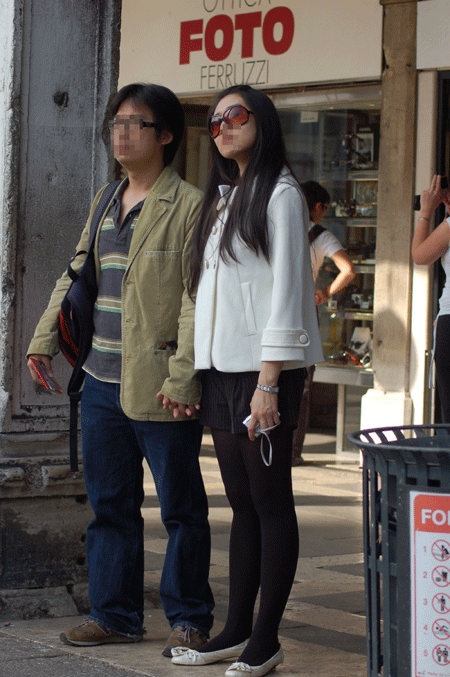
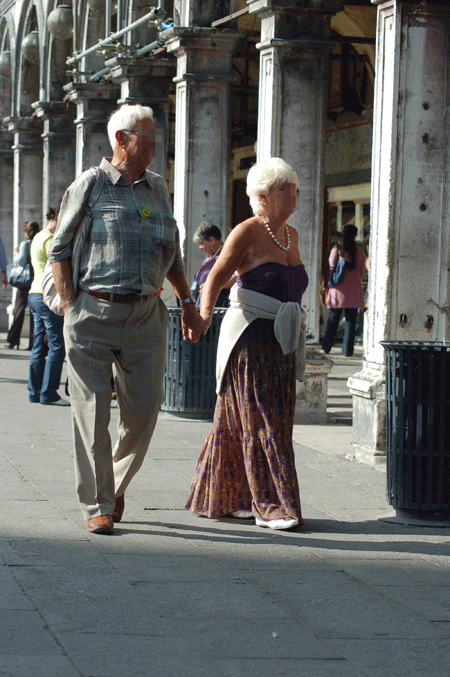
San Marco Square can be a bit stuffy at times, but today there are fewer tourists. During the course of the history, the Piazza San Marco has gained an iconic status as the place that symbolizes Venezia in the eyes of the world. It was here in the Piazza where the helicopter landed with the statue of Our Lady of Fatima in 1959 as part of its triumphal march, encircled by the radiant escort of doves, throughout the Italian peninsula leading to Italy’s solemn consecration to the Immaculate Heart of Mary.
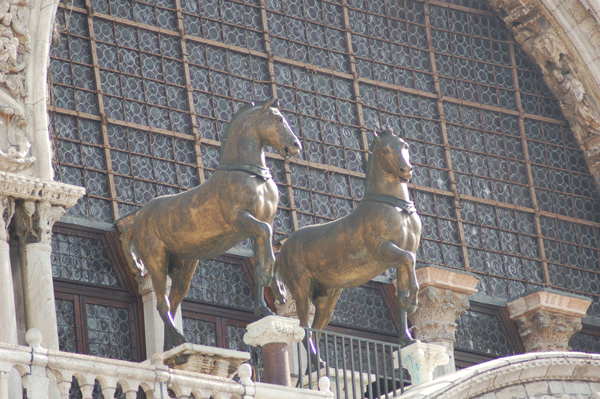

I was not there when that happened. I was not there when the emperors and kings, dukes and marquesses, knights, burgesses, counts and such people of authority were there.
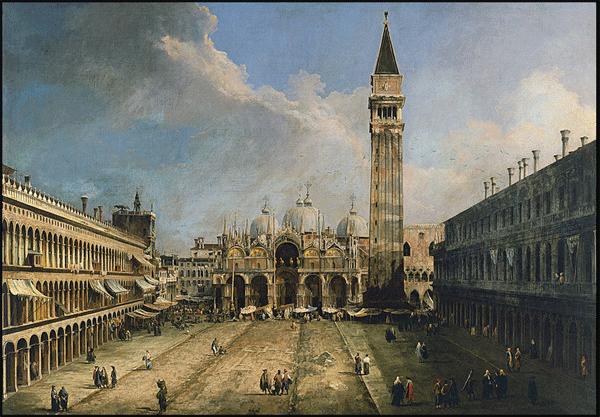
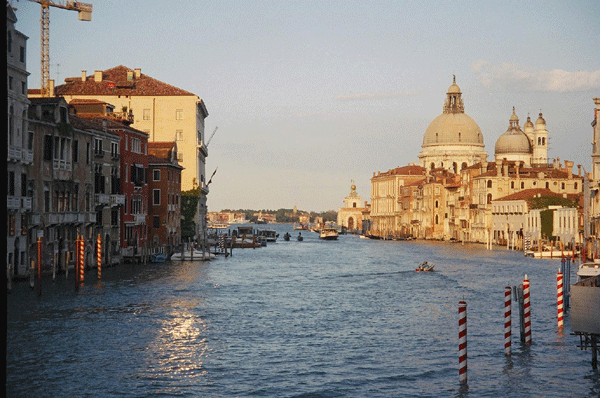
I was not there when artists such as Titian, Tintoretto, Veronese, or the Doges such as Enrico Dandolo or Lorenzo Tiepolo, lived there. I was not there when Gregory Peck and Audrey Hepburn romanced there in Roman Holiday, nor was I there when Daniel Craig ran around looking for Eva Green in Casino Royale. I was not there when the Romeos and Juliets from Bollywood like Ranbir Kapoor and Deepika Padukone of Bachna Ae Haseeno (2008) performed wiggles and shakes to rhythmic beats. I was not there last Wednesday November 21 to eat a bowl of “Castradina” soup made of smoked mutton and cabbage when it was served in restaurants around the Piazza to mark the celebration of the Festa della Salute in remembrance of the plague of early 16th century. But I was there when the pictures you see here were taken. I was there when the outdoor band played Laura Pausini’s La Solitudine and Luciano Pavarotti’s version of O sole mio ushered in sadness into my heart. And I wish to be there many more times….. for my children to be there with their children and so on…..
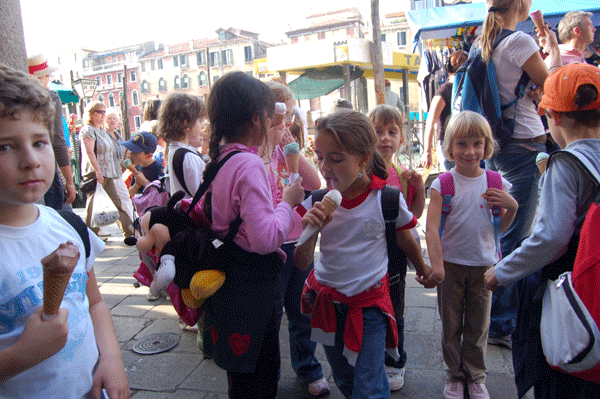

On November 1, I wrote about Castelo de São Jorge in Lisbon which miraculously withstood destruction from devastating earthquakes that destroyed the city around it. Proving how wonderful citizens of this world can be, Lisbon was rebuilt with great effort from generous handshakes of help that reached to it from all parts of the world. Here I draw your attention to another catastrophe that was waiting to happen about which all of us are well aware of and expert action is being taken by groups like Consorzio Venezia Nuova to protect historic Venezia. What is important here, compared to Lisbon, is that in the case of Venezia, there will not be any land to rebuild it. Some of the columns and doorways once on ground level are already submerged. Experts have located few older pavements beneath the present pavement of the Piazza.
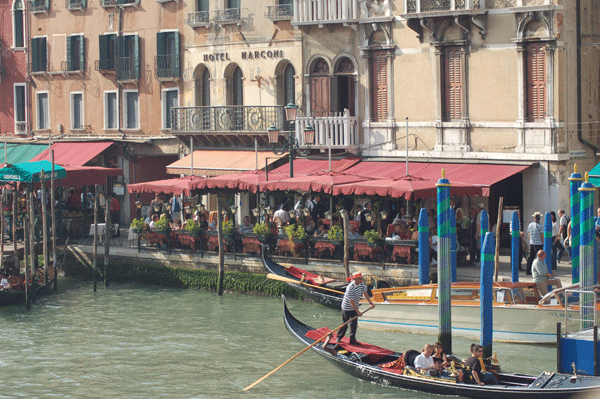

Venezia is not neglected since works that have been going on for some years to fix moveable barriers that would rise from the sea and protect Venezia from high tides is expected to be operational by 2014. However, taking into account the research report of the Scripps Institution of Oceanography of University of California, San Diego that the city is sinking at a rate of 2mm a year, our help should not require a necessary pre-condition: disaster! Symbolically speaking, a handful of sand from each one of this world could solve that….
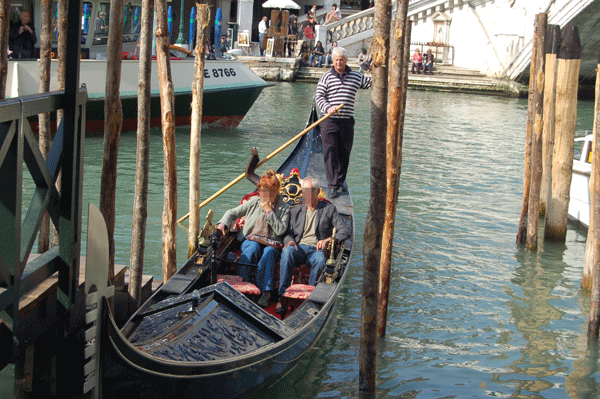
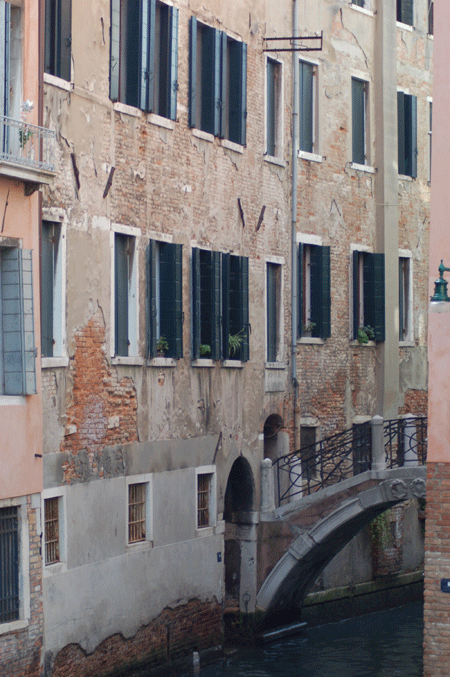
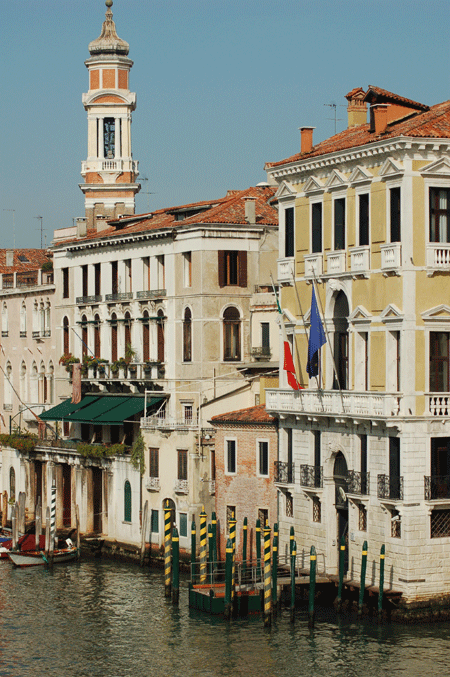
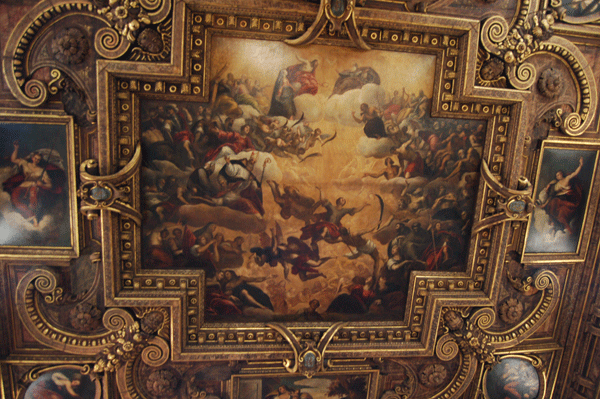
Venezia has given us hundreds of years of history and art. The Venezia that we love must exist for the future generations, too. As the Venetians say: “Com’ era, dov’ era” (as it was and where it was), We must all strive to find ways and means to save La Serenissima (the most serene) from her misery. That is our dream and I truly believe that dreams do come true – one day. Viva Venezia… Viva San Marco…. Till next time. Ciao, Jo
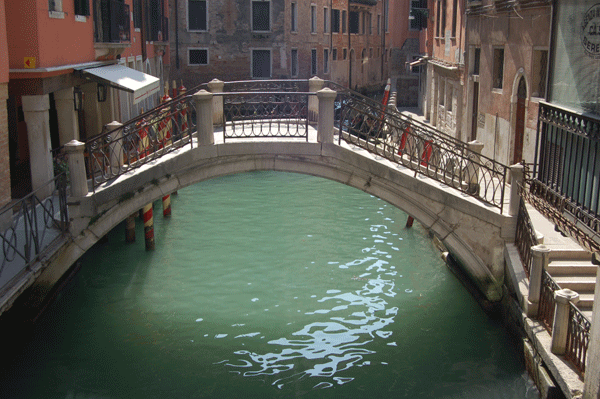
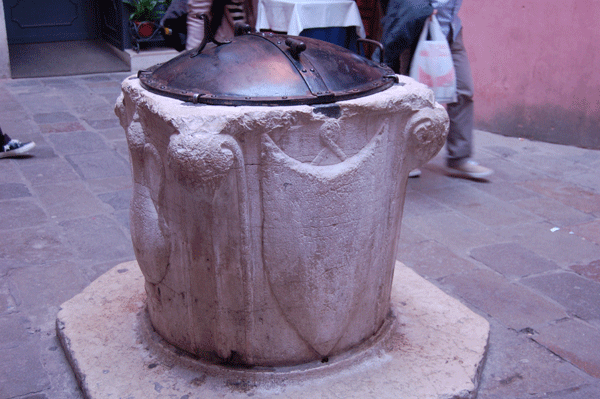
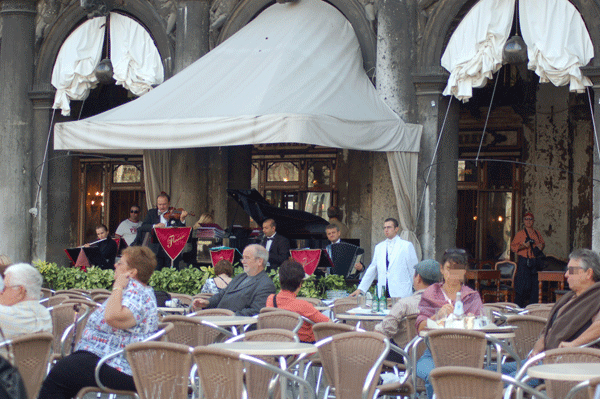
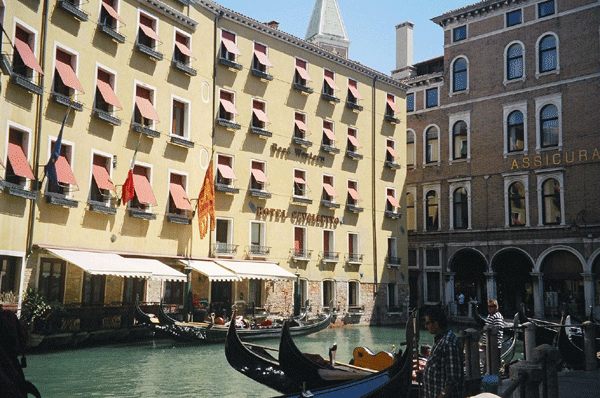



(All Photos: © JS-CS-Bianca Celine Diane-Andrea Lalis Sebastine/Manningtree Archive.)
(Paintings of: “San Marco” by Jusepe Leonardo (1601-53); “Procession in Piazza San Marco” (1496- aka: Procession of the True Cross in Piazza San Marco) by Gentile Bellini (c. 1429-1507); and “Piazza San Marco with the Basilica” and “Piazza San Marco in Venice” by Giovanni Antonio Canal (il Canaletto – 1697-1768) – Wikipedia – Public domain)
Many Thanks

My “Thanksgiving” has wings and it goes to all my 105 friends and followers, “Commentators” including those who “Like” my postings in: “Manningtreearchive”. Your support means a lot to me and I love you all. Many thanks. Jo
StarChoice 15: Adventures of Don Juan
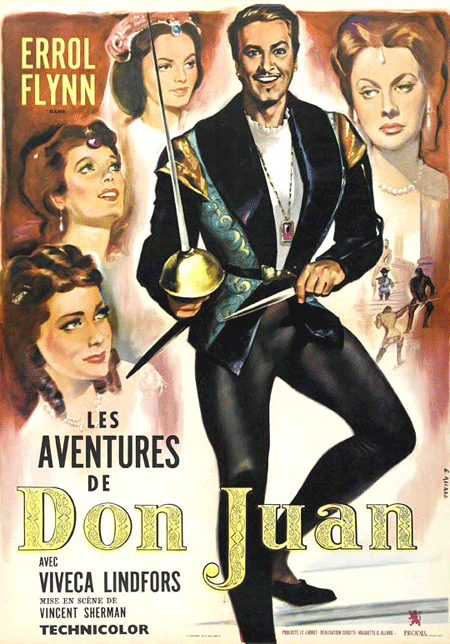
(Aka: “The New Adventures of Don Juan”, “El Burlador de Castilla”, “La Avventure di Don Giovanni”, “Die Liebesabenteuer des Don Juan”, “Les Aventures de Don Juan” – Technicolor – December 24, 1948)
Back in 1944, Samuel Goldwyn productions released a romantic comedy titled “The Princess and the Pirate”, starring Bob Hope and Virginia Mayo which told the story of a distressed princess who travelled incognito on the high seas and was rescued by the most unlikely of the knights. The production of this swashbuckler was made with utmost secrecy to protect its ending which naturally caught the curiosity of certain studio heads in Hollywood.

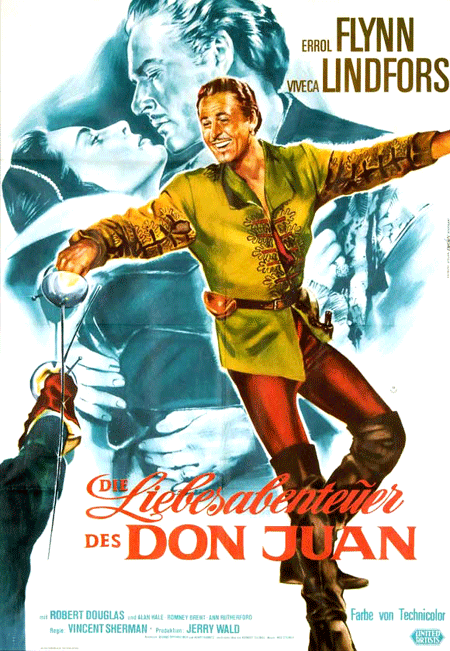
At that time, the situation was ripe for a diversion from war movies which the audiences were getting tired of since the middle of 1943. Taking into account the major interest of the audience in the glitz and glamour of the movies of historical-romantic fiction set during 17th & 18th century, Jack (Jacob) Warner, the president of Warner Brothers Studios, decided to bring in some power of his own to such movies by casting Errol Flynn in a big-budget swashbuckler film he had kept in the wings for some time.
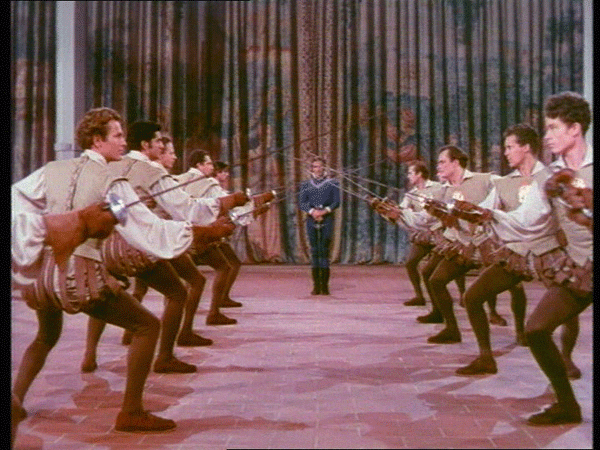
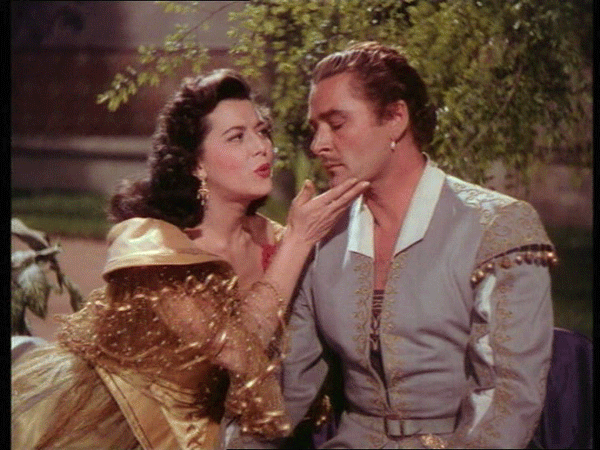
Back in 1926, Warner Brothers had made a silent version of Don Juan with legendry actor John Barrymore in the lead. Jack Warner had noted the parallels that connected the character of Don Juan de Maraña with John Barrymore and his fellow-drunk Errol Flynn whom Warner Brothers had initially employed at their Teddington studio. Warner draw up an action-filled script centered on the romantic exploits of Don Juan with Flynn as the title character. However, this version does not in anyway correlate to the drama, literature, poetry, or music of the Don Juan legend portrayed in earlier presentations. As an alternative to the youthful, morally righteous hero, the new Don Juan will be a distinct ladies’ man who would cut a dash on a horse and wield a sword even though he would be a tad more jaded and fickle.
 The studio immediately swung into action and roped in director Raoul Walsh to start shooting in May, 1945, nearly four months prior to the end of World War II on September 2. The shooting dates were set up since few sets were already prepared. Then everything went topsy-turvy. An industry-wide strike of studio set designers that broke out in March, 1945 paved way to a bloody riot in front of the main gates of Warner Brothers studios in California on October 5, 1945 (known as Hollywood Black Friday). Although the strike came to an end one month later, it soon brewed up into another strike which lasted some 13 months before matters were somewhat sorted out. Several attempts by the studio to reorganize the cancelled dates of the project (initially with non-strikers/replacement workers) in the next two and a half years were met with failure.
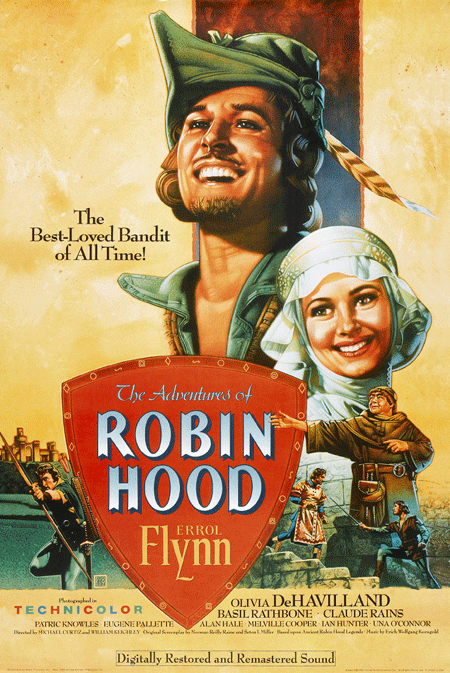 Being the period following the end of the war when the box office receipts were slumped, in order to make the production economical, producer Jerry Wald (1911-1962) started taking steps to revise and embellish the script (based on the original story by Herbert (Addison) Dalmas (1902-1989)), with the help of a series of writers, including “Max Brand” (aka: Frederick Faust) and William Faulkner. Aside from the use of props and scenes from “The Adventures of Robin Hood” and “The Private Lives of Elizabeth and Essex”, a sequence relating to a great ball was definitely removed from the final screenplay that would be at last credited to screenwriters George Oppenheimer (1900-1977) and Harry Kurnitz (1907-1968). Some people in the field of film-making have an innate ability to turn screenplays into star-studded blockbusters.
 Director Vincent Sherman and George Oppenheimer were two of them. Oppenheimer who was the co-founder of the Viking Press, was often used to improve the scripts of others.
In 1948, “Adventures of Casanova” produced by Bryan Foy who had long association with Warner Brothers came out to good reviews. Starring Mexican actor Arturo de Cordova, this swashbuckler devoid of historical accuracy, was packed with first-rate swordplay about an 18th-century Casanova returning to Palermo, Sicily to help overthrow the tyrannical rule of the king of Naples. This is the first movie that was shown on WCBS-TV’s Channel 2 which would become the legendry late-night movie channel “The Late Show” in 1951. The film would act as a suitable precursor for Warner Brothers-First National Picture’s new Errol Flynn vehicle.
 “Adventures of Don Juan”, does not follow the basic storyline of a great lover’s entanglements with the Italian Borgia family, as featured in John Barrymore’s version. On the contrary, Flynn’s Don Juan de Maraña, living in 17th century Spain, is concerned with spoiling the dastardly schemes of the lovely Queen Margaret’s first minister, Duke of Lorca and wooing her.
Synopsis: Outskirts of London. The night had fallen now. We see a dark figure stealthily climbing a tree which was leaning towards the balcony of a villa. We can see a beautiful young lady anxiously looking down at the figure lifting himself up through the branches to keep up the secret rendezvous with her. The narrator had already started to explain the state of affairs of the period:
 “In Europe, as the 17th century dawned, mankind was lifting itself from ignorance and superstition. The old frontiers of the mind were rolling back. New books, new methods were aiding man in his time taught knowledge and wisdom. In the laboratory, in the arts, in every field of endeavour, man was lifting himself, hand over hand, climbing onward, ever upward. And on the outskirts of London, on a summer night, another man was lifting himself, hand over hand, climbing upward, ever onward toward his objective” – Count d’Orsini’s wife, Catherine.

Having climbed onto the balcony and into the arms of robust, rosy-cheeked Catherine, she demands to know what took him so long. Don Juan explained that no power on earth would have kept him away from her. In this entire world there has been only one image in his heart, one vision for his eyes. He had loved her since the beginning of time. Now Catherine was confused: She had only met him yesterday! Don Juan was ready for that: Yes, yesterday was when time began. After they surfaced from a kiss rooted in flowering passion, he tenderly assured her that he is hers alone – 101%. Yet Catherine could not believe him – he has made love to countless women. Once again his smile flashed. “Catherine, an artist may paint a thousand canvases before achieving one work of art. Would you deny your love the same practice?” He had apparently developed some wonderful poetic skills. When Catherine implored him to let her know how long he will love her, he decided to release her from her emotional chains. “Sweet lady, love is not measured in terms of time, but only in ecstasy.”
 Don Juan found some ground for solace when she told him that even though she is married, she is unattached to her husband, Cecil, who is now on a hunting trip to satisfy his extreme fondness for grouse. Inside the privacy of her bedroom, their amorous exploits were abruptly cut short by the arrival of Catherine’s elderly husband. Vanity is fair in love and hate. Her wrathful husband promptly challenged Don Juan to a valiant duel of swords which Cecil was inevitably set to loose. Disappointments have taught Don Juan to be realistic. Don Juan de Maraña took the trouble to advise Cecil that he should be ashamed of himself to leave a beautiful young woman alone neglected while he indulged in his selfish pleasures – grouse hunting! When did he last tell her that she is beautiful? The man appeared to have a mental block when it comes to admitting he is wrong. Cecil should remind her of her beauty every day of her life. Write poetry, send her flowers (to which Catherine added: “and jewelry”) When he put her back into her lovely mood, she is such an exquisite delight. No argument there.
Though Don Juan departed from the balcony with a carefree smile, he and his faithful servant Leporello, were given chase by the guards of Count d’Orsini. On the road, they came across a cavalry of Queen Elizabeth of England who were waiting for the Duke of Cordoba to arrive by dawn to escort him along the road to London. Having been taken for the Duke of Cordoba, Don Juan and Leporello were accorded royal escort to London and to his bride.
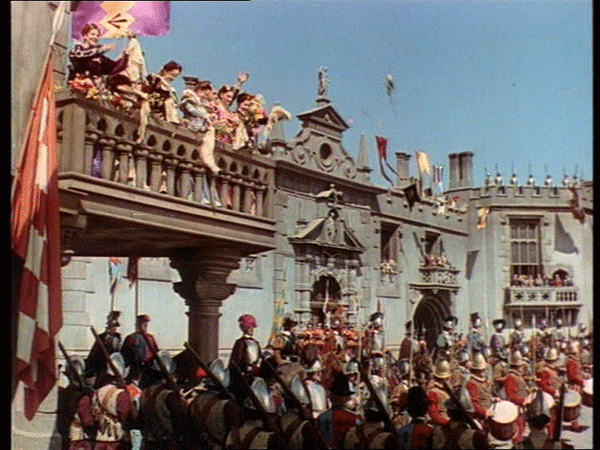

They were led in a pageant parade through the streets of London town teeming with its populous. Though Lady Diana was reluctant to her betrothal to the Duke of Cordoba which ensured a new cycle of prosperity for England, having found the imposter to be Don Juan, she was over the moon that he had found her again.


She edgily poked his mind to remember of their secret tryst four months ago at the garden of a Countess in Paris. How could he forget those pleasantries and pleasures? As she bolted the door, a thin smile flickered on her lips, and there was a malicious glitter in her eyes. This time she will not let him forget her. It didn’t take much longer for the paramours to drift into a kiss which was broken by the arrival of the real Duke of Cordoba. Though Don Juan and Leporello were immediately imprisoned, they were soon paroled to the custody of His Excellency Count de Polan, the Ambassador of Spain.

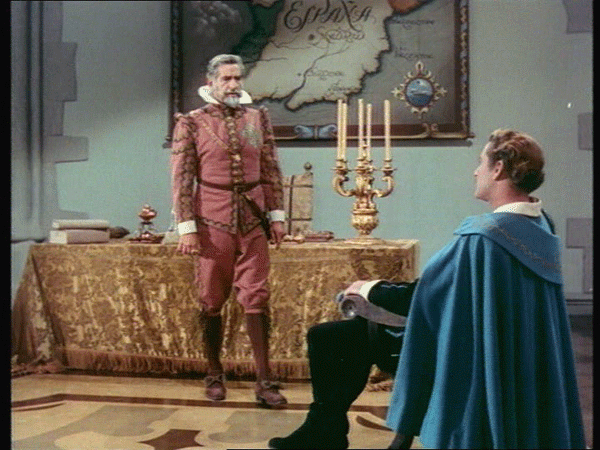
With his release from the English jail, Don Juan seemed headed for the Spanish prison since having returned to Madrid, the Duke of Cordoba had complained to the weak and feckless King Felipe III and Queen Margaret of Spain about the series of amatory escapades of Don Juan de Maraña who had damaged the prestige of Spain and messed up the marriage of convenience shaped expressly for the purpose of peace between Spain and England. There is a fair chance of hanging. Count de Polan, who is a friend of Don Juan’s father, told him to leave London and return to Madrid to present himself before the Spanish Court for Her Majesty’s judgment.
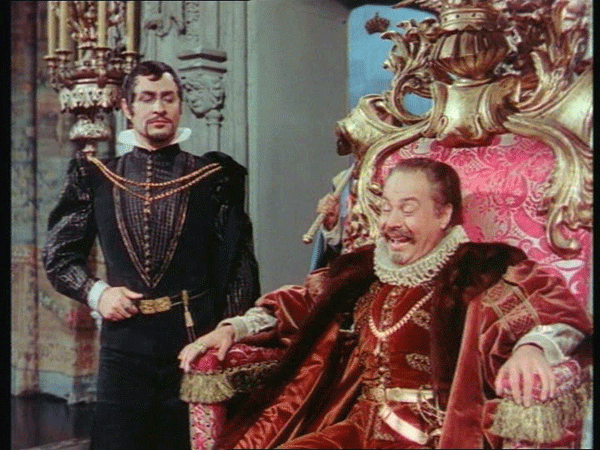

The Count had written to the Queen urging that she deal gently with Don Juan. Though Don Juan claimed he knew nothing of matters such as court intrigue, the ambassador had maintained that he devote his time to help the heartbroken Queen to attain peace in her country ruled by the subservient sovereign King Felipe III under the influence of his first minister, who has been plaguing her of late. His loyalty to the Queen would help her to face the cunning Duke of Lorca who is hatching a ruthless plot to elevate himself as a power behind the throne. Don Juan and Leporello rode across the midlands into the city of Madrid….and so the future began….
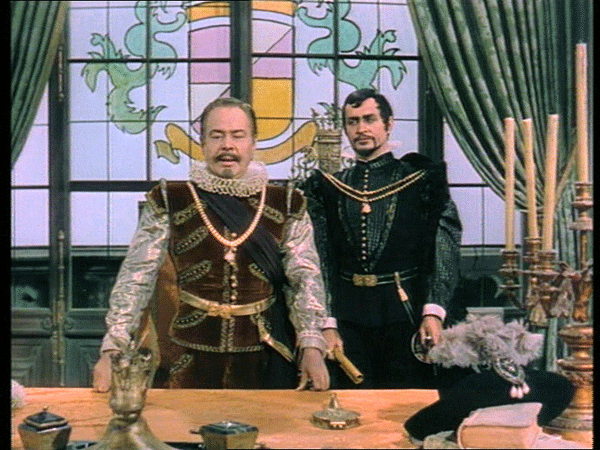

The shooting of ”Adventures of Don Juan” started in October, 1947 under Vincent (Vince) Sherman (born Abram Orovitz – 1906-2006), a former American stage actor who joined with Warner Brothers in 1938 where he was assigned to their B-picture unit. Sherman who had associated with chubby dynamo Jerry Wald since “All Through the Night” (1941), had launched his directorial career with the horror movie “The Return of Doctor X” (1939). Owing to his experience in numerous Theatre Guild productions on Broadway, reworking of scripts and finally directing movies, Vince Sherman became an expert in film making: in its continuity and cutting and progression. He made films relishing in the love and devotion of his wife Hedda Comorau who turned a blind eye to, according to IMDB, his occasional romantic flings with actresses Bette Davis, Joan Crawford and later with Rita Hayworth. Being a good friend of Errol Flynn who was the big white hope of Warner Brothers, Sherman had no qualms when Flynn asked to direct him in ”Adventures of Don Juan” which he did with his customary efficiency.
 1944 was a period when the Tasmania born Errol Leslie Thomson Flynn was spawning lot of publicity from his off-screen feats, especially the foul smell derived from his rape trial of 1943. Flynn had been an English repertory theatre actor before obtaining a contract with Warner Brothers and would become rated as the best swashbuckler of the sound cinema – an image created with the help of director Michael Curtiz with whom he finally quarreled and split.
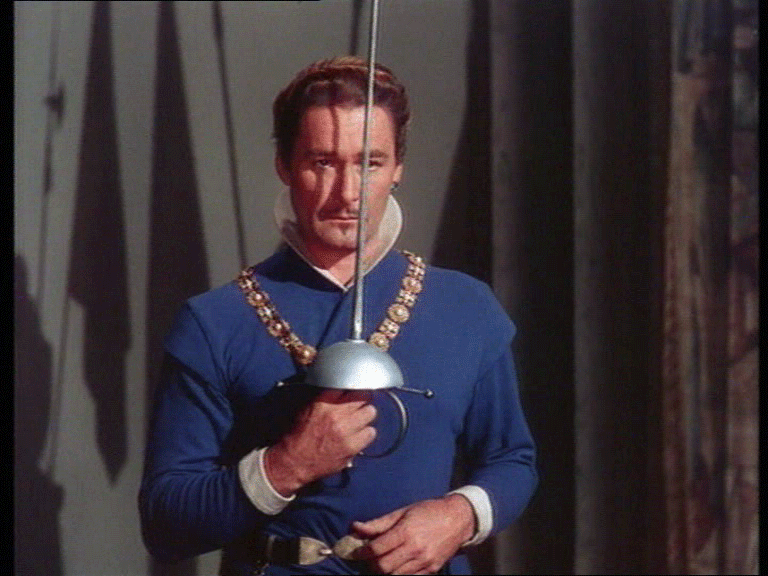
Keeping up with the image of the daringly gallant and dashing swashbuckler, Errol Flynn maintained an appetite for a delightful and hard life. He had his own dedicated group of drinkers and keeping him within the production schedule was one heck of a job for director Sherman and unit manager Frank Mattison. The “Singing Cowboy” Gene Autry once said, “(Flynn) spent more time on a bar stool, or in court, or in the headlines, or in bed, than anyone I knew.” He was once described by David Niven as “a magnificent specimen of the rampant male.” The frivolous, sardonic, and rather witty initial scenes of Don Juan wooing an enamoured Catherine and the inevitable encounter with her enraged husband is a spoof of the personality of Don Juan and of star Flynn himself.

While the burden to carry the film focused on the title character is loaded on the star performer; few weeks into the production, Flynn disappeared out of town for a few weeks, possibly for one of his major binges, leaving the artistic collaborators in the enterprise to shut the unit down and wait it out until he returned. When he finally positioned himself before the camera, he appeared sodden with alcohol which was consumed from mid-afternoon onwards, forbidding him from going on with a scene for long. This is despite Flynn’s famous trick of spending half hour in the steam room to get the booze off him. However, all this resulted in a good deal of additional set ups, retakes, editing rhythms and extra time though Sherman once said that this happened only once.
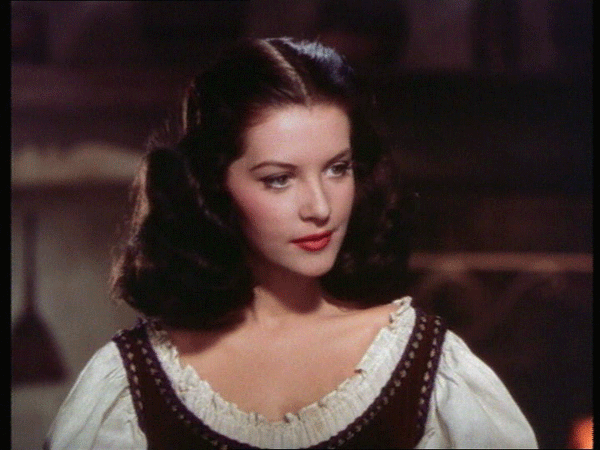
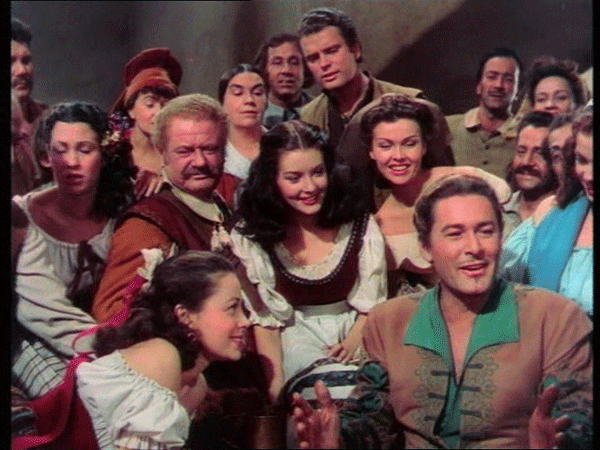
Despite the studio’s endeavor to wink at Flynn’s age, there was some concern about the roughened state of his face from his hard living. In spite that Flynn sometimes failed to generate the excitement of the performance of Douglas Fairbanks or Burt Lancaster, I think he had great personal style and that the flamboyant Flynn’s physic was tailor-made for the swashbuckling roles. Being a great natural athlete, it was Flynn’s lighter-than-air agility, light-hearted seriousness, a degree of grace and style, and pure English-speaking voice which turned out “Adventures of Don Juan” to be a good film.

The role of Spanish Queen Margaret was portrayed by the Uppsala born 28-year old Swedish actress Viveca Lindfors (Elsa Viveca Torstensdotter Lindfors – 1920-95). Before she was imported to Hollywood by Warner Brothers in 1946, she was appearing on stage and in films having been trained at The Royal Dramatic Theatre School in Stockholm like her fellow Swedish actresses Greta Garbo, Signe Hasso, Mai Zetterling and Ingrid Bergman.
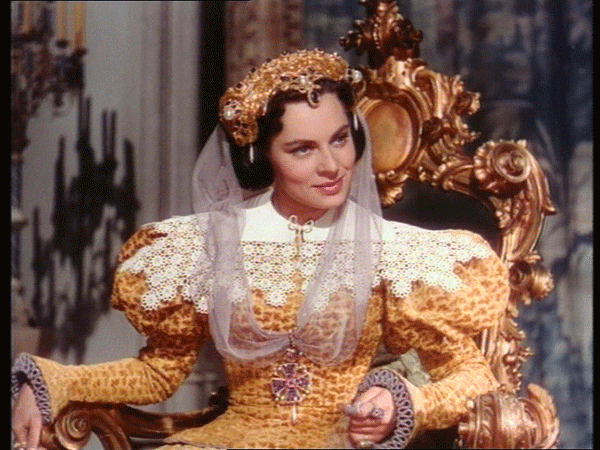
Queen Margaret would be Lindfors’ first appearance in a Warner/Hollywood movie. I have a strong feeling that the appearance and mannerism of Lindfors in the role of Queen Margaret had influenced in formulating Sophia Loren’s character of Doña Jimena in “El Cid”
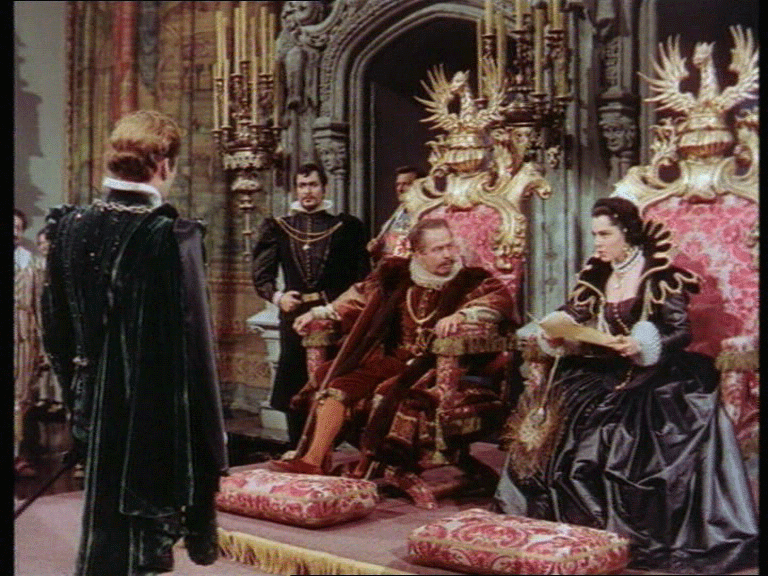
The role of the subservient King Felipe III is played by Romney Brent (1902-76), the dapper Mexican actor/director also known as Romulo Larralde.
 Buckinghamshire born stage actor Robert Douglas (Robert Douglas Finlayson – 1909-99) was a student of the Royal Academy of Dramatic Art and appeared on British stages before he moved to Hollywood after the war and specialized in roles of suave and arrogant villains. Douglas stars as the king’s illusory minister, the Duke de Lorca who had his heels on the king’s neck. This role was originally meant for Claude Rains and later for George Coulouris. Well versed in swordplay, Douglas had studio experience in having dueled with the likes of Stewart Granger, Robert Taylor, Burt Lancaster, etc. Douglas’ stylish daredevil duel with Flynn on the grand staircase in the king’s palace, though at times not totally fair, has by now attained cult status.
 Burly Alan Hale Sr. (Rufus Edward MacKahan – 1892-1950) was a cheerful actor who played heroes in silent action films and similar to his role of Leporello, was often cast as a jovial sidekick of Errol Flynn. Having acted in period films such as “The Last Days of Pompeii”, “The Man in the Iron Mask”, “The Sea Hawk”, his career would see him acting as Little John in three movies, viz., “Robin Hood”, “The Adventures of Robin Hood” and in “Rogues of Sherwood Forest”. Interestingly, innovations such as the folding theatre-seats and hand fire extinguisher are credited to him.
 The lady in the coach at the end of the movie is played by none other than Nora Eddington (1924-2001), the second wife of Errol Flynn whom the nineteen year old Nora had met in 1943 while working at the courthouse where Flynn was undergoing trial for statutory rape from which he was acquitted. Unfortunately the couple who married in 1944 at Mexico will be divorced in 1949.
The former child stage star/leading lady Ann Rutherford (Donna Elena), character actor Robert Warwick (aka: Robert Taylor Bien – Count de Polan), British actor Aubrey Mather
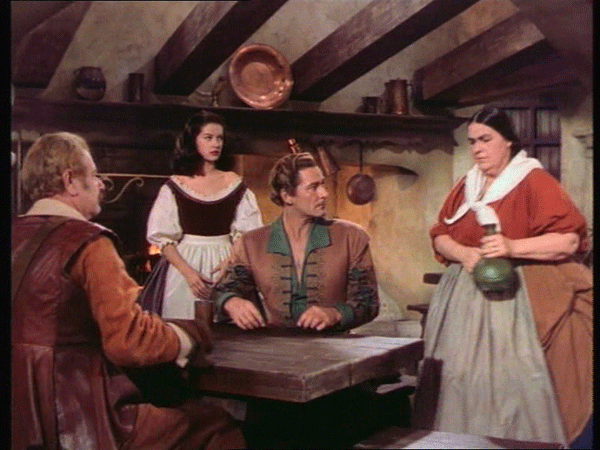

(Lord Chalmers), former child actress Helen Westcott (aka: Myrthas Helen Hickman – Lady Diana), dwarf actor Jerry Austin (Don Sebastian), Douglas Kennedy (aka: Keith Douglas – Don Rodrigo), Jeanne Shepard (Donna Carlotta), Mary Stuart (Catherine), G.P. Huntley, Jr. (Count d’Orsini), Spanish Opera singer Fortunio Bonanova (Don Serafino), Irish character actress Una O’Connor (Duenna), heavily-built Canadian actor Raymond Burr (Captain Alvarez), etc rounded off the supporting cast.


The film features impressive photography by English Cinematographer/actor Elwood (Bailey) Bredell Sr. (1902-1969), a former lab technician who would, while working with Universal Studios during the period 1937-46, reveal his cinematographic skills in films of genre: thrillers and film noir. Bredell’s chance to picture big-budget movies came after his shift to Warner Brothers in 1947, when his sumptuous visual style attained a new dimension in filming that resulted in richly textured images which embellished movies such as “Adventures of Don Juan”, “Female Jungle”, and “Journey into Light”, the latter of which also offered him occasion to work with Viveca Lindfors once again. For “Adventures of Don Juan”, Bredell and his team not only took care of the artistically and dramatically expressive angles, but generated a mixture of shadows and diffused lighting that would provide a memorable atmosphere of sinister visions to the frames.
 The film is edited by Alan Crosland, Jr. (1918-2001), the son of Alan Crosland who directed “Don Juan”, the 1926 silent film of Warner Brothers starring John Barrymore. Crosland. Jr’s expert editing patterns can be noted in the brisk pace as the duel heightens, as well as in the smooth flow of scenes he had put together from the asymmetrical frames occasioned by disruptive filming.
Though the location filming was done in West Hills, Providencia Ranch (Hollywood Hills) and Warner Ranch (Calabasas), the interiors were mostly shot in semi-Expressionist sets at Stages in Warner Brothers Studios in Burbank, California, under the direction of Art Director Edward Carrere and Set Decorator Lyle B. Reifsnider.


The specially constructed magnificent sets of the king’s palace and the grand staircase adds colour and dynamism to the expertly choreographed duel between the heroic Flynn and scoundrel Douglas which takes place to the splendour of Max Steiner’s rousing score. The initial scene at the balcony gives a richly coloured texture, the streets of 17th century London and Madrid, the entire palace including the dungeon were all arranged to provide a picture-book-look by providing due consideration to the minute details. Edward Carrere justly received an Academy Award for the Art Direction for this movie.

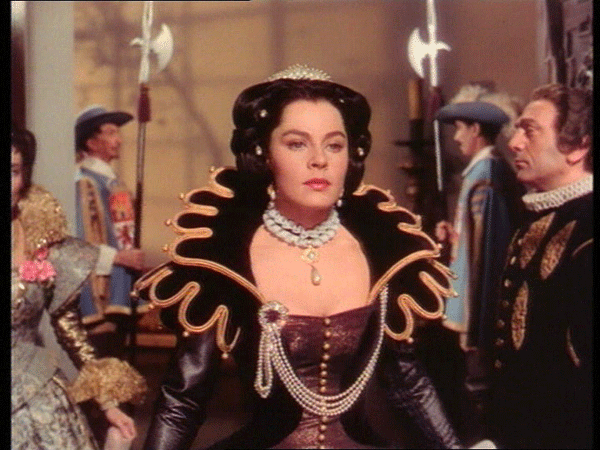
The characters were dressed up beautifully by Costume designers Leah Rhodes, Marjorie Best (uncredited) and William (Billy) Travilla. The costumes that express authenticity, especially of delectable Viveca Lindfors, are befittingly designed, the influence of which is evident in the costumes worn by Sophia Loren in “El Cid” and “The Fall of the Roman Empire”. The black band around Flynn’s head during the final scenes conjures up the flair and grace of Douglas Fairbanks. The film would win the Academy Award for Costume Design. Dress designer Billy Travilla (1920-90) was an employ of Columbia Pictures from 1941 to 43 before he was brought to Warner Brothers by actress Ann Sheridan, where his first work is for this movie. He would later become famous for his dresses designed for Marilyn Monroe one of which is the snow white ivory halterneck cocktail dress blowing in the breeze in Monroe’s “The Seven Year Itch”.
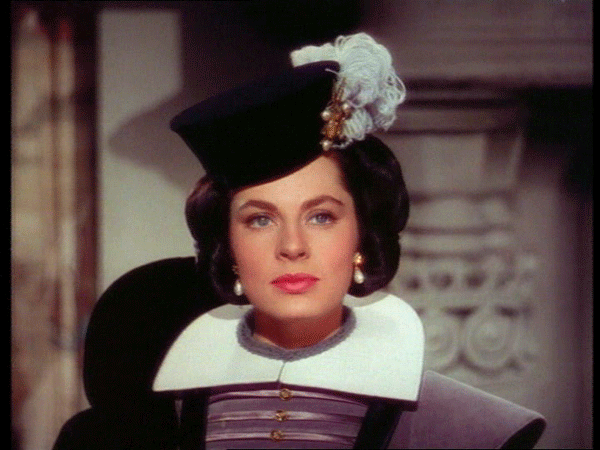
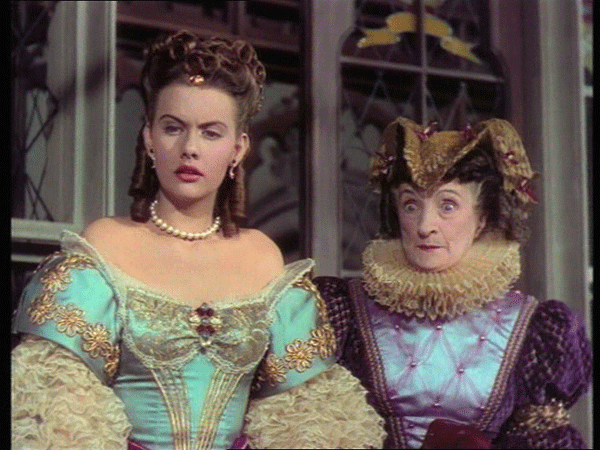
Perc Westmore who handled the make-up for this movie is the son of George Westmore, the head of the famous family of Hollywood make-up artists who had earned their reputation during a period when none of today’s popular creams like Diors’ “Capture Totale”, or Lancôme’s “Génifique” to name a few, were available.
 The enthralling dueling sequences were staged with a tongue-in-cheek approach by the team of Assistant Director Richard Mayberry, Fencing Master Fred Cavens and special-effects men William McGann and John Crouse blended together by maestro Sherman by casting doubles. The duel scenes in the dungeon, in the halls of the palace and on the grand staircase were aptly staged, even though Don Juan’s spectacular leap from the stairs during the duel was performed by Jock Mahoney (1919-89), the only stuntman who was willing to do that dangerous stunt and was paid S1,000 for it.


The film is laced with the romantic and richly melodious score of Austrian composer Max Steiner (Maximilian Raoul Walter Steiner – 1888-1971) with orchestrations by Murray Cutter. One of Hollywood’s most prolific film score writers, Steiner had provided music for “Gone With the Wind”, “Casablanca”, “The Treasure of the Sierra Madre”, “The Jazz Singer”, to name a few. It was Max Steiner who first came up with the potentiality of scoring films with original compositions, convincing the producers about the important role music can play in conveying the mood, character and pace of a film. Originally, fellow Austrian Erich Wolfgang Korngold (1897-1957) was assigned to score for “Adventures of Don Juan” but was reassigned to Steiner since Korngold had left Warner Brothers by the time the filming was wrapped up.

To provide score for an action film like this is a complicated art requiring tremendous skill in precision timing which Steiner has fulfilled by providing the most enjoyable accompaniment to the pageantry and stylish scenes of the movie.


To promote the movie, Warner Brothers even reissued “The Adventures of Robin Hood” and “The Sea Hawk” in America which performed very well in spite that they lacked Technicolor photography. Though “Adventures of Don Juan” did thriving business in Europe, it put up only a reasonable success in the U.S box office – a clear indication that Flynn’s golden days were not going to have resurgence and this expensive, but generally entertaining swashbuckler would be Flynn’s last big-budget extravaganza.
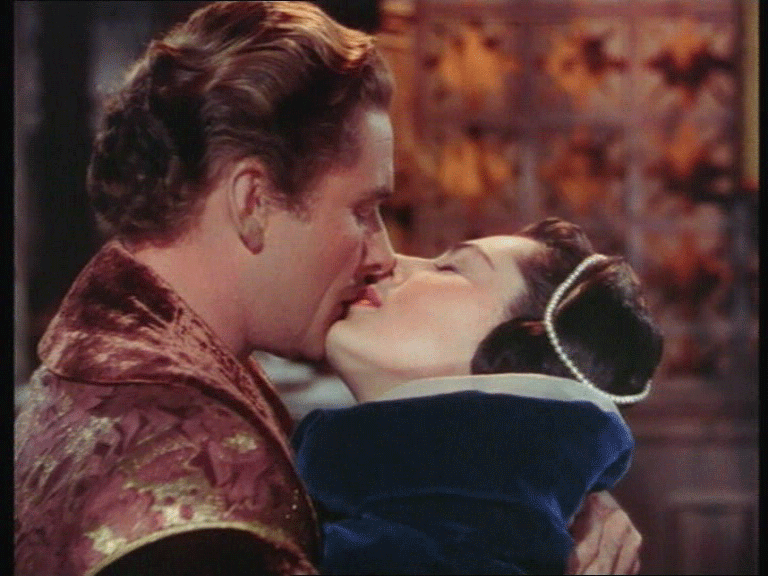 Every movie leaves something to the imagination. “Adventures of Don Juan” has a safe corner in the memory as a film created with the involvement of great talents who had impeccably crafted wonderful sets, high-end action scenes, colorful period costumes, a harmony of melodious, rousing score dominated by violins, trumpets, and drums – all that and more…
Take your pleasures where you can. The curious are urged not to miss it. Ciao, Jo.
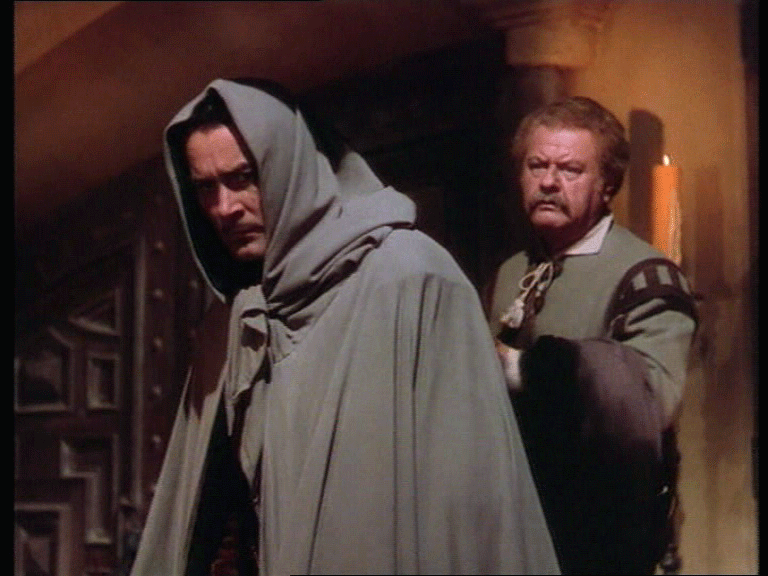
(PS: The DVD of this movie is available with main dealers such as amazon.com, TCM Shop, etc)
(Text: © JS/Manningtree Archive)
StarChoice 14: The Million Pound Note
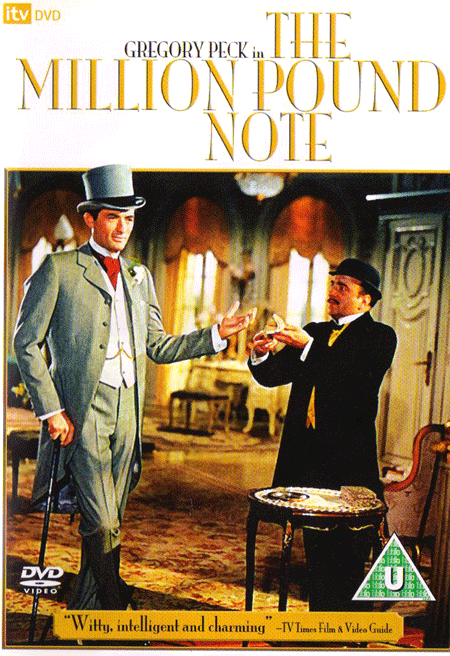 (Aka: “Man with A Million”, “Big Money”, “L’homme aux million”, “El millonario”, “Il forestiero”, “Sein größter Bluff” – Colour – 1954)
“A true Englishman doesn’t joke when he is talking about so serious a thing as a wager”, wrote Jules Verne in “Around the World in Eighty Days”. This brings to my mind the high-profile bet the Virgin boss, British billionaire Sir Richard Branson made with Tony Fernandes, the group chief executive of Air Asia. By way of passing, I also remember a wager struck up between a couple of my friends during their recent shopping spree at an upper-class boutique in Madrid, when they came across a middle-aged Indian lady admiring the bridal gowns par excellence by prestigious wedding dresses designers displayed there. As for the subject of their bet, one maintained that the lady is looking for a wedding gown for her daughter while the other one heldthat it is for herself. Mind you, as it turned out, none of them were right. The salesman known to them from previous visits later told them that while seeing her off at the door, he had courteously complemented her that he is sure the bridal gown she just purchased would be lovely for her daughter. Right away, she had given him a baffled look and retorted: “For my daughter?! This is for me to wear at a high society party back in Bombay!” That said, she walked out in a huff.

It is not hard to make a decision when you are firm in your belief as to its objective. Apparently, it is Victoria Beckham’s belief in her sense of style that earned her the Womenswear Designer of the Year award at the 2012 WGSN Global Fashion Awards. Quite similarly, the success in a wager is related to the belief in the standpoint of the bettor. However, to play safe from gamble, a better way to triple the money is to fold it thrice and stash it inside the wallet.
 Today I am writing about a wager set by two Englishmen which is the theme of British director Ronald Neame’s “The Million Pound Note”, a film which is rated in a guide as “Witty, intelligent and charming”. Assessing the four main elements of movie making – script, acting, cinematography and editing, I have no reason at all to disagree to this rating.
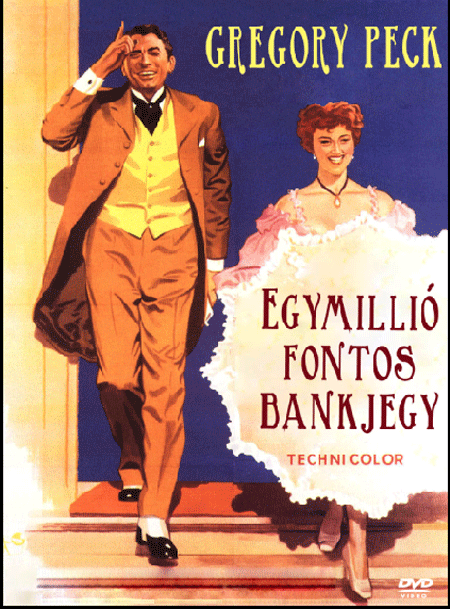 “The Million Pound Note” was released in the United Kingdom in January 1954. This Ronald Neame and John Bryan production was produced at Pinewood Studios in England in 1953 when the film industry and exhibitors were striving to curb the menace and progress of television against box office. It was during this year that 20th Century Fox released their initial CinemaScope film, “The Robe” and also when drive-in theatres sprang up across America. The year saw the release of “Bwana Devil”, the first film on Polaroid’s dual projector 3D system, the precursor to 3-D or three dimensional films. A string of high quality movies hit the screen during 1953: “Julius Caesar”, “Stalag 17”, “From Here to Eternity”, “Gentlemen Prefer Blondes”, and William Wyler’s “Roman Holiday”, catapulting its leading star Gregory Peck to greater heights.

The tall, principled and handsome Gregory Peck was 37 years old when he was cast in the role of Henry Adam which was perfected for him. It is a jolly good treat to watch Peck’s unpretentious seaman going through the experiences goaded by a million pound note as he gained wisdom from the fascination it created in the London society. Born Eldred Gregory Peck, he had attended Sanford Meisner’s Neighborhood Playhouse School of Theater in New York where performers like Grace Kelly, Geraldine Page, Steve McQueen, et al had attended, following which Peck performed on stage till the early 1940s. Actor Eli Wallach remembers him as “tall, slim, almost regal and very shy”, while his contemporary Karl Malden in his memoirs sums up Peck’s days as a stage actor as: “I knew right away that he was going to be a big star. He had a resonant voice and a winning, relaxed manner on stage.”
 Peck’s opportunity came when Hollywood was experiencing the absence of romantic leading men due to the war, debuting with 1944’s “Days of Glory”. Having become an instant star with “The Keys of the Kingdom”, Peck was rated as a downright decent leading man. He had worked with Hollywood legends such as Alfred Hitchcock, John Huston, William Wyler, Elia Kazan, etc, though some of his best films were under the direction of Henry King. His considerable charm had been put to effective use in comedies such as Stanley Donan’s “Arabesque” or Vincente Minelli’s “Designing Woman”, but Peck is least interesting when he is portraying straightforward integrity. Ever the gentleman, Peck was a “straight arrow, who took the job of acting seriously and analytically.” While acting, he maintained that anyone standing around in his eye line had to be moved off out of the way.
 Esteemed as one of the great screen actors with a string of outstanding performances in movies, Peck went on to win five Academy Award nominations and won the Best actor Oscar in 1963 for his performance as the courageous small-town lawyer Atticus Finch in “To Kill a Mocking Bird”. He was also awarded with the Jean Hersholt Humanitarian Award.
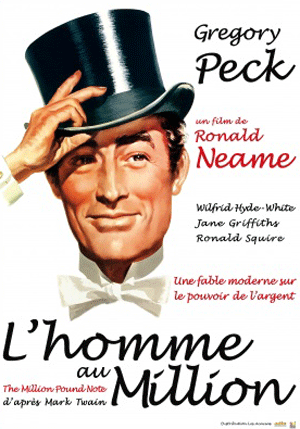 He would become the first actor-president of the Academy of Motion Picture Arts and Sciences for three years from 1967 to 1970, a period known for his efforts to rejuvenate the organization and its image by trying to bring in younger stars into its membership.
In 1953 when the pre-production work on “The Million Pound Note” was about to begin, Gregory Peck was in Italy acting in “Roman Holiday”. He was also going through a patch of despair due to separation from his Finnish wife Greta Kukkonen (née Eine Matilda Kukkonen), which was soon reversed when he fell in love with Paris-born journalist Veronique Passani, whom he met when she interviewed him for the French daily newspaper France Soir. Peck would marry her soon after his divorce from Kukkonen in 1955.
 “The Million Pound Note” starts with a display of the company logo of J Arthur Rank Organisation of a golden gong being struck by the gong man’s familiar slow-motion swing of arms. The man you see there is the English heavyweight boxer, Bombardier William “Billy” Thomas Wells, the first of Rank’s gong men. The credits are shown with melodious classical music with stirring effectiveness and snippets from instrumental version of the patriotic British song “Rule Britannia”.
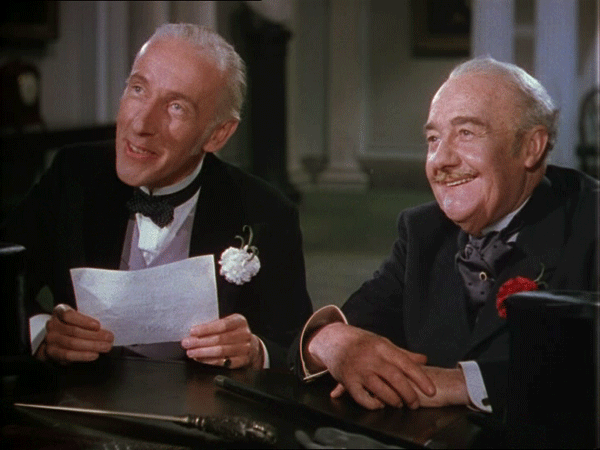
According to the narration at the beginning of the movie, the story starts at a time when Britain was very rich, and deep in the vaults of England there was more gold than anywhere else in the world. Safe, people used to say, safe as the Bank of England. In this time, there lived two elderly and superbly wealthy brothers named Oliver and Roderick Montpelier at their grand mansion at Belgrave Square. Being a bit oddball in nature, they entertained different opinions regarding people’s attitudes to the symbol of wealth. Having decided to play a wager to prove this, the brothers acquired a single currency note for a million pounds issued on June 20, 1903 by the Bank ofEngland.
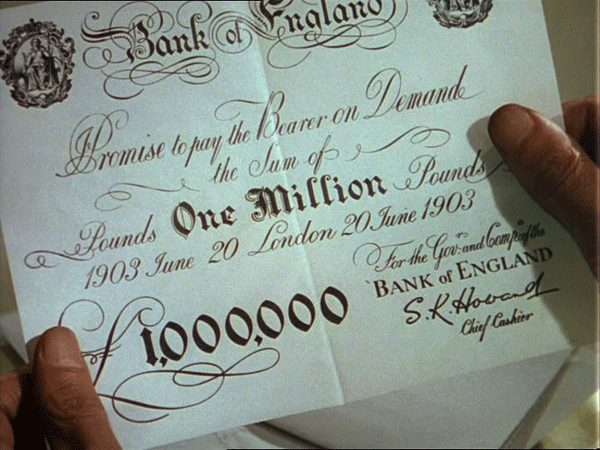
Oliver Montpelier thought that the note felt good and maintained that such is people’s attitudes to the symbol of wealth that by merely possessing this scrap of paper, without ever cashing it, you could have everything you wanted. On the contrary, Roderick found the note quite unique, an exquisite thing of beauty and believed that it would be quite useless if you were denied the right to cash it.
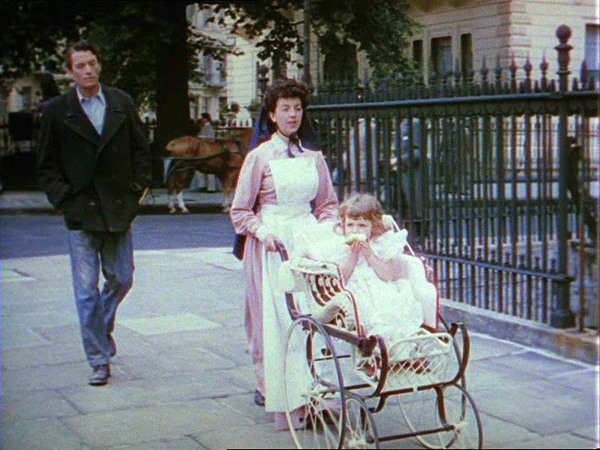
For now, we are introduced to the leading character of the movie, a penniless and friendless young seaman named Henry Adams from New England who was stranded in London. He was at his wit’s end for having failed in his efforts to find a job. As a last resort, he had even approached the Consulate of the United States of America where he encountered a display board which discouraged American citizens from approaching the Consulate for monetary help:
“This Consulate is not provided with funds by the U.S Government
for the assistance of needy Americans in London”

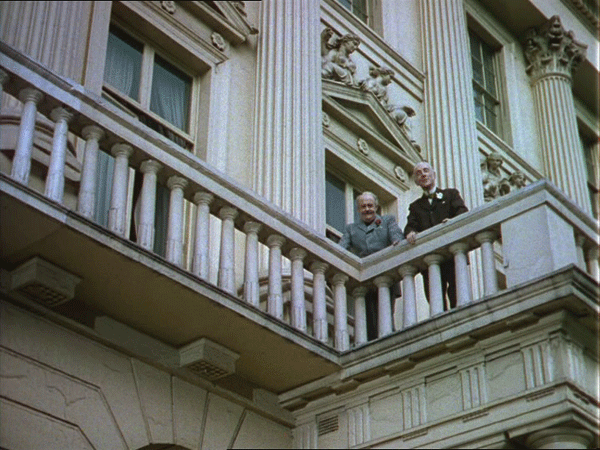
It was when he was trying to pick up a discarded pear from the pavement that he was invited by the two brothers to their mansion. Though Adam was expecting to find work from them, he was given a letter in a sealed envelope informing him that everything will be explained once he opened the envelope at two o’clock, exactly one hour and ten minutes from then.
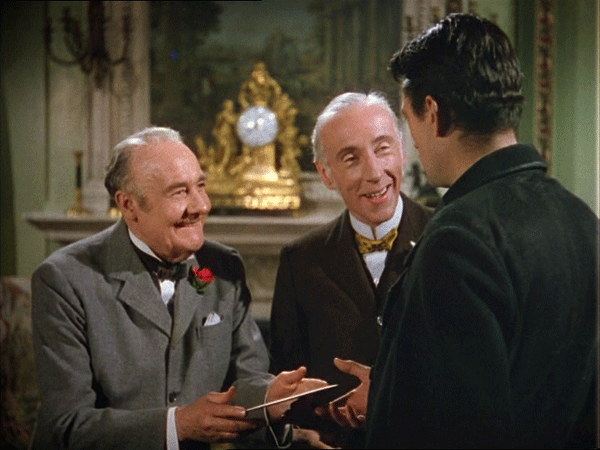
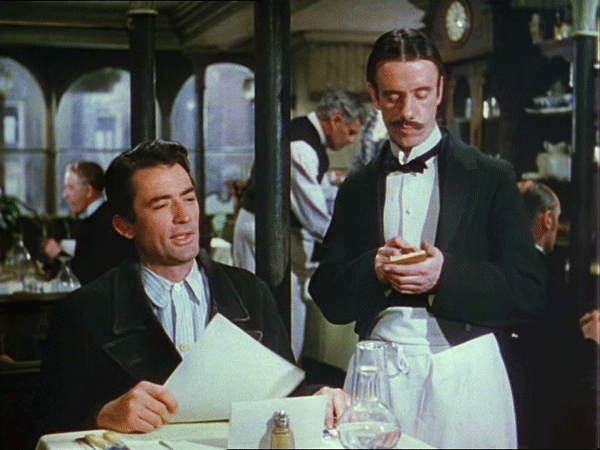
On the strength of the assumed fortune in the envelope, Adam went into a decent restaurant and ordered a wonderful, long over due meal which explains the bill:
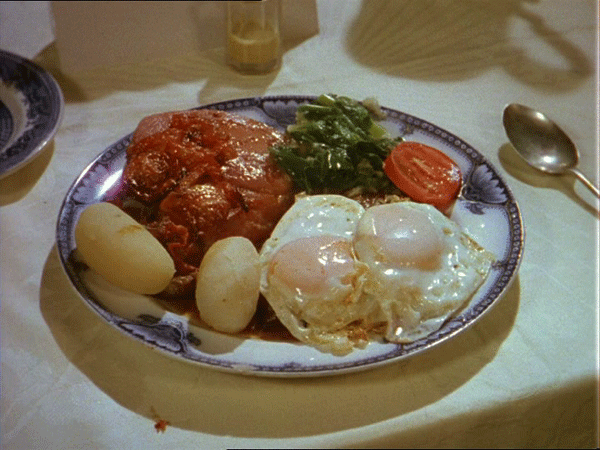
“Ham, eggs, steak, potatoes, beans, carrots, twice.
Trifle, cheese, coffee, two quarts of ale. Three and ten pence.”
On the threshold of being thrown out of the restaurant for non-payment of the bill, the envelope was opened to discover the note of the enormous value of One Million Pounds! The instant transformation in the attitude of all those around him owing to the gargantuan value of the note was evidently amusing.
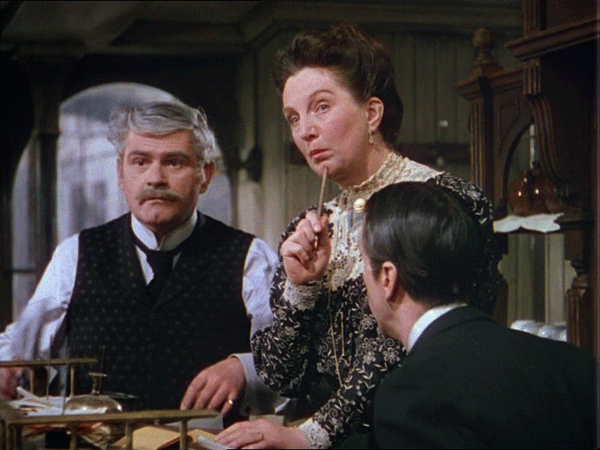

Taken for an eccentric millionaire, the red carpet was rolled out for him. He is most welcome to come in anytime he wanted, and to have whatever he wanted. As for his present bill, he doesn’t need to pay it – just forget it, it’s of no consequence at all.
Upon rushing back to the mansion of the brothers to return the note, Adam learned from James, the butler that the brothers were unavailable, having gone abroad for a month. At this point, sitting on the stairs to collect his thoughts, he learned from the letter in the envelope that:

As his mind brooded over the contents of the letter, the note accidently flew off his fingers, the retrieval of which creates a series of funny sequences. In a while, the note again does the grand-work for him at the tailoring shop of Jonathan Reid who, upon seeing the note, takes it as their pride and glory to see His Eminence properly attired for the season.
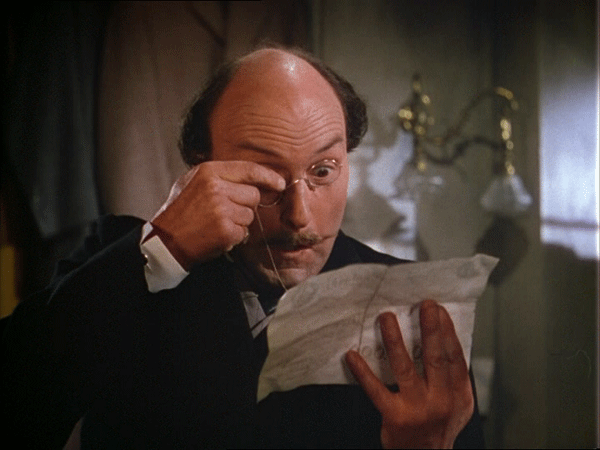
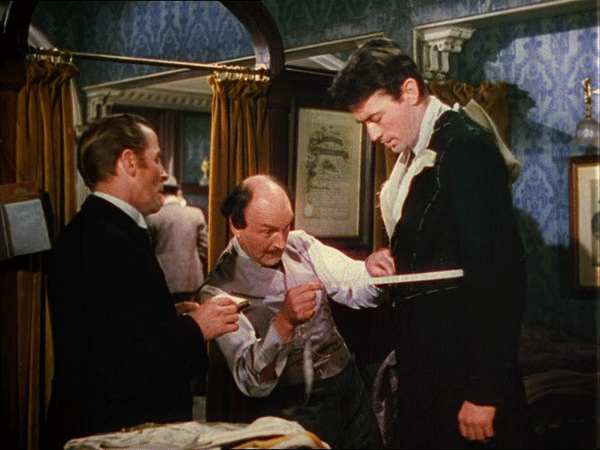
From here, Adam is referred to as an admiral of the seas to the prestigious Hotel Bumbles, the very place to stay – quiet, modest and discretion itself. Having gone through further complications on arrival at the hotel, and after a good deal of Yes-my-lord-ing and Very-good-my-lord-ing, Adam was elegantly accommodated in the Bridal Suite after the current occupant, the Duke of Frognal, was instantly chucked out.
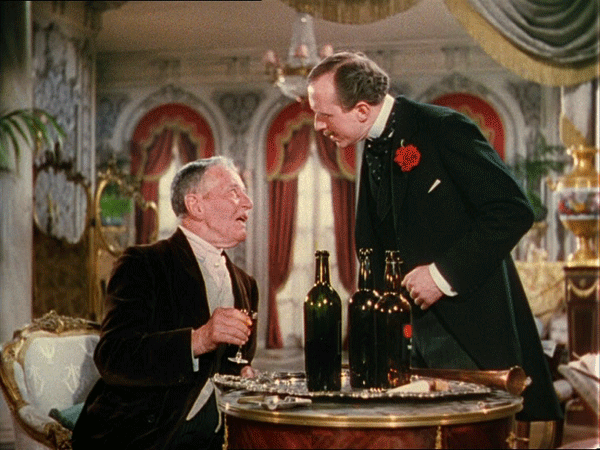
With his social status realigned, Adam started to move in exclusive social circles of the British aristocracy aided by the American Ambassador. This provided him with the opportunity to meet lovely Portia Lansdowne, niece of the toothy Duchess of Cromarty to whose reception at her Hampshire House he was invited to attend.

Some people will tell the world anything they know about everything. Maybe that’s not a bad thing. Given that the sugar-coated rumour mills started to roll about his mere acquaintance with Lord Lloyd Hastings, the shares of Hasting’s company shoot up – a rather happy moment at the Stock Exchange.
Whilst Adam was all set to soar and score, things unfortunately started to look pretty foul when the Duke of Frognal pulls a prank and hides the note with the help of Renie, the hotel chambermaid. It was a wake up call for Adam. As Adam started to scale down the heights he had climbed, it began to dawn on him that he would have to actually spend the money if he wishes to live like a Lord….
Produced by Ronald Neame and British production designer turned producer John Bryan, the film features an array of British crew and technicians though a good number of the casts are not credited. The screenplay founded on an updated version of a short story by Mark Twain called “The Million Pound Bank Note” is by expert British documentary director and writer (Noreen) Jill Craigie.
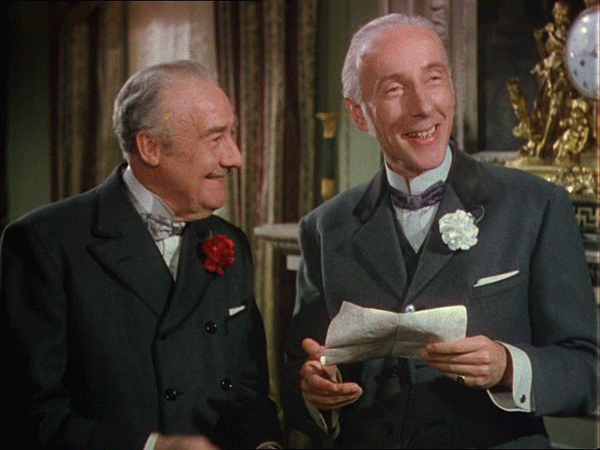 The characters of the two brothers being integral to the structure of the film are joyously portrayed by two brilliant British actors. Trained at the Royal Academy of Dramatic Art, jovial Ronald Squire from the Liverpool Repertory Theatre had acted in many light comedy roles before he appeared in the role of Oliver Montpelier. Wilfrid Hyde-White’s role as Roderick Montpelier, marks one of the various comedies he made before shifting to America in the 1960s. An impeccable character actor of stage and screen who had often acted opposite Sir Laurence Olivier and Vivien Leigh, and is best remembered for his role as Col. Hugh Pickering in George Cukor’s “My Fair Lady” (1964) in which he sets up a wager with Prof. Henry Higgins (Rex Harrison) challenging him to transform flower girl Eliza Doolittle (Audrey Hepburn) into a lady.
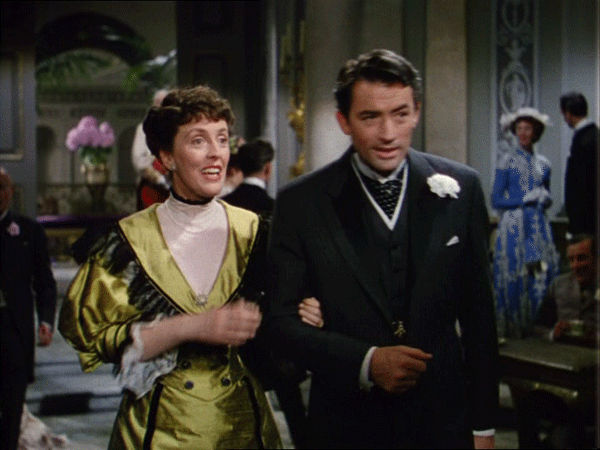 Joyce Grenfell (born Joyce Irene Phipps) who portrays the Duchess of Cromarty was initially a radio critic columnist who went on to debut on the London stage before she made entertaining the troops her principal work during World War II, a period which she described as “The Time of My Life”*. After the war Joyce, along with Viola Tunnard, her accompanist who was a gifted musician and able pianist, went for one more tour to “Re-Joyce” the troops, starting at Benghazi in December 1952 and finishing off in Malta by January 1953. Following this, she acted in a movie called “Genevieve” before her appearance in “The Million Pound Note”, which her mother approved since she was appalled of the number of unattractive characters her daughter played in films.
 A.E. (Matty) Matthews in the role of the hard hit Duke of Frognal who repeats his title as a form of bragging about his “wealth” but is a lot poorer is perfectly cast. Matthews is popular for a crack he once made, “I always wait for “The Times” each morning. I look at the obituary column, and if I’m not in it, I go to work”. The film also stars Wilbur Evans (American Ambassador), Jane (Mary) Griffiths (Portia Lansdowne), bald-headed American actor Hartley Power (Lord Lloyd Hastings), Maurice Denham (Jonathan Reid), Reginald Beckwith (Rock), Brian Oulton (Lloyd), John Slater (Parsons), Hugh Wakefield (in his last role, Duke of Cromarty), Bryan Forbes (Todd), George Devine (Chop house/Restaurant proprietor), Hugh Griffith (Potter), etc.
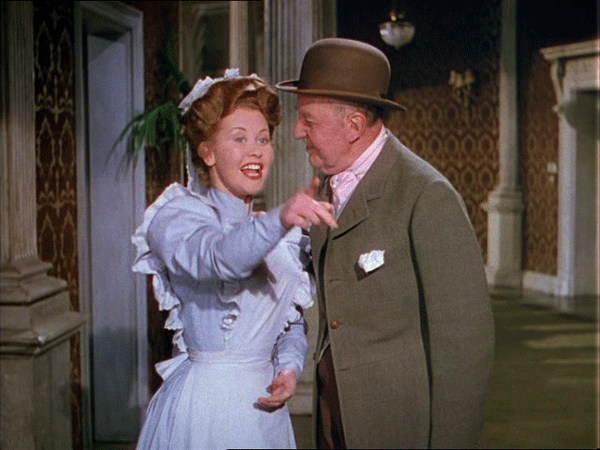
The music is provided by prolific post-Romantic English composer William Alwyn and conducted by the Scottish conductor/composer (James) Muir Mathieson. Once a professor (from 1926 to 1955) at the Royal Academy of Music in London, Alwyn had progressed from scores for World War II documentary films for the British Ministry of Information to scores for feature movies such as “Svengali”, “Zarak”, “Swiss Family Robinson”, etc. He has decorated the movie with classic symphonies; music that is both melodic and eminently accessible. At times, his tunes are both subtle and profound, dominated by violin notes, atmospheric waltzes, snippets from popular British music and he even used bits from the Yankee Doodle.
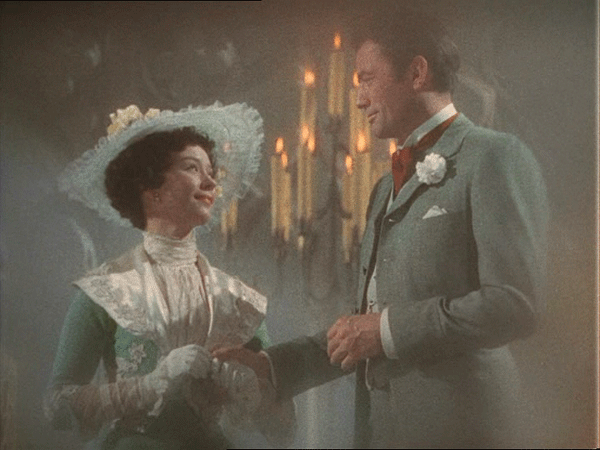

One of the greatest of British cinematographers, Geoffrey Unsworth is a recipient of an OBE (Officer of the Order of the British Empire), and winner of two Oscars, among others. Unsworth has done a wonderful workmanlike job here, assisted by camera operator Jim Bawden. With a long string of superb films behind him, among them “A Night to Remember” (1958), “Cabaret” (1972), “Superman” (1978), etc, he died of a heart attack at the age of 64 on the set of Roman Polanski’s “Tess” (1979).
 Production designer Jack Maxsted (“The Adventurers”, “Diamonds are Forever”, etc) together with John (Allan Hyatt) Box did the Art Direction for the film. Though Box’s career got an upshot with David Lean’s “Lawrence of Arabia” (1962), he was known for recreating exotic locations in unlikely places. He had effectively constructed Chinese city walls in Wales for “The Inn of the Sixth Happiness” (1958) when the unit was denied permission to shoot in China. When a Russian country house in snowy landscape had to be replicated in Spain for “Doctor Zhivago” (1965), he would accomplish that by using white plastic sheets and marble dust. (For references on John Box and William Alwyn, you may read my review of August 23: “StarChoice 9: Zarak”)
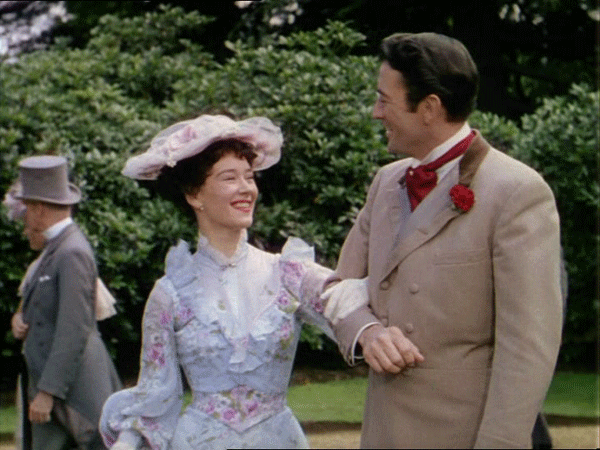 The Costume design is by Margaret Furse, the Academy Award Winner for Best Costume for “Anne of the Thousand Days” who also did costumes for “Oliver Twist”, “The Crimson Pirate”, “Mary, Queen of Scots”, etc. If one looks closely at Furse’s costumes in the movie, we can find out how the small details which would normally go unnoticed make an impact on the overall effect in the frames.
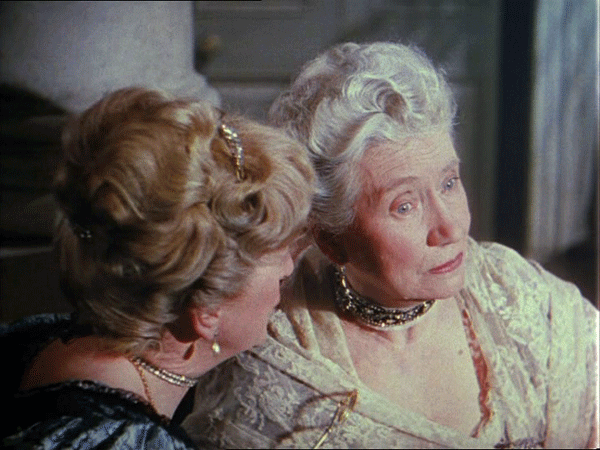 Make up and Hair styles are done by George Blackler and Biddy Chrystal respectively. Blackler had headed the make-up department for “Black Narcissus”, “Operation Crossbow”, “Dracula A.D. 1972”, “The Satanic Rites of Dracula”, etc; while the renowned hairstylist Chrystal (aka. Eileen Chrystal) has enough feathers to line her nest for having worked on movies such as “The Sword and the Rose”, “Sword of Lancelot”, “The Fearless Vampire Killers”, “11 Harrowhouse”, etc. While the set dressing is by Dario Simoni, editor Clive (Stanley) Donner cuts it all together.
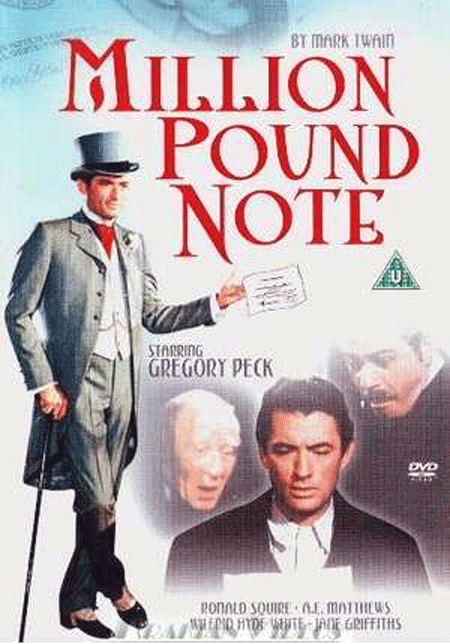 As for director Ronald Neame, he was born in 1911 in London to beautiful silent film actress Ivy Close, Neame was the producer of British filmmaker David Lean’s (1908-1991) early British films “Great Expectations” (1946), and “Oliver Twist” (1948). Like director George Stevens, Victor Fleming, Phil Rosen, he was an outstanding cinematographer, before becoming an expert director at light, frothy comedies. Although Neame was uncredited, he was an assistant cameraman on Alfred Hitchcock’s “Blackmail” (1929), the first sound-on-film British talkie.
As in every movie, there is a price dictated by the subject matter, the content and the showmanship values. “The Million Pound Note” is a fairly pleasing comedy which aptly displays the Edwardian atmosphere, flavour and local colour of England. You could see the muffin seller walking down the street, the family picnic on the green grass, uniformed school children lined up for outing, etc.
With a witty, well-written screenplay by expert writer Jill Craigie, Neame didn’t have to run to the hull every other minute to check for leaks. The meal at the restaurant leading to the discovery of the note is beautifully staged and ably photographed by Geoffrey Unsworth while Alwyn’s pleasant music flutters all around it. Another amusing scene is the incident at Jonathan Reid’s tailor shop.
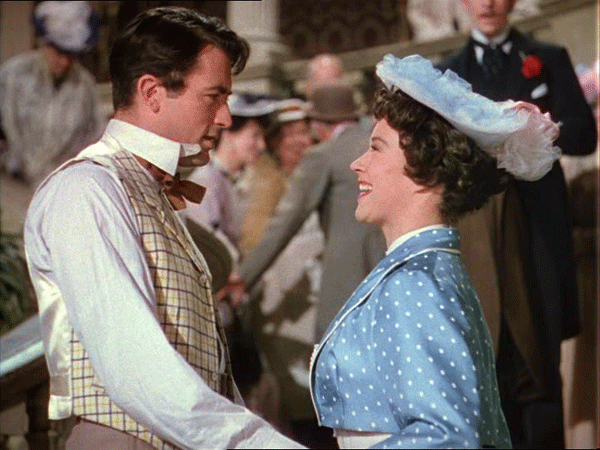
The scenes of Portia Lansdowne which ends with a pop at matrimony, provides the emotional quotient. In all fairness, the movie is nicely ornamented and acted under the graceful direction of Ronald Neame. Being a comedy, everything works out happily though the movie will set us thinking about the extraordinary way some people’s attitudes change by the symbol of wealth and also why some regard the rich as superior to the poor. “The Million Pound Note” is a classic comedy which can be watched by the whole family.
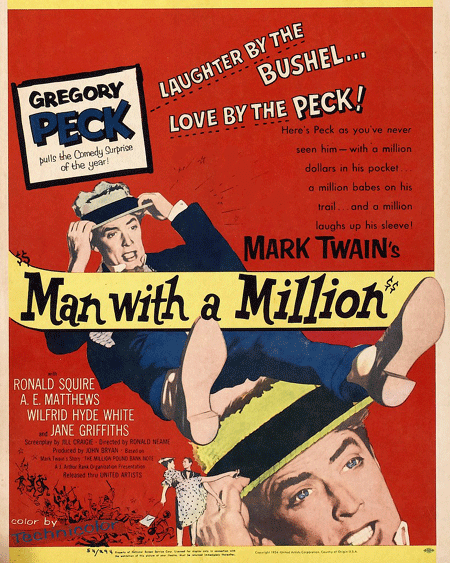
(Text: © JS/Manningtree Archive)
 Manningtree Archive
You must be logged in to post a comment.