Tag Archive | Alain Delon

Irène Papas Makes An Entrance

Screen actress Irène Papas became synonymous with world-class Greek stage/screen performers in the category of Katina Paxinou (Katina Konstantopoulou, 1900-1973), Melina Mercouri (Maria-Amalia Mercouri, 1920-1994), Eva Kotamanidou (1936-2020), etc, irrespective, to few critics, some may be of dark complexion or with language fluency issues.

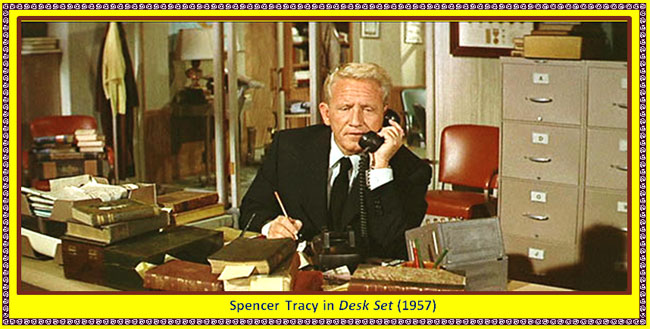
One of Irène’s bad experiences came from actor Spencer Tracy during the production of the Western movie, Tribute to a Bad Man (1956) which Tracy never finished because director Robert Wise (1914-2005) fired him. A book describes how Tracy derided co-star Irène because she was too clumsy and too tall (big raw-boned five feet ten inches in her bare feet, as tall as Tracy) and her English didn’t suit him because she was from Greece.
Greece which is domicile to Greek, one of the world’s oldest written languages, as well as to minority languages and Greek dialects, English together with German, French and Italian were the most common foreign languages spoken. Apart from her native Greek and competence in English, Irène also spoke German and Italian. As a matter of fact, Irène had been in London where she made effort to perfect her almost fluent English.

In those days, foreign-language features showed an increase in bookings and according to top players in U.S. movie circles, besides A-List performers such as Sophia Loren, Gina Lollobrigida, Simone Signoret, Alec Guinness and Maximilian Schell, the other foreign film personalities whose names became familiar to U.S. audiences during 1962 included Alain Delon, Claudia Cardinale, Marcello Mastroianni, Jeanne Moreau, Elsa Martinelli, Melina Mercouri, Horst Buchholz, Maria Schell, Irène Papas, Romy Schneider, Alida Valli, Jean-Paul Belmondo, Alberto Sordi and Christian Marquand.

These best-known of the foreign stars were considered marquee names capable enough to draw patrons to the box-office, and almost all of them have either made pictures in Hollywood or appeared in English-language pictures filmed in Europe by American show business companies.
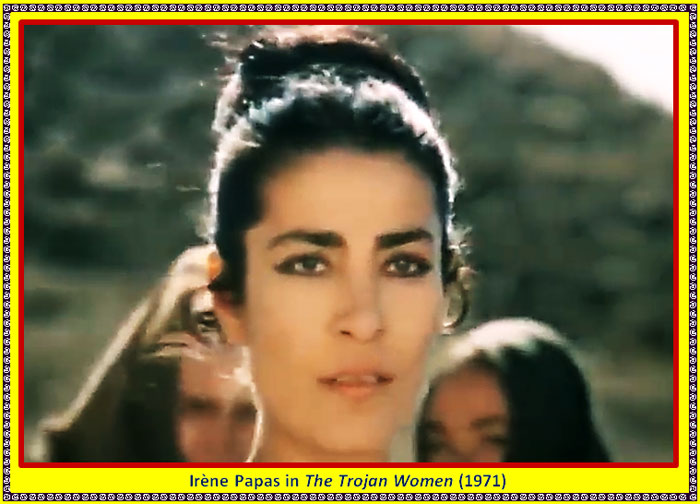
To a great extent, those who are famous stay that way because the press keeps them in the public eye. As for the gifted Irène Papas whom many have waxed poetic in praise of her, upswing on her career also gifted her ample occasions to meet a number of influential people in the film industry, some of them veritable volcano of knowledge and inspiration. It would have been completely in character that her career also brought her time to socialize with the prettiest people, most of them exceedingly rich and ripe, not boors or bores. Then again, one also had to good-naturedly tolerate a great deal of unprofessionalism, too. She was once bestowed with the title “Europe’s Woman” for her efforts to bolster European civilization.

As an award-winning actress who personified Greek female beauty on the cinema screen and on the stage, Irène Papas starred alongside fashionable Hollywood stars of the time such as Anthony Quinn, Gregory Peck, James Cagney, Kirk Douglas, etc. With Kirk Douglas and Alex Cord, she co-starred (as Ida Ginetta) in director Martin Ritt’s The Brotherhood (Mafia, 1968), an excellent Godfather predecessor produced by Kirk Douglas, one of the best paid actors in Hollywood during that time.

It was Irène’s association with Michael Cacoyannîs (1922-2011) that paved way for Irène’s brilliant performances in the title role in Electra (1962); in Zorba the Greek (Alexis Zorbas, 1964); in The Trojan Women (1971) and also in Sweet Country (Glykeia patrida, 1986), a forceful drama filmed in Greece. These are part of a clutch of films rightly considered as the high point of Irène’s film career. Cacoyannîs is the Greek Cypriot theatre/film director who introduced actress Melina Mercouri (as a good femme fatale) through his 1955 film, Stella.   
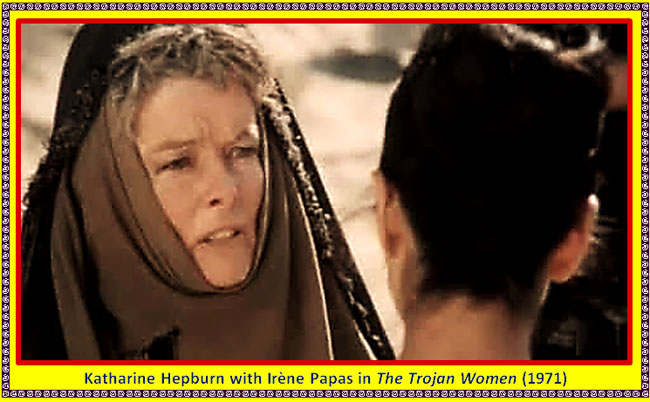
Audiences across the world who have seen Zorba the Greek may remember Cacoyannîs’ treatment of Irène Papas in the role of the widow when the viewer first saw glimpses of her face as she hung her immaculate sheets on the clothesline while it flapped in the wind.
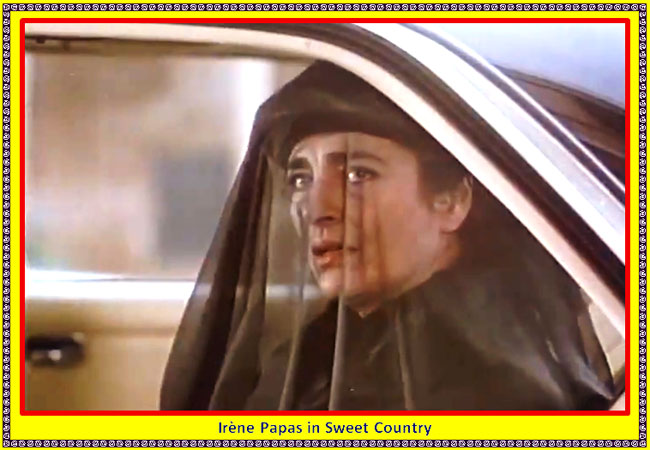
Sweet Country, based on a novel by Caroline Richards, is about the emotional turmoil that befalls an American expatriate couple, Anna Willing (Jane Alexander) and professor husband Ben (John Cullum) while living under military rule following the September 1973 Rightist military coup led by General Augusto Pinochet Ugarte after the assassination of Chile’s first socialist President Salvador Allende (1908-1973). The film is an indictment of conditions that existed at that time when lead character Anna is drawn into the resistance against Pinochet as she attempt to get the torture victims across the border.

In 1968, Irène had an on-going contract to star in director John Huston’s epic production of The Madwoman of Chaillot (1969), based on the 1943 classic play La Folle de Chaillot by French novelist (Hippolyte) Jean Giraudoux. The film featured an all-star cast of Katharine Hepburn, Charles Boyer, Yul Brynner, Giulietta Masina, Edith Evans, Danny Kaye, John Gavin, Paul Henreid, Margaret Leighton, Richard Chamberlain, Donald Pleasence, and Nanette Newman.

The production of The Madwoman of Chaillot was not all smooth sailing. Few days before the production began in Nice, France, the Producers had profound reservations about director Huston who had difference of opinion on the modernization of the movie’s theme. They clinched a deal with British director Bryan Forbes to take over direction of the movie at very short notice. Furthermore, days into the shooting at the Studios de la Victorine, Nice, France, Irène opted out of her role which went to English stage actress Edith Evans DBE. Irène too had not been in a good frame of mind with the characterisation of the role of Josephine she was portraying. All this put-downs were newsworthy in the show business circles.

More a proven actress than a glamorous star alone, Irène Papas has starred in numerous movies, some of them forgettable except for her presence in them. Nonetheless, there are enough significant movies she has done that became the consuming interest to her celebrity status. Listed below, in order of year of release, are some of Irène’s movies in my collection (1):
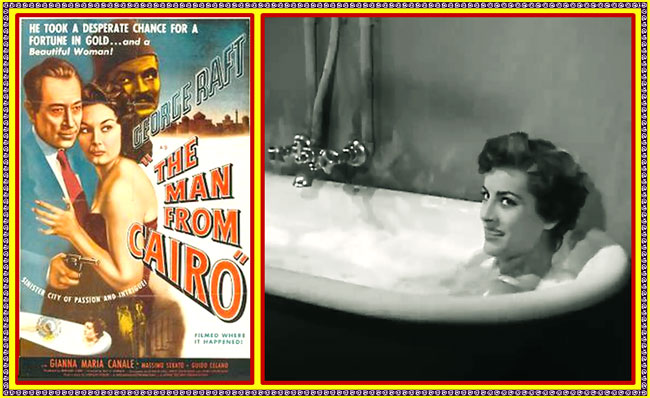
Irène Papas acted as Yvonne Lebeau, a dancer at Cote Bleu, a little nightclub in downtown Algiers in The Man from Cairo (Crime Squad/Dramma nella Kasbah, 1953). Based on story by Hungarian novelist Ladislas Fodor and directed by Ray H. Enright (and Edoardo Anton – uncredited), it was filmed on location in Algeria and Italy. The movie center upon a fortune in gold, lost on the North African desert, which lures a variety of wealth-seekers. After many twists and turns, an American tourist and General Dumont solve the mystery of the lost gold. Although Irène only had a short spell in the earlier part of the movie, George Raft, Gianna Maria Canale, and Massimo Serato in prominent roles had better scope to display their acting talents;

Irène did the starring role of Faidia in Theodora, Slave Empress (Teodora, Impératrice di Bisanzio, 1954), an Italian production by Lux Film with a cast of hundreds, massive sets and in dazzling Pathécolor directed by Riccardo Freda. Stunningly beautiful Gianna Maria Canale, the director’s better half, played the role of Teodora, the daughter of a bear feeder at the amphitheatre who rose to become empress of Byzantium, the celebrated consort of the handsome Emperor Justinian/Giustiniano (Georges Marchal). Teodora champions the causes of the common people, to the displeasure of the prime minister, Giovanni Cappodocia (Henri Guisol), the chief troublemaker who breeds conspiracy. The film marked the second co-starring role of Irène with Gianna Maria Canale, the first being The Man from Cairo.
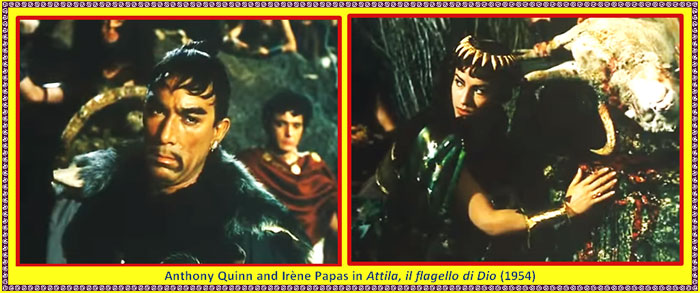
In 1954, Attila (Attila, il flagello di Dio/Attila, Hombre o Demonio/Attila, fléau de Dieu) was released with Irène in the role of Grune. The film featured the cult of the most ruthless conqueror of all time – the barbarian Attila the Hun who, with sword and flame, swept across the civilised world in the year 450 A.D. Even the mighty Roman Empire was marked for his conquests. A Dino De Laurentiis and Carlo Ponti production for Lux Film, directed by Pietro Francisci (1906-1977), Anthony Quinn gave the title role pure savagery while romancing Sophia Loren in the role of Attila’s woman Honoria. Jo                                        

Notes:  

  1. The listed reviews in this tribute is limited only to those films in my personal collection;
  2. DVD/Blu-ray of most of the movies mentioned in this write-up is available with some leading dealers.
  3. Up to now, the sources of reference for this tribute to Irène Papas are archives of the past including printed publications and visual media. DVD sleeves/images shown here are only for promotional purpose. Source: Wikipedia, amazon.com, imdb, and from DVD sleeves.
  4. This illustrated article is an affectionate nosegay to the movies referred above. Please refer to “About” of my webpage for more details.

(© Joseph Sébastine/Manningtree Archive)

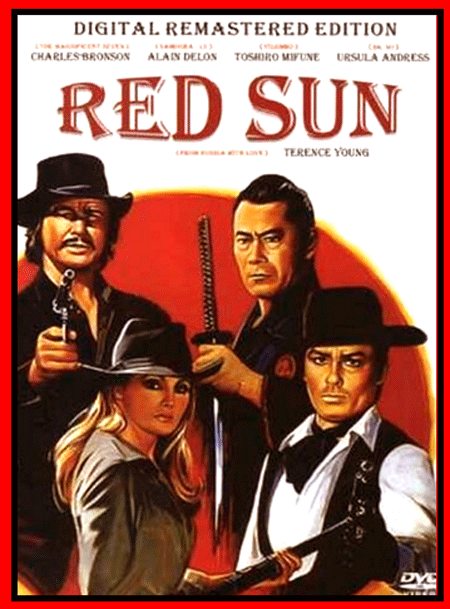
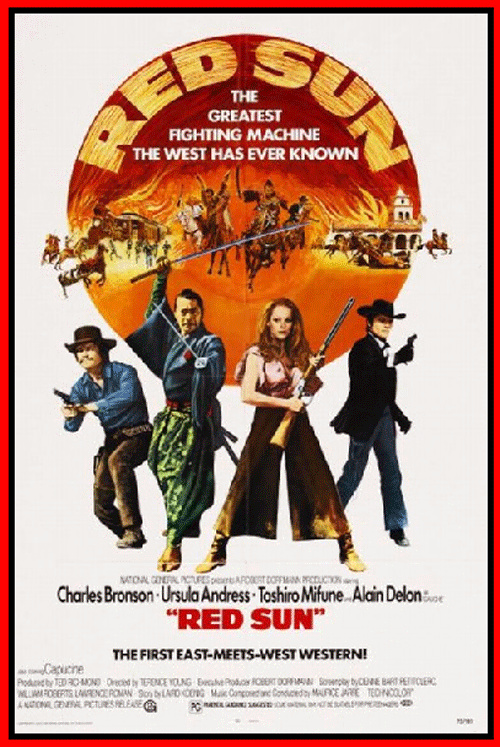
Red Sun (Soleil rouge – StarChoice.26)


Header-SC1

0 1

This second post concludes my preceding article of March 29, 2016: The Galloping Riders of Almería

0 2

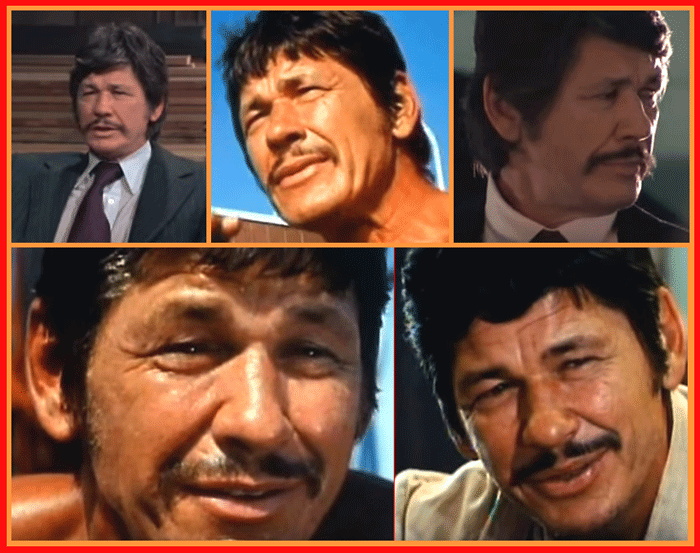
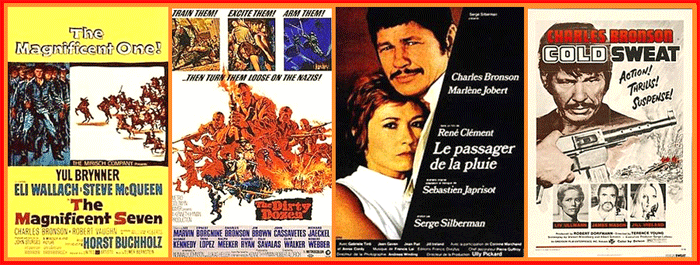
By early 1970s, Charles Bronson’s charm had transcended the borders of Europe and invaded far of corners of Asia. Movies such as The Magnificent Seven, The Great Escape, The Dirty Dozen and Once Upon A Time In The West have all contributed their magic for the popularity of Bronson. No sooner, large billboards of the craggy-faced, toughly built Bronson appeared in strategic locations in Japan where he was elevated as the quintessential ‘Western Man.’

His aura of toughness and animal magnetism even earned him an appearance in the Japanese television commercial for Mandom, proclaiming a new toiletry brand for men. The ad-film was created by none other than the Japanese filmmaker Nobuhiko Obayashi, known for his surreal visual style. As for Bronson’s film career, there was no dearth in films for he was already in talks with filmmakers about a project called Red Sun.

0 4

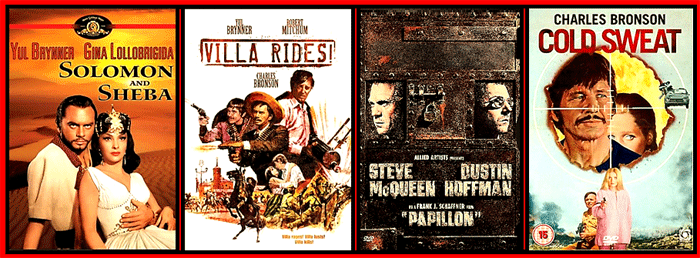
According to a book on Charles Bronson, the script for Red Sun was already available – having been passed around the major studios since 1966 when, based on an idea outlined on fifteen-pages, veteran producer Ted Richmond (Solomon and Sheba, Villa Rides!, Papillon) obtained the consent of Toshirô Mifune to star in it.

0 5

Owing to unenthusiastic response to get the film off the ground in Hollywood, Richmond associated with producer Robert Dorfmann (Le Cercle Rouge, Cold Sweat, Papillon) in Europe who signed Bronson and Delon. The choice was easier since the two stars had not only starred in their earlier projects, their commercial appeal made it possible to secure financing. The result was a co-production, between Les Films Corona, France; Oceania Produzioni Internazionali Cinematografiche (Oceania Films), Roma/Italy; Producciones Balcázar S.A., Spain, – an arrangement, besides other benefits, assured distribution in three markets.

0 6

They also roped in Terence Young to direct the movie. Young has proven his flair in directorial skills through a wide range of genre including peplum and war films since his directorial debut in 1948.

0 7

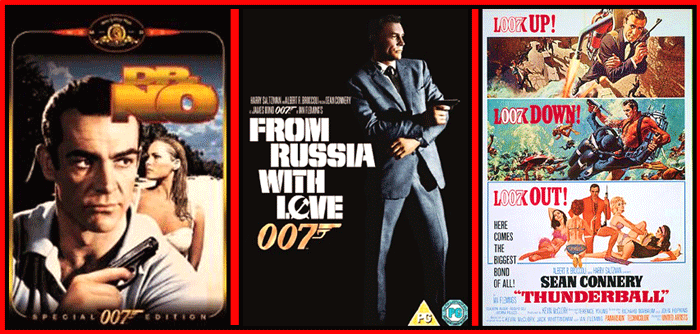
International in scope as the stylish action director of three of the first four James Bond films, Dr No (1962), From Russia With Love (1963), and Thunderball (1965), Young himself was then ranked a colourful character – consistent to the image of the British secret service agent James Bond’s taste for fine wine, expensive clothes and beautiful women.

0 8

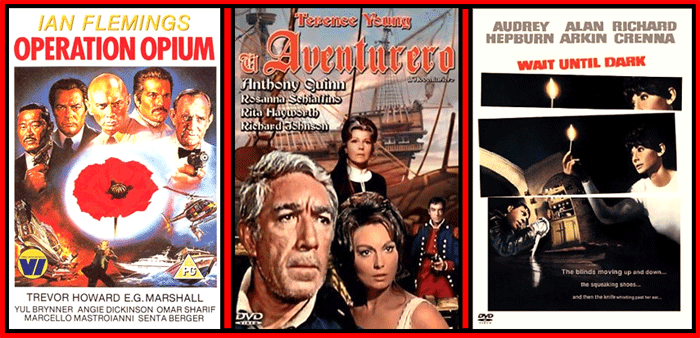
Ever since his departure from the James Bond series, Young was engaged in direction of The Poppy is Also a Flower (Operation Opium, 1966), L’Avventuriero (The Rover, 1967), Wait Until Dark (1967), Mayerling (1968), and Cold Sweat (1970), the first of three movies that Terence Young would make with Charles Bronson.

0 9

Red Sun was shot during the first half of 1971. Chosen as a stand-in for the American Southwest are the atmospheric mountains, virgin grounds, stark terrain and delicious climate of Spanish Almeria’s El Cabo de Gata (Cape Agate), Tabernas and Cortijo de la Sartenilla as well as the area between La Pedriza de Manzanares El Real and La Calahorra, effectively cutting the production cost.

0 10

Some of these places, studded with agave plants and other desert succulents, flat-roofed whitewashed houses and abandoned/renovated farmsteads, were familiar to Bronson for having worked there recently in earlier production of Sergio Leone.

0 11

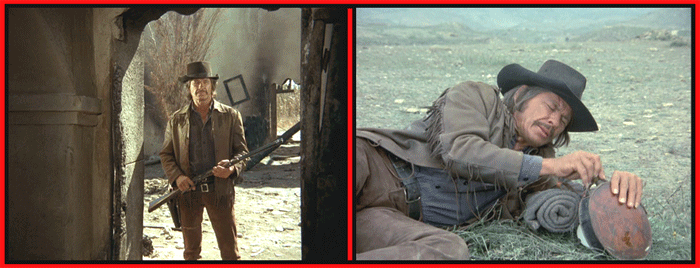
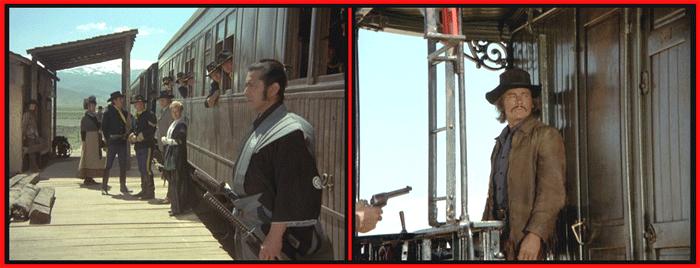
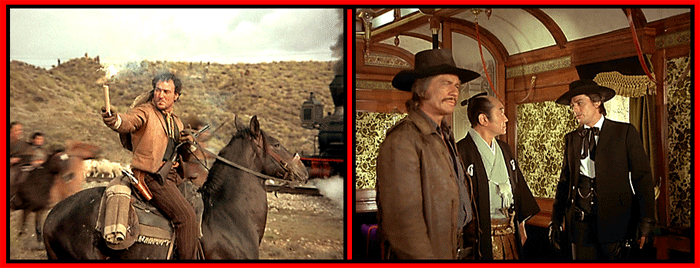
Set in the 1870s, Red Sun opens with the arrival of prairie rider Link Stuart (Charles Bronson) at a deserted railway station from where he boards a mail train bound for Washington. Besides the civilian passengers and the US soldiers protecting the gold and other valuables on the train, a delegation led by the Japanese ambassador to the United States occupied a private car.

0 12

During the reign of the 121st emperor of Japan, Emperor Kōmei-tennō (July 22, 1831 to January 30, 1867), Japan had begun its transformation into a modern industrial power following the arrival of US Commodore Matthew Calbraith Perry and his “Black Ships” on July 8, 1853 on a mission to force the opening of Japanese ports to American trade, through the use of gunboat diplomacy if necessary. Within the next decade, the drive for modernization resulted in the opening of Japan’s doors to the rest of the world.

0 13

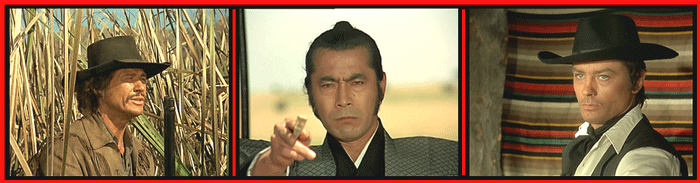
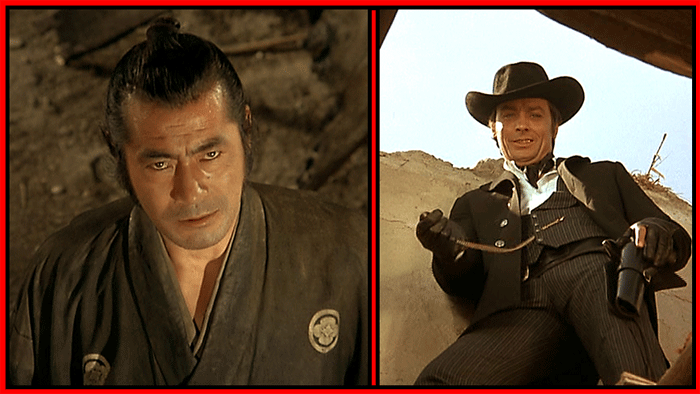
Ten years later, as the movie goes, Sakaguchi, Lord of Bizen and the first Japanese ambassador to the United States by authority from the Emperor, had arrived in San Francisco after a long and perilous voyage by sea. Even though his safe arrival to Washington is guaranteed by the US government, anticipating dangers on their way, the entourage rightfully consisted of two samurais to protect their liege lord – one being Kuroda Jubie (Toshirô Mifune) (1) to whom loyalty and death is part of his air and sea and earth.

0 14

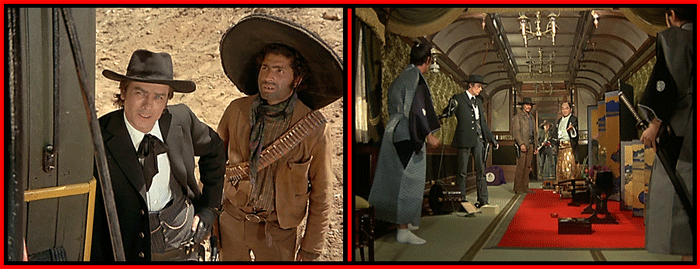
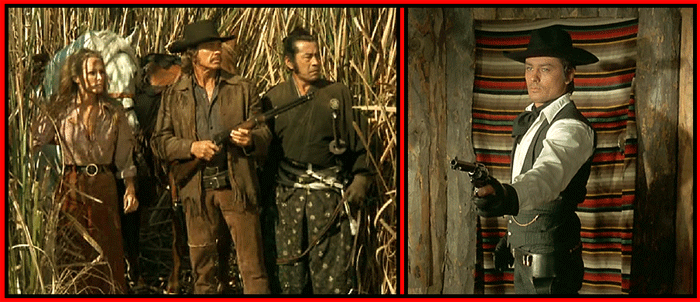
Once the train had chugged out of the station, its control was forcefully taken over by the bandit group belonging to Link and co-leader Frenchman Gauche (Alain Delon) who soon set to rob the train of its valuables. Having sent off all civilian passengers by foot, Link and Gauche barge into the private car of the Japanese entourage and steal their money while the two samurai stay meek at the ambassador’s instance.

0 15

It was after Link had left the car with the money when Gauche’s attention was drawn to a precious Mikado katana, a gold embossed sword, the Japanese was carrying for presenting to the 18th U.S. president, Ulysses S. Grant. Gauche forcefully steals it after killing one of the samurai (Hiroshi Tanaka) who aggressively opposed him. With his mission successfully completed, Gauche double-crosses his partner Link (who was promised 1/3rd of the loot) by throwing dynamite at him. Believing Link to be dead, Gauche and his henchmen ride off with the spoils.

0 16

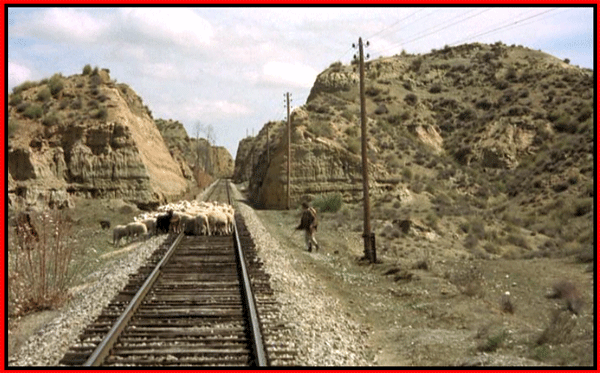
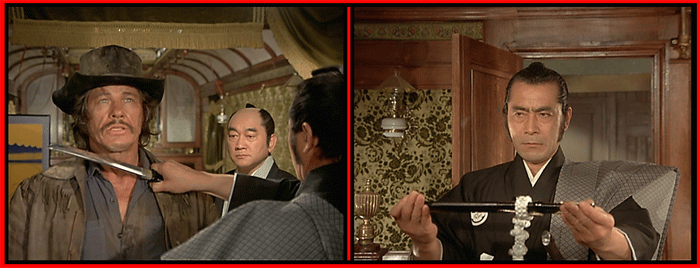
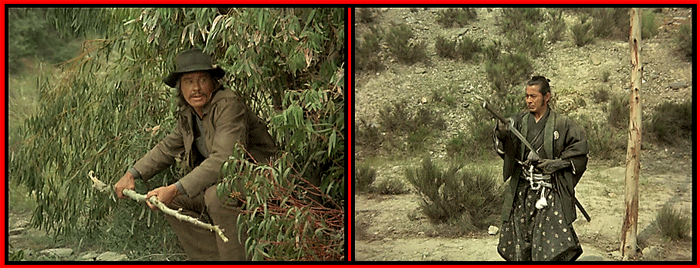
Link was fortunate to survive the attempt on his life and was discovered by Kuroda by the railroad track. Regaining consciousness, Link was compelled by the Japanese ambassador to accompany samurai Kuroda to track down Gauche and retrieve the sword. Kuroda will attain this within seven days maintaining the code of morals and manners of the Bushidō (the way of the warrior) (2) and if he failed, carry out seppuku (belly-cut) or hara-kiri, the Japanese ritual suicide reserved for samurai.

0 17

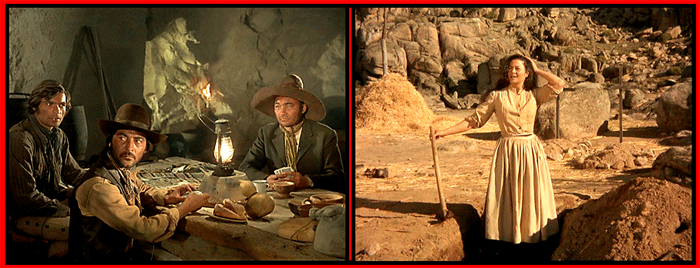
Although Link reluctantly agreed to this he was troubled by the samurai’s intention to kill Gauche in a bloody reprisal as soon as he retrieved the sword. This would not leave Link enough time to catch Gauche alive, and obtain the loot ($400,000/-, give or take a dollar!) from the train robbery. For purpose of expediency, Link must elude Kuroda and go after Gauche alone. The journey that follows is a concoction of action, humour, nudity, betrayal, revenge and restitution of honour.

0 18

A French/Italian/Spanish production, the film was a hit in Europe and Asia while in the USA the regular critics were unkind to it which the filmgoers mostly discarded. An uncomplicated action director, Terence Young keeps the movie at a semi-brisk pace sprinkled with humour and brings the story to a dramatic climax amidst the reed thickets, shot in Venta Nueva, Adra, Spain.

0 19

Red Sun contains the three situations essential to every western: isolation, violence and law. Kuroda, a man of dignity and honour, but quick and deadly as a rattle snake, is an isolated man in the West in his pursuit to retrieve the stolen sword and protect the honour. He was forced to associate with the outlaw Link into a path of violence, taking the law and justice into his own hands, hardly concerned whether he may die doing it or not.

0 20

Since most of the action takes place while Link and Kuroda are on the trail of the sword, director Young gives more emphasis to the interaction between the always very meticulous Bronson and much-focused Mifune – the events depicted in the movie leading to the point where Kuroda brings respect in Link for the strict bushido code which Kuroda adhered to, whereas Link manages to convince the revenge-minded Japanese to restrain from killing Gauche until Link could learn of the location where Gauche has hidden the loot. The script also briefly offers Kuroda, who generally dominates Link, an opportunity to speak of the disappearing values of the samurai as his countrymen no longer value the customs of old.

0 21

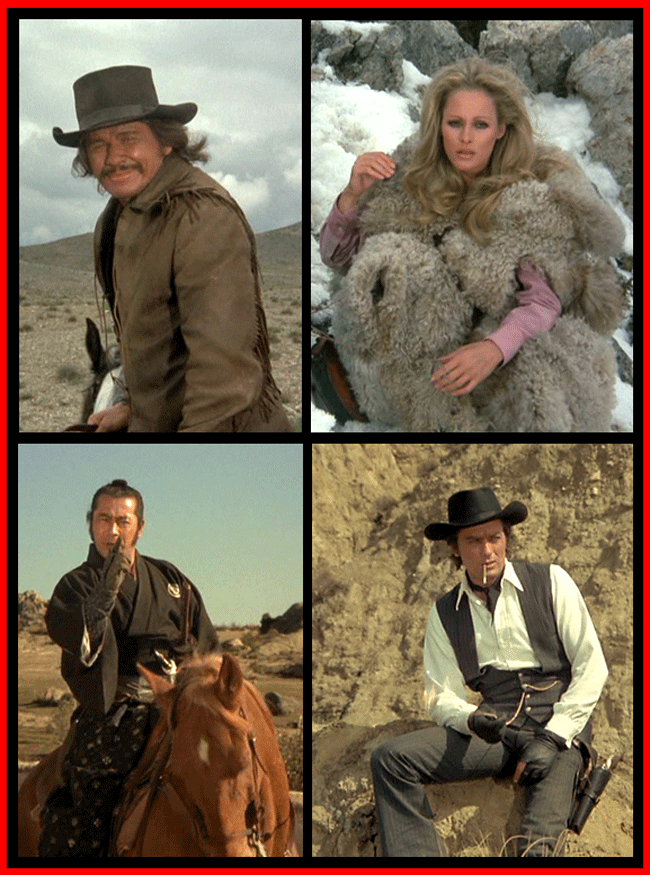
The two foreigners, Kuroda and Gauche, in the western settings of the movie contrasts dramatically: Mifune’s Kuroda representing the good and the gallant, while French actor Alain Delon’s Gotch ‘Gauche‘ Kink epitomises the bad and the ruthless; and within the limited but fairly meaty sequences of Gauche, the story maze clearly defines his debauchery, grounds for Kuroda to exact lethal vengeance. Relevant to Delon’s then public image as a “toughie” off screen, he comes across effectively as crafty and aggressive – and then again, there is always the visually interesting aspect – his pretty-boy good looks.

0 22

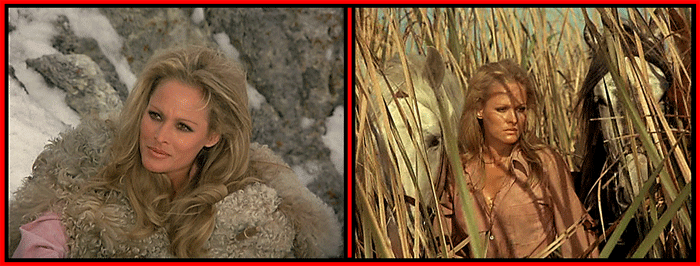
Statuesque Swiss-German actress Ursula Andress, who received second billing in the movie credits, is the foul-mouthed prostitute Christine who is the connection with Gauche whilst in love with Link. Red Sun displays her in a parody of scenes: in partial nakedness, as a helpless hostage of outlaws, as a victim of refined Indian torture, etc.

0 23

Although Andress has donned roles in Le Avventure di Giacomo Casanova/Sins of Casanova (1955), What’s New Pussycat? (1965), The Blue Max (1966), Anyone Can Play (1968), etc, it is her smouldering screen appearance as Honey Ryder in Dr. No (1962) that she is much remembered for, although she also appeared as Vesper Lynd in the satirical James Bond spoof Casino Royale (1967), a role turned down by Joan Collins, Elizabeth Taylor, Shirley MacLaine and the patrician French actress Capucine (The Pink Panther, ‘What’s New, Pussycat?).

0 24

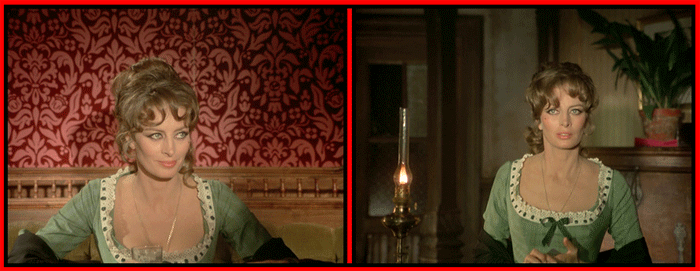
As it turned out, Capucine (Kap-u-SEEN), whose original name is Germaine Hélène Irène Lefebvre but changed it in honour of France’s nasturtium, co-starred with Andress in the role of Pepita in Red Sun.

0 25

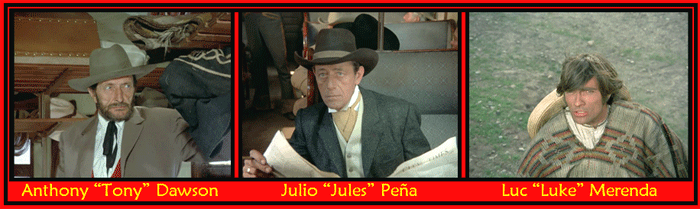
In the supporting role as Hyatt is Scottish actor Anthony “Tony” Dawson – a regular in Terence Young productions and often cast in a variety of villainous roles in the 1950s and 1960s including movies such as Alfred Hithcock’s Dial M for Murder (1954) and Dr. No.(3)

0 26

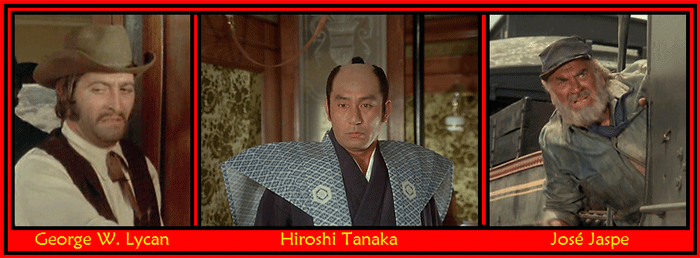
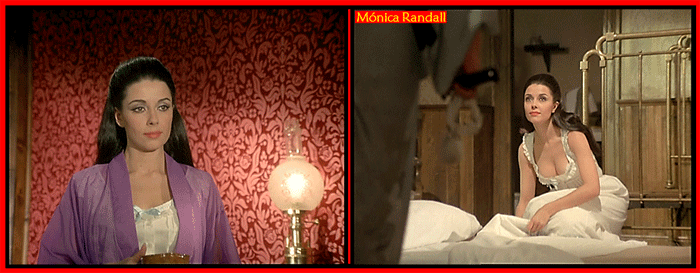
Other members of supporting cast: young French actor Luc “Luke” Merenda (Chato), Hungarian dancer/circus artist Bart Barry/ Bernabé Barta Barry (Paco), Lee Brown/Guido Lollobrigida (cousin of actress Gina Lollobrigida) (Mace), John Hamilton/Gianni Medici (Miguel), George W. Lycan (Sheriff Stone), Hiroshi Tanaka (Second samurai), Canada born Satoshi (Tetsu) Nakamura (Japanese Ambassador), Jo “José” Nieto (murdered Mexican farmer), Spanish actor Julio “Jules” Peña (Peppie, train passenger with newspaper), beautiful Spanish rose Mónica Randall/Aurora Julià Sarasa (Maria), John B, Vermont, plus a whole team of stuntmen (4).

0 27

Original Music by French composer/conductor Maurice Jarre (Maurice-Alexis Jarre) is an interesting mixture of Anglo/Japanese themes. The brilliant Eastmancolor cinematography owes to Henri Alekan of Roman Holiday (1953) fame.

0 28

The script adapted by Denne Bart Petitclere/William Roberts/Lawrence Roman is based on the story by American author Laird Koenig, famous for his novel, The Little Girl Who Lives Down the Lane (1974). Further crew consists of: Gerald Devriès (dialogue); Johnny Dwyre (Film Editing); Enrique “Henry” Alarcón (Set Decoration); Tony Pueo (Costume Design): Alberto de Rossi (Make-up); Karl Baumgartner (Special effects).

0 29

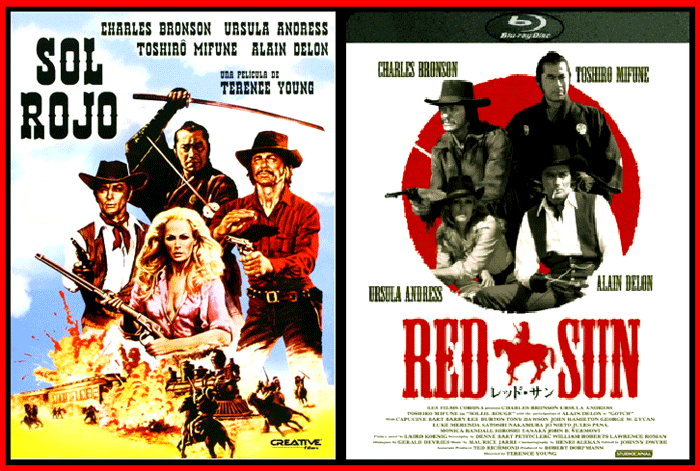
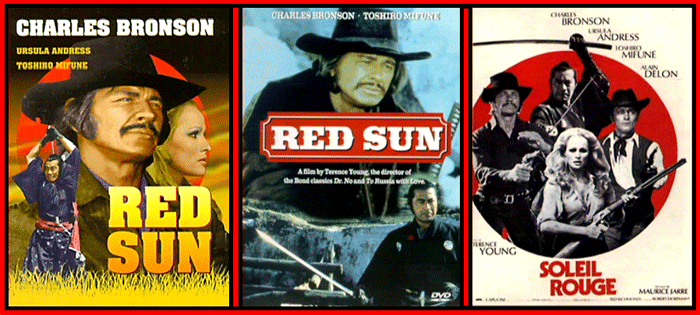
Released in 1971, Red Sun  is also known as: Sole rosso (Italy), Sol rojo (Spain), Rivalen unter roter Sonne (Germany), Sol vermelho (Portugal), Monomahia ston kokkino ilio (Greece), The Magnificient Three (Philippines)

0 30

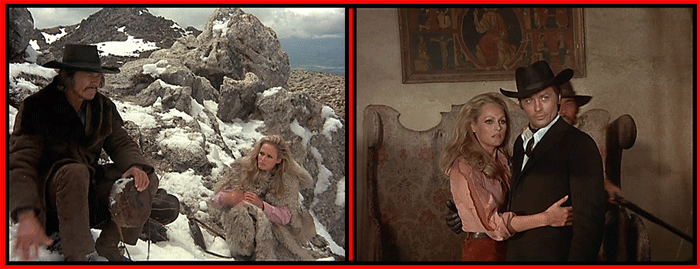
Red Sun has its moments of fun and rough spots besides providing the opportunity to see Bronson/Andress/Mifune/Delon coming together in a pleasing blend of their American/Swiss/Japanese/French charm, embellished by the direction of Britain’s Terence Young. Until next time. Jo

0 31

Notes:

  • Toshirô Mifune’s character in Hell in the Pacific is called Tsuruhiko Kuroda.
  • The eight virtues typified by the Bushidō code: Righteousness; Courage; Benevolence; Respect; Sincerity, Honour, Loyalty, Self-Control.
  • According to a film trivia, it is Dawson’s hands we see stroking a white cat in the scenes depicting Bond’s arch-nemesis Ernst Stavro Blofeld in From Russia with Love and Thunderball.
  • One of Hollywood’s top gun coaches and fast-drawing experts, chickasaw Indian Rodd Redwing died on May 29, 1971 following a heart-attack aboard the flight while returning home from Spain after work on Red Sun.
  • Books, DVD/Blu-ray of the books/movies referred to in this article are available with amazon.com, amazon.co.uk and other leading dealers.
  • DVD sleeves/posters credits: Wikipedia, amazon, and from my private collection.
  • This illustrated article is an affectionate nosegay to the movie reviewed above. Please refer to “About” of my webpage for more details.
  • In memory of French actress/model Capucine (January 6, 1933 – March 17, 1990)

0 32

(©Joseph Sébastine/Manningtree Archive)
The Galloping Riders of Almería

b1

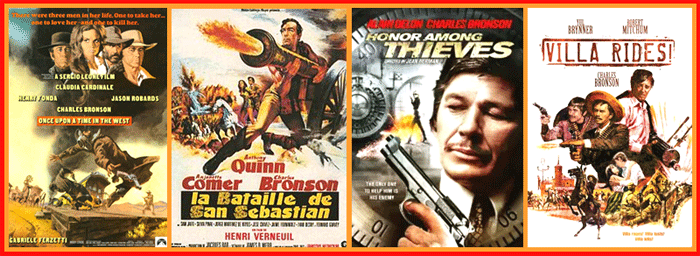
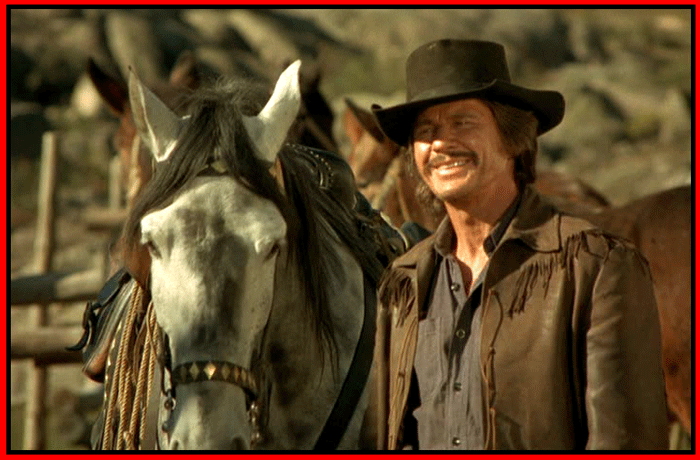
International superstardom finally started to cast its glare on American actor Charles Bronson in the late sixties – essentially since his appearance as the half-breed gunslinger l’uomo dell ‘armonica in Sergio Leone’s spaghetti Western “Once Upon a time in the West” (C’era una volt ail west, 1968). In the mind of filmgoers, the gristly face of Bronson with his sleepy eyes and drooping moustache had become distinguished as an image of a ‘tender tough guy’ with an explosive air of elemental violence about him, drawing audiences to his movies shown across Europe over to Asia. The Italians nick-named this stone-faced and powerful personality, their “Il Brutto” – The Ugly One.

b2

While Bronson’s films never received wide release across America where he remained an unknown actor, his leading parts were confined to European products such as Guns for San Sebastian (1967), Farewell Friend (Adieu I’Ami, 1968), Villa Rides (1968), etc.

b3

Born to Lithuanian parents settled in the bleak mining town of Ehrenfeld (known locally as Scooptown), Pennsylvania, USA, “Shulty” (nickname of Bronson as a boy) was initially a coal miner who led a life full of deprivation. Charlie served the army from early 1943 to early 1946, following which he went on to do short stints as bricklayer, waiter, baker’s helper, etc before venturing into the theatre where his face and figure could draw only bit-parts of heavies and ethnics.
b4

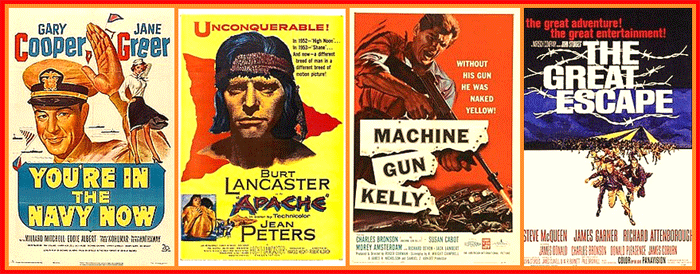
Without any film-acting experience other than a year of learning at the Pasadena Playhouse, he had headed for Hollywood where, from his film debut in You’re in the Navy Now (initial title: U.S.S. Teakettle, 1951) till director Robert Aldrich’s Apache (1954), he was known as Charles Buchinsky, his birth name. With Drum Beat (1954) he changed his name to Bronson after the Bronson Gate at Hollywood’s Paramount Studios which derived its name from Bronson Street in Los Angeles.

b5

Having met actress Jill “Dorothy” Ireland in Bavaria, Germany, in 1962 during the filming of The Great Escape (then married to Welsh actor David McCalum whom she divorced in 1967), Bronson (divorced from his first wife Harriet Tendler in 1965) and Jill married in October 1968, which was few months after Bronson left Hollywood for Europe where he travelled from 1969 to 1973, making various movies.

b6

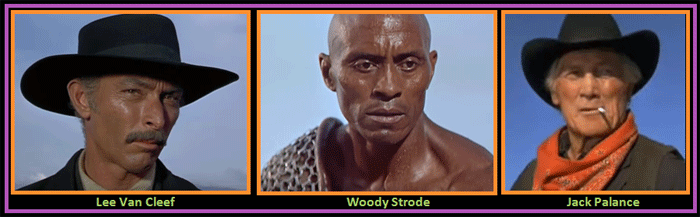
He soon fitted himself into a world infested with immigrant western actors such as Steve Reeves, Clint Eastwood, Cameron Mitchell, Lee Van Cleef, Eli Wallach, Van Heflin, John Ireland, Ty Hardin, Woody Strode, Rod Steiger, Jack Palance, etc, who had taken trek to Europe to join the European actors (most of them given Western-sounding names) to star in Peplums as well as in Euro-Westerns mostly shot in Almería which provided a perfect match for the deserts of Arizona.

b7

b8

Impressed by Bronson’s performance in Machine-Gun Kelly (1958), French actor Alain Delon had by then developed an interest to work with him. Conveyed to Bronson through French producer Serge Silberman while Bronson was on location in Spain (at El Casar de Talamanca, Guadalajara, Castilla-La Mancha for director Buzz Kulik’s “Villa Rides”), the outcome was Bronson in the role of Franz Propp in Adieu I’Ami (Farewell Friend/Honor Among Thieves).

b9

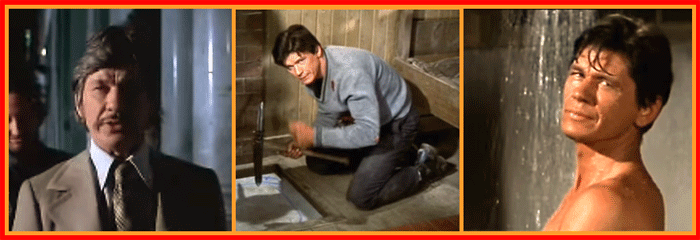
When the film came out, his pairing with Delon earned them lavish praises from the critics, spiralling progress in Bronson’s career through a series of European productions including director Richard Donner’s Twinky (Lola/Statutory Affair, 1970) and French director René Clément’s chilling suspense piece Le Passager de la pluie (Rider on the Rain, 1970), the role in which, according to a book, had come seeking Bronson with a bit of urging of Alain Delon.

b10

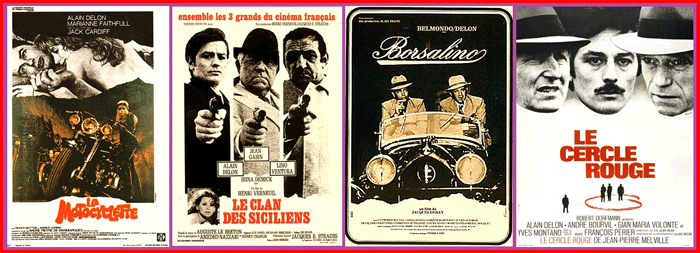
In the late 1960s, with the sensuality of facial features that made Alain Delon a beautiful leading man still intact, Delon retained his physical presence and stylish, enigmatic look in domestic productions such as The Girl on a Motorcycle (1968), La Piscine (1969), Le Clan des Siciliens (The Sicilian Clan, 1969), Borsalino (1970), etc.

b11

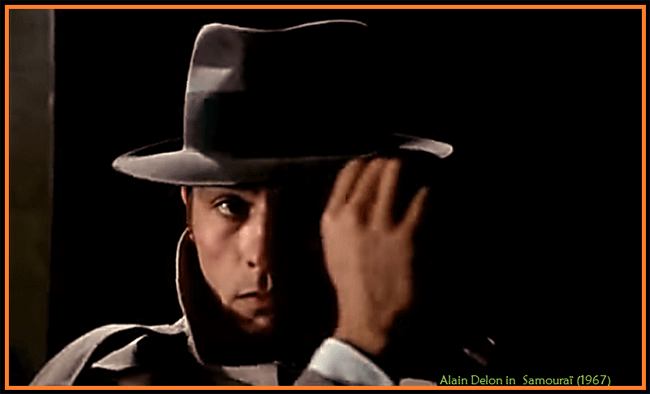
Earlier in 1966, he had acted as a hitman clad in a trenchcoat and sporting a felt-hat in French director Jean-Pierre Melville’s cult classic Le Samouraï (The Samurai, 1967) which had kindled his interest in Japan where he had recently earned a large number of fans and commercial success that extended not only to his iconic status, his screen muscularity and sex appeal, but even to the sunglasses branded with his name. According to IMDB, at that time, Delon even kept a samurai blade hanging on the wall of his bedroom.

b12

Producing films since the 1970s under the name of his own production company, Adel Productions, and in a position to attract investment from across Europe and USA, Delon was then very active in filmdom and given the scale of his popularity as a global style icon, no doubt he would have gladly welcomed any interesting story angles of diverse genre to revamp his image, including a proper role where elements of Japanese culture are interestingly featured.

b13

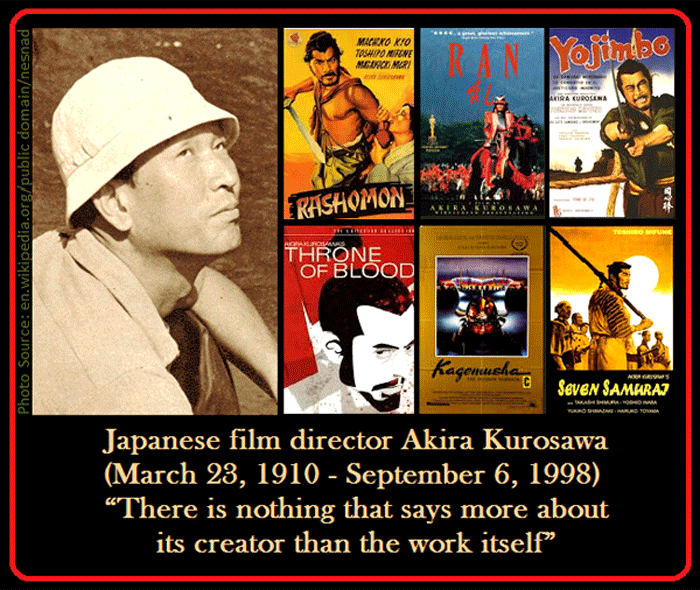
The box-office success in Japan of more than a dozen films that director Akira Kurosawa made between 1950 and 1965 and other elements of Japanese film culture were already fanning their influence on the American filmdom. Kurosawa’s “Rashomon” (1950) came out as “The Outrage” (1964), “The Magnificent Seven” (1960) was based on “Seven Samurai”, while “A Fistful of Dollars” (1964) which invented the spaghetti Western was inspired by “Yojimbo” (1961) (1).

b14

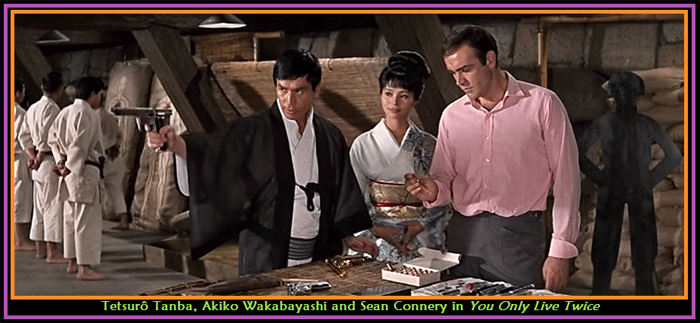
Simultaneously, “You Only Live Twice” (1967), the fourth James Bond starring Sean Connery, predominantly set in Japan, featured prominent roles for Japanese actors Tetsurô Tanba, Akiko Wakabayashi and Mie Hama. Director Richard Fleischer’s “Tora, Tora, Tora” (1970) about the Pearl Harbour attack featured a fusion of West-Orient actors and crew and Kurosawa was originally slated to direct the Japanese half of the film which did not materialised due to technical issues.

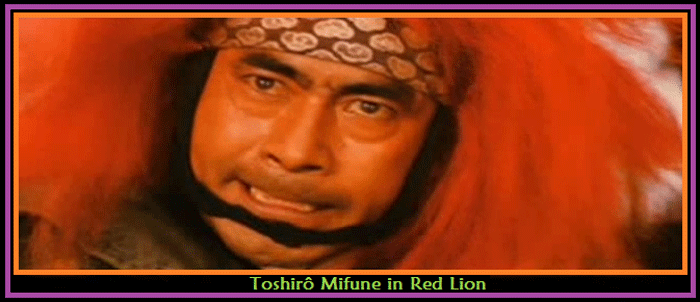
The West had also taken note of Toshirô “The Wolf/The Shogun” Mifune’s strong, monolithic screen presence. Mifune had built his career on several wonderful classics of Kurosawa which included Rashomon (1950), Seven Samurai (1954), Throne of Blood (1957), Yojimbo (1961), Red Beard (1965), and The Hidden Fortress (1958), which was Kurosawa’s personal favourite.

b15

The power of Mifune’s screen presence engendered the strength of character through silence, together with quick and deadly dynamism in action sequences. In “Something Like An Autobiography” Kurosawa wrote that, in Mifune he had come across “a kind of talent he had never encountered before in the Japanese film world.”

b16

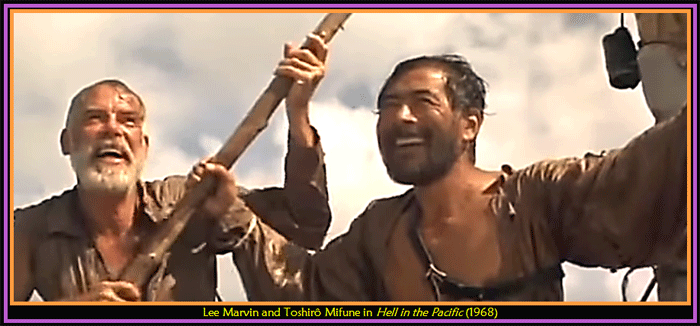
Toshirô Mifune, himself a producer on several samurai films, was no stranger to roles in Hollywood products. Referred to as Japan’s John Wayne, he had appeared in Grand Prix (1966) and later with Lee Marvin in director John Boorman’s Hell in the Pacific (1968), a World War II drama of two adversaries, an American pilot and a marooned Japanese navy captain Tsuruhiko Kuroda, on a small uninhabited island in the Pacific Ocean. The film offered good contrast in acting styles of Marvin and Mifune (both actually served in the Pacific during World War II) as the two men of opposing countries who cease their animalistic confrontation and come to terms with peace and cooperation in order to survive.

b17

It was during this period that the American producer Ted Richmond decided to create a Shogun-type Western, with a fusion of Japanese folk legends. Jo                 (To be continued)

b18

Notes:

  • According to A New Guide to Italian Cinema, Leon has insisted that the source of A Fistful of Dollars is a play by Carlo Goldoni Arleccchino il servitor di due parroni/The Servant with Two Masters (1745)
  • Books, DVD/Blu-ray of the books/movies referred to in this article are available with amazon.com, amazon.co.uk and other leading dealers.
  • DVD sleeves credits: Wikipedia, amazon.co.uk, and from my private collection.
  • This illustrated article is an affectionate nosegay to movies of the past. Please refer to “About” of my webpage for more details.

b19

(©Joseph Sébastine/Manningtree Archive)