Tag Archive | Gianna Maria Canale

Irène Papas Makes An Entrance

Screen actress Irène Papas became synonymous with world-class Greek stage/screen performers in the category of Katina Paxinou (Katina Konstantopoulou, 1900-1973), Melina Mercouri (Maria-Amalia Mercouri, 1920-1994), Eva Kotamanidou (1936-2020), etc, irrespective, to few critics, some may be of dark complexion or with language fluency issues.

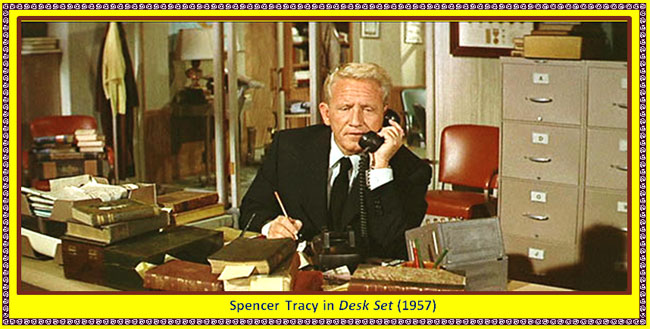
One of Irène’s bad experiences came from actor Spencer Tracy during the production of the Western movie, Tribute to a Bad Man (1956) which Tracy never finished because director Robert Wise (1914-2005) fired him. A book describes how Tracy derided co-star Irène because she was too clumsy and too tall (big raw-boned five feet ten inches in her bare feet, as tall as Tracy) and her English didn’t suit him because she was from Greece.
Greece which is domicile to Greek, one of the world’s oldest written languages, as well as to minority languages and Greek dialects, English together with German, French and Italian were the most common foreign languages spoken. Apart from her native Greek and competence in English, Irène also spoke German and Italian. As a matter of fact, Irène had been in London where she made effort to perfect her almost fluent English.

In those days, foreign-language features showed an increase in bookings and according to top players in U.S. movie circles, besides A-List performers such as Sophia Loren, Gina Lollobrigida, Simone Signoret, Alec Guinness and Maximilian Schell, the other foreign film personalities whose names became familiar to U.S. audiences during 1962 included Alain Delon, Claudia Cardinale, Marcello Mastroianni, Jeanne Moreau, Elsa Martinelli, Melina Mercouri, Horst Buchholz, Maria Schell, Irène Papas, Romy Schneider, Alida Valli, Jean-Paul Belmondo, Alberto Sordi and Christian Marquand.

These best-known of the foreign stars were considered marquee names capable enough to draw patrons to the box-office, and almost all of them have either made pictures in Hollywood or appeared in English-language pictures filmed in Europe by American show business companies.
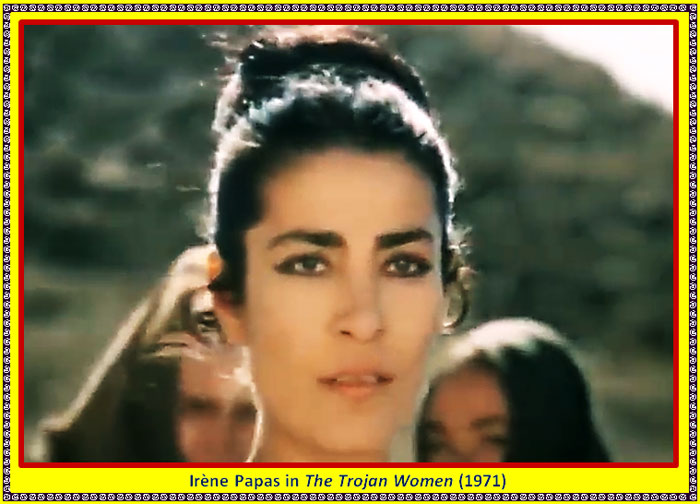
To a great extent, those who are famous stay that way because the press keeps them in the public eye. As for the gifted Irène Papas whom many have waxed poetic in praise of her, upswing on her career also gifted her ample occasions to meet a number of influential people in the film industry, some of them veritable volcano of knowledge and inspiration. It would have been completely in character that her career also brought her time to socialize with the prettiest people, most of them exceedingly rich and ripe, not boors or bores. Then again, one also had to good-naturedly tolerate a great deal of unprofessionalism, too. She was once bestowed with the title “Europe’s Woman” for her efforts to bolster European civilization.

As an award-winning actress who personified Greek female beauty on the cinema screen and on the stage, Irène Papas starred alongside fashionable Hollywood stars of the time such as Anthony Quinn, Gregory Peck, James Cagney, Kirk Douglas, etc. With Kirk Douglas and Alex Cord, she co-starred (as Ida Ginetta) in director Martin Ritt’s The Brotherhood (Mafia, 1968), an excellent Godfather predecessor produced by Kirk Douglas, one of the best paid actors in Hollywood during that time.

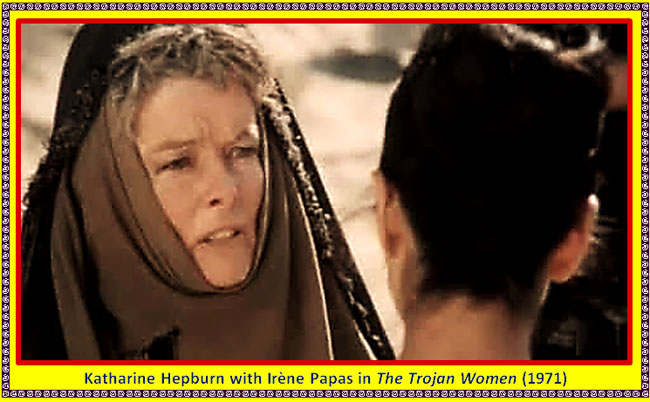
It was Irène’s association with Michael Cacoyannîs (1922-2011) that paved way for Irène’s brilliant performances in the title role in Electra (1962); in Zorba the Greek (Alexis Zorbas, 1964); in The Trojan Women (1971) and also in Sweet Country (Glykeia patrida, 1986), a forceful drama filmed in Greece. These are part of a clutch of films rightly considered as the high point of Irène’s film career. Cacoyannîs is the Greek Cypriot theatre/film director who introduced actress Melina Mercouri (as a good femme fatale) through his 1955 film, Stella.   
Audiences across the world who have seen Zorba the Greek may remember Cacoyannîs’ treatment of Irène Papas in the role of the widow when the viewer first saw glimpses of her face as she hung her immaculate sheets on the clothesline while it flapped in the wind.
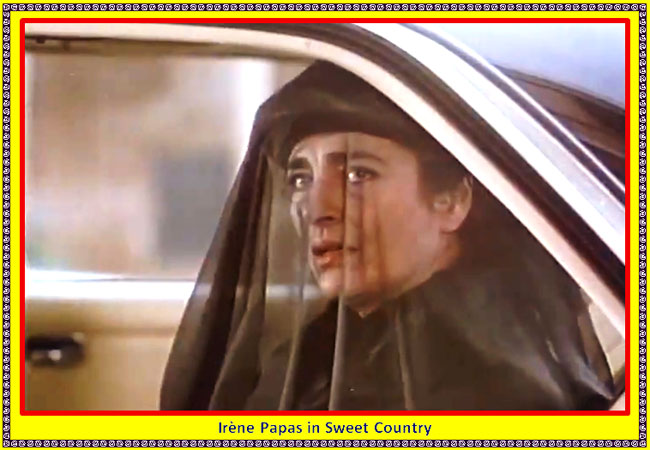
Sweet Country, based on a novel by Caroline Richards, is about the emotional turmoil that befalls an American expatriate couple, Anna Willing (Jane Alexander) and professor husband Ben (John Cullum) while living under military rule following the September 1973 Rightist military coup led by General Augusto Pinochet Ugarte after the assassination of Chile’s first socialist President Salvador Allende (1908-1973). The film is an indictment of conditions that existed at that time when lead character Anna is drawn into the resistance against Pinochet as she attempt to get the torture victims across the border.

In 1968, Irène had an on-going contract to star in director John Huston’s epic production of The Madwoman of Chaillot (1969), based on the 1943 classic play La Folle de Chaillot by French novelist (Hippolyte) Jean Giraudoux. The film featured an all-star cast of Katharine Hepburn, Charles Boyer, Yul Brynner, Giulietta Masina, Edith Evans, Danny Kaye, John Gavin, Paul Henreid, Margaret Leighton, Richard Chamberlain, Donald Pleasence, and Nanette Newman.

The production of The Madwoman of Chaillot was not all smooth sailing. Few days before the production began in Nice, France, the Producers had profound reservations about director Huston who had difference of opinion on the modernization of the movie’s theme. They clinched a deal with British director Bryan Forbes to take over direction of the movie at very short notice. Furthermore, days into the shooting at the Studios de la Victorine, Nice, France, Irène opted out of her role which went to English stage actress Edith Evans DBE. Irène too had not been in a good frame of mind with the characterisation of the role of Josephine she was portraying. All this put-downs were newsworthy in the show business circles.

More a proven actress than a glamorous star alone, Irène Papas has starred in numerous movies, some of them forgettable except for her presence in them. Nonetheless, there are enough significant movies she has done that became the consuming interest to her celebrity status. Listed below, in order of year of release, are some of Irène’s movies in my collection (1):
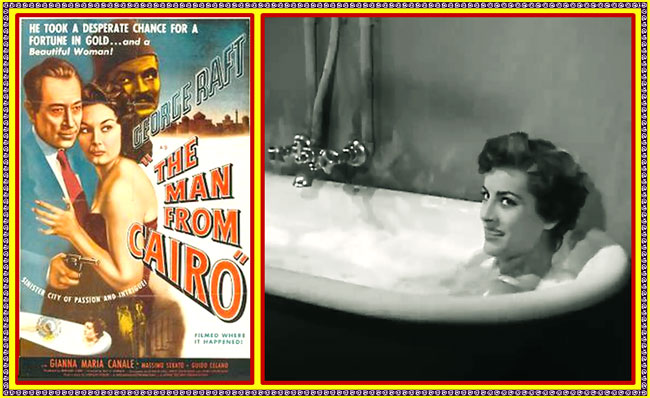
Irène Papas acted as Yvonne Lebeau, a dancer at Cote Bleu, a little nightclub in downtown Algiers in The Man from Cairo (Crime Squad/Dramma nella Kasbah, 1953). Based on story by Hungarian novelist Ladislas Fodor and directed by Ray H. Enright (and Edoardo Anton – uncredited), it was filmed on location in Algeria and Italy. The movie center upon a fortune in gold, lost on the North African desert, which lures a variety of wealth-seekers. After many twists and turns, an American tourist and General Dumont solve the mystery of the lost gold. Although Irène only had a short spell in the earlier part of the movie, George Raft, Gianna Maria Canale, and Massimo Serato in prominent roles had better scope to display their acting talents;

Irène did the starring role of Faidia in Theodora, Slave Empress (Teodora, Impératrice di Bisanzio, 1954), an Italian production by Lux Film with a cast of hundreds, massive sets and in dazzling Pathécolor directed by Riccardo Freda. Stunningly beautiful Gianna Maria Canale, the director’s better half, played the role of Teodora, the daughter of a bear feeder at the amphitheatre who rose to become empress of Byzantium, the celebrated consort of the handsome Emperor Justinian/Giustiniano (Georges Marchal). Teodora champions the causes of the common people, to the displeasure of the prime minister, Giovanni Cappodocia (Henri Guisol), the chief troublemaker who breeds conspiracy. The film marked the second co-starring role of Irène with Gianna Maria Canale, the first being The Man from Cairo.
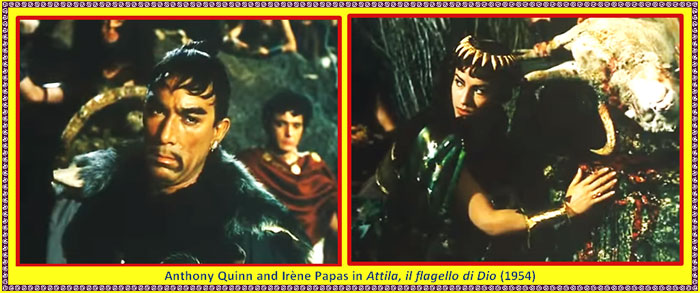
In 1954, Attila (Attila, il flagello di Dio/Attila, Hombre o Demonio/Attila, fléau de Dieu) was released with Irène in the role of Grune. The film featured the cult of the most ruthless conqueror of all time – the barbarian Attila the Hun who, with sword and flame, swept across the civilised world in the year 450 A.D. Even the mighty Roman Empire was marked for his conquests. A Dino De Laurentiis and Carlo Ponti production for Lux Film, directed by Pietro Francisci (1906-1977), Anthony Quinn gave the title role pure savagery while romancing Sophia Loren in the role of Attila’s woman Honoria. Jo                                        

Notes:  

  1. The listed reviews in this tribute is limited only to those films in my personal collection;
  2. DVD/Blu-ray of most of the movies mentioned in this write-up is available with some leading dealers.
  3. Up to now, the sources of reference for this tribute to Irène Papas are archives of the past including printed publications and visual media. DVD sleeves/images shown here are only for promotional purpose. Source: Wikipedia, amazon.com, imdb, and from DVD sleeves.
  4. This illustrated article is an affectionate nosegay to the movies referred above. Please refer to “About” of my webpage for more details.

(© Joseph Sébastine/Manningtree Archive)

Irène Papas – Greece Comes to LA

You can be important to someone but not all the time….

The pretty Greek actress Irène Papas’ cinematic debut took place in Hamenoi Angeloi (Fallen Angels, 1948, credited as Eirini Papa) directed by Egyptian-born Nikos Tsiforos. This could be true in keeping with the date of release even though elsewhere in the media it is also mentioned that her debut big screen performance (as Eirini Pappa) was in Nekri politeia (Dead City), the directorial debut of Frixos HeIiades (Phryxos Iliadis). That movie in which Irène had a short spell playing a girl named Lena was released in December 1951, the year she separated from her husband, director Alkis Papas.

Nekri politeia was exhibited at the 5th Festival de Cannes held in Southern France from 23 April to 10 May 1952 where Irene was an invitee. For someone who was learning her craft and gaining confidence she was being courageous and had started to look the popular conception of a star. Her face was beautiful with an almost perfect bone-structure, black hair, dark expressive eyes, and she moved with a natural inborn elegance – with the grace of the dancer in her.

While attending the Film Festival, the late Prince Aly Khan, then husband of American screen actress Rita Hayworth, chose Irène as his partner for the dance that would open the prestigious reception of the film exhibition. “That meeting with Aly Khan set me back ten years,’ a biography (1) had quoted Irène as saying at that time. According to a book on Aly Khan, it was Irène’s name which was most persistently linked with Aly’s by the end of that film festival. As a result, her photograph and life story soon flashed in newspapers around the world. But then again, according to The Courier-Mail, Brisbane, Irène brushed away the rumours as “Nice flirtation. Although we had a nice flirtation, reports of a possible marriage are ridiculous. I am separated from my husband, but I am still married, and have not asked for a divorce.”

Impressed by Irène’s performance in Nekri politeia, the Italian international producers of Ponti-De Laurentiis Cinematografica immediately offered her an acting contract. Although she did not perform in the film they initially proposed since it was decided to do not cast her in it for the one reason that the role featured a simple and voluptuous vampire. Instead, the producers cast her in the role of Mrs. Luisa Azzali in Le infedeli (The Unfaithfuls / Escándalo en Roma, 1953, dir: Mario Monicelli & Steno) which was a vehicle for Gina Lollobrigida and May Britt.  

It was Irène Papas’ collaboration with Italy’s Lux Films (2) that paved way for her to appearance in noteworthy movies of 1954 such as Attila, il flagello di Dio starring Sophia Loren and Anthony Quinn in principal roles; and Theodora, Slave Empress featuring Gianna Maria Canale and Georges Marchal.

By then, the long gaze of Hollywood had already fallen on Irène Papas. I read somewhere that director Elia Kazan also took an interest in casting her. Anyhow, going over to Hollywood should be quite fun for her.

Arriving in America in the fall of 1954, her first film-test was done by film producer Sol C. Siegel (1903-1982) of movies such as: A Letter to Three Wives (1949), Gentlemen Prefer Blondes (1953), Three Coins in the Fountain (1954), etc. Upon his proposition, Irène was given the kind of reception the film studio reserved for the more obvious gold-runners – and as it turned out, following her screen test, it only took the studio just three days to sign her up in a long-term contract. The producers had taken her acting talent very seriously, at which point, it gave her no small pleasure to be hailed on the lot as a “beautiful Anna Magnani”. There was talk that she will have the leading feminine role (3) in the 1959 remake of Ben-Hur which was to have all the ingredients that translate into great popular appeal.  

Irène Papas made her Hollywood-produced film debut in the role of Jocasta Constantine (4), a former dance-hall Greek emigrant in the Western, Tribute to a Bad Man (1956). Complimenting Irène in the movie was James Cagney’s vigorous acting as the Wyoming horse rancher Jeremy Rodock. Directed by Robert Wise with music by Miklós Rózsa (1907-1995), it was filmed in CinemaScope in Colorado in August 1955.

By then she had met actor Marlon Brando who had won rave notices for his performance in director Elia Kazan’s A Streetcar Named Desire, the 1951 melodrama based on Tennessee Williams’ play. It was only with the passing of time, she revealed that Brando was chryso mou (my darling), the love of her life. Although they never married, instead, her second marriage became a reality in 1957 when she wed film producer José Kohn. That nuptial also hit difficult times and didn’t last longer.

Irène Papas might not have liked working in Hollywood forever because she decided to return to Greece. Before that became a reality, she appeared in few TV sitcoms as well as in series of classical and modern stage presentations including: Fyodor Dostoevsky’s The Idiot; William Shakespeare’s The Merchant of Venice; etc. Moreover, she also endeavoured to step forward into boosting her talent. She went to New York City and enrolled in an acting course by Artistic Director Lee Strasberg at the reputed Actors Studio, founded in 1947. That was an appropriate move on her part on the light of the perception that what is taught reaches through to minds that, once set right, have a chance of staying right.

Back in Greece, Irène didn’t fancy much interest to perform in the Greek theatre. Obviously, she was introspective for having met with negative criticisms during earlier shows. Following appearance in The Lake of Sighs (I limni ton stenagmon, 1959) written and directed by Grigoris Grigoriou, Irène was pleased to avail the opportunity to portray Laskarina Bouboulina (Laskarina Pinotsis) in Greek film director Kostas Andritsos’s Bouboulina (1959), a B&W movie about the heroic exploits of Greece’s first naval commander – in skirts, who historically defeated the Ottoman Empire and liberated Greece.

Laskarina was born in May 1771 inside the prisons of Constantinople (Istanbul) where her mother, Skevo, the daughter of a prominent family of the island of Hydra, was visiting her dying husband Stavrianos Pinotsis who was a prisoner there for his part in the Peloponnese revolution of 1769-70 against the Turks. Shortly after Pinotsis’ death, she lived with her mother at the island of Hydra for four years before moving to Spetses Island. In 1788, she married a Spetsiot skipper and upon his early death, she wed another Spetsiot captain named Dimitrios Bouboulis who also commanded his own ship. In May 1811, Bouboulis too lost his life in sea battle with Algerian pirates off Lampedusa in the Mediterranean Sea.

As a widow, she inherited considerable fortune and undertook to boost the strength of her fleet. To safeguard herself from the attempt of Ottoman authorities to confiscate her fortune, she became an active member of the secret organisation, Filiki Etaireia (Friendly Society). Her efforts in preparations for the impending Greek War of Independence (1821-29) included buying arms and ammunition from foreign ports, as well as creation of her flagship, the Agamemnon, a 33-metre corvette armed with 18 heavy cannons. Upon the outbreak of hostilities, among other things, she commanded her own fleet and fought with great enthusiasm and incredible heroism. The gallant Laskarina Bouboulina was consequently transformed into a legendary figure correlated to the siege of Nafplio and synonymous with female courage and heroism of later Greek history. Killed in May 1825 connected to a family feud, she was posthumously honoured (5). Koula Agagiotou, Andreas Barkoulis and Miranda Myrat also co-starred in the movie Bouboulina.

It was Irène Papas’ impact as a dramatic performer that won her worldwide acclaim with her brilliant performances in the title role in director Michael Cacoyannîs’ Electra (Elektra, 1962). Over the years, in a career spanning about 60 years, Irène Papas starred in over 70 films. Featured in Greek, French, Italian and Hollywood movies, Carl Foreman’s The Guns of Navarone (1961), Michael Cacoyannîs’ Zorba the Greek (1964), Costa-Gavras’ Z(1969) and Francesco Rosi’s Christ Stopped at Eboli (Eboli/Cristo si è fermato a Eboli, 1979) are some of the many movies that catapulted her fame beyond Greece to Italy, Spain, France, England and across the Atlantic Ocean and beyond. Jo

Notes:

  1. Life of the Party: The Biography of Pamela Digby Churchill Hayward Harriman by Christopher Ogden;
  2. Italian film producers Carlo Ponti (1912-2007) and Dino De Laurentiis (1919-2010) joined the Lux Films soon after the Company’s relocation to Rome in 1940;
  3. The role of Esther in Ben-Hur (1959) went to beautiful Israel actress Haya Harareet. The film when made was a successful achievement by MGM and for the exhibitors.
  4. According to imdb: this role was previously offered to A-list actresses: Grace Kelly, Eva Marie Saint and Jennifer Jones.
  5. Upon death of Laskarina Bouboulina on May 22, 1825, she was buried at the cemetery of Agia Anna Church up on the mountain. Her bones were later shifted into the family vault at the Church of Aghios Ioannis (The Church of St. John) below, built in 1822 and fully funded by Laskarina. In 1938, the casket was donated to the Museum of Spetses upon its inauguration. The Bouboulina museum was established much later in 1991.
  6. Up to now, the sources of reference for this tribute to Irène Papas are archives of the past including printed publications and visual media. DVD/Blu-ray of most of the movies mentioned in this write-up is available with some leading dealers.
  7. DVD sleeves/images shown here are only for promotional purpose. Source: Wikipedia, amazon.com, imdb, and from DVD sleeves.
  8. This illustrated article is an affectionate nosegay to the movies referred above. Please refer to “About” of my webpage for more details.

 (© Joseph Sébastine/Manningtree Archive)