Remembering the Italian actress Laura Antonelli (Laura Antonaz, November 28, 1941 – June 22, 2015). Once a desired icon of male gaze, her final withdrawal from filming and public had elicited her view: “Earthly life no longer interests me.”
Here are some of her feature films which I have seen:
Notes:
Some of the DVD/Blu-ray of the movies referred to in this article is available with leading dealers.
DVD sleeves/posters credits: Wikipedia, amazon, imdb and from my private collection. Please refer to “About” of my webpage for more details.
In memory of Laura Antonelli who left for her heavenly abode on June 22, 2015.
May 8th marks the death anniversary of four eminent personalities – each of them recognized specialists in their respective fields.
(1) Gustave Flaubert (December 12, 1821 – May 8, 1880), French novelist. Especially famous for his “Madame Bovary” (debut novel: Madame Bovary: Mœurs de province, 1857), “Salammbô” (1862), etc.
Film adaptations of Madame Bovary includes: 2000 BBC version and 2014 version, etc. A sword and sandal film Salambô (The Loves of Salammbo) was released in 1960.
(2) George Peppard (October 1, 1928 – May 8, 1994), American actor and producer.
Featured in movies such as: Breakfast at Tiffany’s (1961), How the West Was Won (1962), The Carpetbaggers (1964), Operation Crossbow (1965), The Blue Max (1966), Tobruk (1967), Cannon for Cordoba (1970), etc.
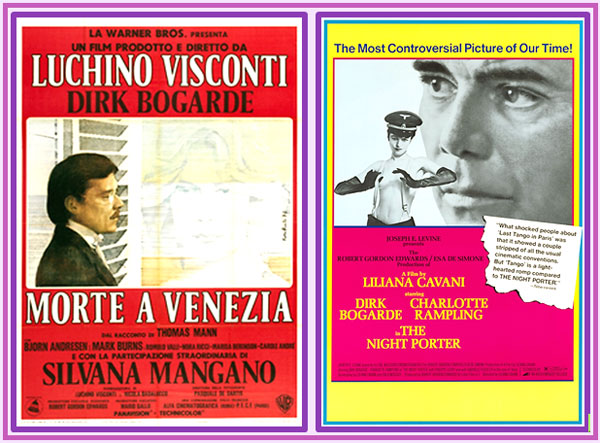
(3) Sir Dirk Bogarde (March 28, 1921 – May 8, 1999), English actor, novelist and screenwriter.
Acting credits include: The Servant (1963), Darling (1965), Accident (1967), Death in Venice (1971), The Night Porter (1974), A Bridge Too Far (1977), etc.
(4) Bryan Forbes CBE (John Theobald Clarke, July 22, 1926 – May 8, 2013), English actor, director, producer, novelist and screenwriter.
Acted in movies such as: The Million Pound Note (1954), The Key (1958), The Guns of Navarone (1961), etc and his directorial venture includes: The Wrong Box (1966), International Velvet (1978), etc.
Although the above personalities are featured in various movies, their movies referred herein are limited to some of those forming part of our private collection.
Jo
Notes:
DVD/Blu-ray of most of the movies mentioned in this write-up are available with some leading dealers.
DVD sleeves/images shown here are only for promotional purpose. Source: Wikipedia, amazon.com, imdb, and from DVD sleeves.
This illustrated article is an affectionate nosegay to the movies referred above. Please refer to “About” of my webpage for more details.
To everyone mentioned in this write-up this post is dedicated.
Part III of The Flower and The Nettle (in 3 parts)
“A word or a smile is often enough to put fresh life in a despondent soul.” – St. Thérèse of Lisieux
Although few names are listed in the Bible from Adam to Noah, it is estimated that even before the murder of Abel around 130 years after Adam’s creation, through the human reproductive process, there were upwards of four hundred thousand male descendants of Adam, in addition to women and children. If a tradition of Abyssinia speaks truly, they were descended from Shem, the son of Noah.
One legend that engaged the minds of the ancients of Abyssinia asserts that the devil or Satan, the head hunter from the garden, was not yet done with just the fall of Eve and Adam. That episode in the garden was only the beginning – a foretaste. Hiding in the serpent for that first time, the devil’s initial attempt was to attribute the prohibition on the fruit of the tree of knowledge in the midst of the garden to envy. Thus, by planting the seeds of doubt in the mind of the woman, the evil one had secured a sparkling victory by inducing disobedience in Adam through Eve which led to their punishment.
Thereafter, God had questioned Adam and his woman but didn’t question the devil: because it’s a non-issue. The devil is confirmed as who he is. He doesn’t just act evil for he is the evil one, at times a fire out of control. The devil cannot be other than he is. His success in this episode, no doubt, had opened the pathway for the evil one to continue with his fiendish stratagem.
In spite that Adam and Eve realised that the Satan impersonated as a serpent had deceived them at so great a price, yet with a singleness of purpose, the devil had ventured to deceive those human mortals once again with his deceptive ways. As we believe, his satanic force of will favoured special and privileged footing in terms of continuity and high advantages in exercising his misdemeanours which was his known forte since a constant endeavour to do evil always exhales and ascends from hell.
The devil is not a literary invention. The Abyssinian version of the Fall of Man of the Old Testament was that jealousy is the prevailing root of all evil and it descended with other sins from our first parents. And so, there are temptations everywhere. The devil will always do his best to tempt you into sin until you get to that place where you fall in love with sin, ungodliness and worldly lusts. He wants you down there with him – like his everlasting inheritance.
One day, Eve was in the cave waiting for Adam to return from the field. At the set of sun, the devil, the hater of all good, decided to approach her.
Eve spent most of her time in their dwelling place in a cave in a rock on the western border of the garden where the earth was very broad. She often thought about how very peaceful and distinct their charmed life of comfort, as they knew it, having lived in that Garden. She knew of the values of that period, of life that knows no Death; and an important lesson about loss.
Unlike their times inside the Garden of Eden when a certain glory rested on them, the punishment inflicted by God on them to work on the uninhabited expanse of land surface for agricultural crop yields to meet their daily bread, often kept Adam away from the presence of Eve. Besides, Adam used to visit a sacred place for his daily prayer – part of his normal course of activities on any given day.
The dusk was falling and Eve, while working with her spindle, wondered what kept Adam away such long time. Even though the devil had picked her lonely moment to take advantage of her, he didn’t expect Eve’s mind would be a strange hard shell to infiltrate.
When Eve came to the mouth of the cave and to the delicious outside air, the evil one, disguised as the accursed serpent, made his apparition, “sorrowfully licking the dust, wiggling on its breast on the ground and venomous, by reason of God’s curse,” which implied that originally the serpent’s physical form walked erect.
With its eyes blood-red, it swelled its head and stood on its tail near the mouth of the cave because the devil could not enter into the cave due to their prayers. With a display of pomp, he said that he hoped what he was going to tell her would meet with her approbation.
The insidious tempter asserted that Eve was a deceived wife and nothing could make him so miserable as to find her unhappy. Adam merits much greater attention from her – for he could be seeing another woman elsewhere during his absence from Eve.
So far, she had no reason to be suspicious of Adam even though, after their expulsion from the Garden, many things have changed. Adam was not the similitude of his Creator – the man of original state of innocence and happiness which he was when God breathed the breath of life into him and pronounced him good.
As devil’s words, warm and sympathetic, set the dogs onto her mind, the tempter craftily proposed to show to her the other woman if only Eve would give credit to his words. He had vouched that she could ask the leaves of the trees for the truth, ask the stars of the night sky, or ask the calmness of the universe, carefully avoiding any mention of the Sun, now about to set, but which dazzles and beautifies.
Heeding to Eve’s request, the devil went ahead of her to the river bank. She followed him until they came to the still waters of the river, the place where he had declared Eve could see her rival. Looking down into the fresh waters of the sun-flecked mountain watercourse, Eve could make out the woman staring back at her – the life in the water. Eve felt dashed and low.
Although the devil didn’t give her to know at that time, her own reflection was sufficient to corroborate her of the other woman’s existence. Although the devil had started out with zeal, now finding himself unable to keep still looking severe, the evil one, animated by infectious evil spirits, eased out of the serpent and hid away from Eve.
His spirit soared at his devil’s luck in deceiving her. He could hardly contain his satanic laughter. That is all that matters and that is always the case. Then, as now, mankind had not been free from the wiles of the devil – the cause of many troubles.
It is difficult to clothe in adequate illustration the ghastly attributes with which painting and writings have invested this horrendous evil character – the devil or Satan. Years later, the Africans of the Guinea Coast would come to an understanding on the issue at hand – learn how to tame the evil, a cognitive achievement that is properly creditable to a legend of their ancestors.
The influences of such a legend have been subject of various interpretations. However, it is not a competition. It asserted that the only defence one would require against the hideous devil and his minions unnumbered, is a mirror. If anyone will keep a mirror beside the Devil, he must see himself in it, and he at once rushes away in terror of his own ugliness.
Seek not outside yourself, heaven is within – Mary Lou Cook
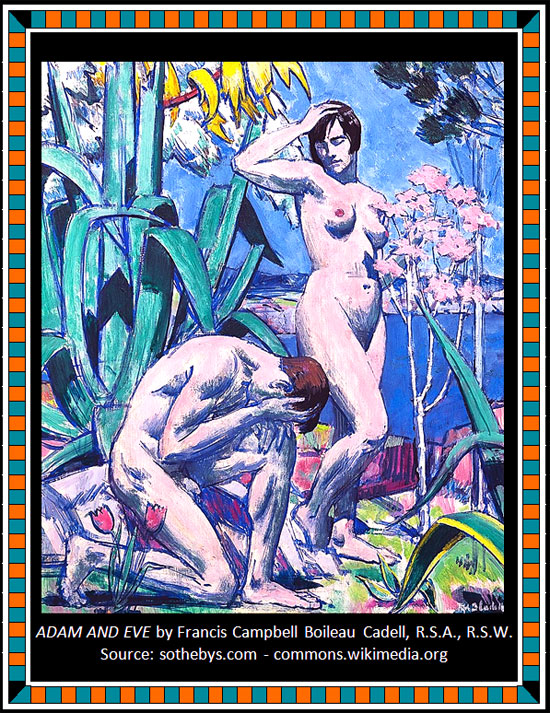
Happiness is a living emotion. It was in the Garden of Eden with its magnificent vegetation, plentiful fauna, and teeming population of many other species wherein Adam, his woman and the animals happily occupied the same plane of existence. It was in this garden that the Creator, who is the foundation of all good, established the union of those first two human beings – which occasioned the beginning of the human family and birth of society. It was in this garden where, both Adam and the woman ate only the abundant fruits of the trees and lived in their state of pristine innocence.
This is also where the first punishment for disobedience was meted out against these two frail creatures who had sinned through pride – for by consuming the forbidden fruit man knew the good he had fallen from, and the evil he had fallen into.
As regards the vexed question of banishment from Eden as a consequence, the respective punishments enforced on Adam and his woman, the couple who originally enjoyed immortality and “walked with God”, brought upon them sickness and death; with the necessity of working for a living, Adam will struggle in pain so much of his further earthly span to prepare the ground fertile to cultivate; and the woman, who was every way perfect and bearer of life, is to suffer multiplied pain during childbirth.
God always intended for human beings to work for a living and for work to be a joy. In the beginning, work was meant as a gift. In the beautiful garden where Adam lived with the woman, no doubt, they didn’t fritter their life away but oft-times occupied themselves tending to that garden. One could think of the time when Adam studied all living things and engaged in the act of naming them – something more than a passing notice but a very important symbol.
The chastisements imposed by God also made them discover their nakedness and awakened in them a sense of shame in contrast to their prevailing state wherein they were unashamed of being naked.
They hid behind the loincloths made of fig-leaves gathered probably from the tree whose forbidden fruit Adam and the woman had eaten (1) in defiance of the commandment of their God the Creator.
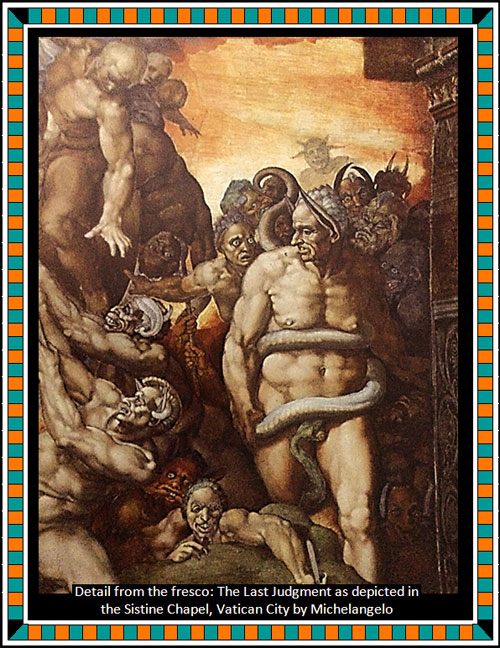
The fact remained that, the mixture of mercy and wrath and expulsion from the Garden of Eden they had incurred was the aftereffect of the crafty exploit of a devious sinner in a serpent’s form. That demonic sinner was none other than the devil. As the Prince of Evil, he is also called Satan, the fallen and lost, but a hero of his own story, who had employed jealousy as a seductive weapon with the utmost subtlety to entice the guileless and unsuspecting woman by praising the alluring beauty of the tree and the seeming benefits which it might confer.
The devil had accosted the woman in the absence of Adam. Perhaps she had only heard the terms of the covenant from Adam. To seduce the woman into disobedience, the evil one had made use of the serpent (chivja). If anything, by his prevarication, the first man Adam not only sinned himself by his disobedience to God and obedience to the devil, but entailed misery on his whole posterity as the blood of the first human stock flows in the veins of every living human being.
The spell of trustworthiness the devil created to seduce the woman into disobedience was no simple feat but craftily attained by him by employing a methodical and deceitful approach for which this evil creature would later become world renowned for.
From the earliest years, painters around the world, while depicting the Fall of Man, have illustrated the devil’s impersonation as a serpent and accentuated the cunningness of this evil snake creature when it engaged Adam’s woman (2) in conversation that led to the Fall of Man, an episode which formed part of the inspired history of the great events of 2369 years depicted in the Book ofGenesis of the Old Testament which started with the first ten words: “In the beginning God created the heavens and the earth.”
Jo (Continued in Part III: Lessons from The Garden)
Note: (1) A fable would later on gather popularity as “Adam’s apple” (Latin: Pomum Adami) in relation to the protuberance in the forepart of the throat, so called from the supposition that a piece of the forbidden fruit stuck in Adam’s throat.
(2) Later, Adam would call his woman Eve – the word Eve is “Chavah/Hawwah” in Hebrew, means “Life, lifegiving“)
“Let us make man in our image, after our likeness” (Genesis 1:26)
Time is always on the run. As for now, let me take the privilege to rewind it to take you to the very infancy of the world – to that ancient time when the first parents who stood at the head of the human race lived care-free in the majestic Garden of Eden, that sacred place stated in the Book of Genesis, the first book of the Bible which is the Book of all beginnings. Purportedly written by Moses, the Book of Genesis tells about how the world came into existence and life actually began.
Predominantly evergreen, the colour that represented hope and new life, the Garden of Eden was reputedly the terrestrial paradise that God planted eastward from Canaan, in Eden. An emblem of the heavenly state, this garden probably lay not far from the ancient Babylon, where the rivers Euphrates on the west, and Hiddekel, or Tigris (which goes toward the east of Assyria) on the east, joined into one and watered it. These waters, after running a little southward, parted into the two streams of Gihon (extent the whole land of Ethiopia) on the east, and onto Pison (extent the whole land of Havilah, where there is gold) on the West. However, the abundant literature on the subject does not lead to a definite answer to the garden’s location.
Human race certainly had a beginning. Science tells us about the evolution of man in variations such as: First Primate (Forerunner of Man); Java Man (about 1,000,000 B.C); Peking Man (about 750,000 B.C); Heidelberg Man (about 500,000 B.C); Neanderthal Man (about 100,000 B.C) with whom our cultural history begins and the formation of Homo sapiens (about 50,000 B.C) which is our own species. In all likelihood there was a first of the species Homo sapiens of the earth, earthy, who once stood at the head of the human race. Adam or whatever his name was, his blood flows in the veins of every living human being belonging to the same species on earth today, as the Bible clearly expresses it.
According to the Book of Genesis, God formed man’s body of the dust of the ground with most exquisite art and skill and breathed into his nostrils the breath of life; and man became a living rational soul. This being our Creator’s greatest achievement, His creation was a human person from the earth, capable of exercising the functions of all sorts of life, although he lacked the Holy Spirit. It was in the very Paradise of God where the Bible says, the first man Adam was graciously placed.
Based on the Old Testament, it is uncomplicated to fathom how the garden of Eden’s image is subliminally imbued in the minds and hearts of the Christians at large. The Bible disclose that, this well-watered Garden of Eden which had a luxuriant natural vegetation, where grew every tree that is pleasant to the sight, was decked and enriched with every choice of precious fruits good for food – the inference being Garden of Eden is a magical place – peaceful.
Amidst the garden stood the principal tree of life, so called because of the invigorating nature of its fruit; and it was made a sacramental pledge of man’s eternal life in heaven, provided he kept the covenant which God made with him. Besides the tree of life, therein was the tree of knowledge of good and evil, so called because, by its fruit God, manifesting his supreme authority, tried Adam’s perfect obedience: for in the day that he eat from it, he shall surely die.
On the word of the Bible, God knew that a help meet for man is essential, since it is not good that the man should be alone. The intended female must be suitable to his nature, useful on all occasions for their mutual comfort, and the propagation of their species.
God caused a deep sleep to fall upon Adam, and as he slept, a female was brought forth from one of the ribs of Adam. He endowed her, as He did Adam, with power of thought, speech and endless life. Once brought her to Adam to honour the institution of marriage, to Adam she was the bone of his bones and flesh of his flesh. He called her ‘Woman’ (îsshâh), because she was taken out of Man.
Jo (Continued in Part II: Speak of The Devil…)
Dedicated to my late wife Renate Elisabeth Simeon (Carina) who took me out of the woods and showed me the trees.
The body is a sacred garment. It’s your first and last garment;
it is what you enter life in and what you depart life with,
and it should be treated with honor – Martha Graham
With the aid of history, it is related that S. Agnes, of long remembrance, was martyred in Rome where the ancient Stadium-Domitiani (Stadium of Domitian/Circus Agonalis/Circus Alexandri, 81-96 AD) (1) existed. This is where Piazza Navona is presently located. A few years after Agnes’ martyrdom, Rome had turned into the cradle of her cult and her burial site on the left side of Via Nomentana became a prominent centre of pilgrimage. With time, a shrine in her honour, probably a private founding, originated at the place of her martyrdom at Stadium-Domitiani.
The survival of historical tradition in things and men exercises an indescribable charm on students of civilization. According to the Depositio Martyrum (part of early Philocalian calendar), since 366 the Feast-day of S. Agnes of Rome was celebrated on January 21 by Pope Damasus I (305-384, Reign: 366-384). Pope Damasus’s veneration for the tombs of the martyrs was commemorated in poetic compositions and also by the Christian community through the years that followed. From Italy, devotion to S. Agnes floated on saintly little wings all around France, spread over to the Netherlands, and to Germany, and so on… preserving S. Agnes in the minds of the populace with faith and trust.Alongside the Apostles and Evangelists, there is no saint whose effigy is older than S. Agnes whose images, with her name inscribed, are found on ancient glass and earthenware vessels used by the Christians in the early part of the 4th century.
The papal investment in her cult, enriched by the growing fame of S. Agnes in Europe, indeed inspired later Popes, especially those during 5th, 8th and 9th centuries. S. Agnes became one of seven women, together with the Blessed Virgin Mary, who are commemorated by name in the Canon of the Holy Mass.
It was precisely after 1050, that a number of popes expressed their hope to restore the past that had been lost so that the church will recapture the purity of the early Christianity. The Shrine of S. Agnes at the ancient Stadium-Domitiani was subsequently enlarged and transformed into a small basilica by Pope Callixtus II (1065-1124, Reign: 1119-1124). Callixtus II had consecrated this Basilica on 28 January 1123, few months after the Concordat of Worms (Pactum Calixtinum) in September 1122. (2) Pope Callixtus II not only rebuilt part of the Church of Saint Paul, but also restored many ancient monuments as well as construction of aqueducts for the accessibility of different quarters of the city.By the end of the twelfth century, Rome housed more than three hundred churches.
3) After centuries have passed, it was in 1652, during the pontificate of Pope Innocent X (1574-1655, Reign: 1644-1655) when the construction of the present Baroque church of Sant’Agnese in Agone (together with the Palazzo of Pamphili family) in Piazza Navona was started by architect/sculptor Francesco Borromini (aka. Francesco Castelli, 1599-1667). Borromini is generally considered the father of all modern abuses in architecture. Borromini undertook this project after completion of the extensive repair and modernization work on the basilica of San Giovanni in Laterano – thus having completed the works in time for the 1650 Jubilee.
The façade of Sant’Agnese in Agoneis reputedly Borromini’s best work. This church houses a chapel dedicated to S. Agnes for the principal reason that the chapel is located closer to the site where Agnes was martyred in c. 304. Visitors can take the stairway to the right of the Chapel’s altar down to the Cemetery Crypt of S. Agnes (sacellum infimum) in the underground (3).
This Cripta which was built as a hypogeum (underground chamber) is the only surviving part of the ancient church. Since at least the 7th century, the Cripta, is venerated as the traditional site where young Agnes received the crown of martyrdom. Presently, it also has much significance for being the Shrine where her relic (skull of S. Agnes) is preserved – most likely brought here by Pope Honorius II (1060-1130, Reign: 1124-1130).
Other traditional account relate that during the 9th century, the skull of S. Agnes was shifted from her martyrium at the Catacombe di S. Agnese to the Papal Archbasilica of St. John Lateran (Arcibasilica Papale San Giovanni in Laterano) (4) outside of Vatican City. This 4th century highest ranking Archbasilica was founded by Constantine the Great at the instigation of Pope St. Sylvester I (285-335, Reign: 314-335). The Lateran was the historic seat of the Popes, bishop of Rome from the time of Constantine to the period of the return of the Holy See from Avignon in 1377 when Pope Gregory XI (1331-1378, Reign: 1370-1378), the seventh and last Avignon pope and a nephew of Pope Clement VI, transferred the papal residence to the Vatican thereby establishing Basilica Papale di San Pietro into an elevated position.
Within the Lateran Palace was Sancta Sanctorum (5). It was an ancient oratory/private chapel of the Popes dedicated to S. Lawrence, which was in existence since earlier than the eight century. The relic (skull) of Agnes was preserved in a closed gallery over the sole altar of this Sancta Sanctorum along with a wealth of reliquaries, icon, and venerated relics. It was from this sanctified spacethat in 1124, the venerated skull was translated by Pope Honorius II (6)to the crypt of the newly consecrated Church of Sant’Agnese in Agone.
Fortunately, given that the translation of the relic of S. Agnes from Sancta Sanctorum had taken place in 1124, it had helped to prevent the relic from destruction for the reason that the old Lateran Basilica was nearly destroyed by the conflagration on the night of May 5th, 1308 during the pontificate of Clement V (1264-1314, Reign: 1305-1314). Although the Basilica was soon after rebuilt by the Romans with the aid of the pope, another disaster struck in 1360 while Innocent VI (1282-1362, Reign: 1352-1362) was the reigning pope when the entire roof fell down crushing the columns of the nave.
The name of S. Agnes is derived from the Greek adjective agnê which mean pure, chaste and should be spelled Agnê without the final‘s’. On the other hand, the Romans linked her name to the Latin word ‘agnus’ meaning ‘lamb’. And so, in the eyes of the faithful, S. Agnes of Rome, of course, is “Agna Dei” – the feminine personification of the Lamb of God.
In 1662 the first statue of S. Agnes was installed amongst the hosts of saints on top of Gian Lorenzo Bernini’s imposing Doric colonnades at the square in front of the monumental Basilica Papale di San Pietro in Rome (7). Standing in the Piazza, and one can watch S. Agnes up there and contemplate in pious veneration of her memory.
Rome is a great repository of Christian relics. The souls of the saints are in the hands of God but their holy relics, and the truths of their history have been left with us as sacred deposits. S. John Chrysostom (c. 347 – 407) gave merit to this by a quote: “God beautifully has divided the martyrs with us; he has taken their souls and given us their bodies.” And those precious remains, which God has entrusted to the guardianship of the church, to the pious veneration of the faithful, it is believed He will, one day, re-establish in glory.
(Concluded)
Jo
Notes:
The entire Campus Martius and the Capitoline Hill had to undergo total reconstruction due to the disastrous fire of 80 AD. The task was carried out by Domitian (81-96), the third emperor of the Flavian dynasty. Apart from the restoration which ncluded the Pantheon, the Portico of Octavia, etc, Domitian built the Stadium (upon the remains of which the present-day Piazza Navona is established) for athletic sports and musical spectacles with a renewed interest in Greek culture.
The Concordatof Worms was a compromise agreement between the Catholic Church and the Holy Roman Empire Henry V (1081-1125, Reign: 1106-1125) settling the Church-State investiture dispute peacefully and the acts were ratified at the first general Council of Lateran (ninth ecumenical council) on 18 March 1123, in the middle of Lent. Henry V’s grandmother (mother of Henry IV), elder sister as well as niece were named after S. Agnes.
The Roman builders of the time endeavoured to rescue the remains of previous edifices, but preserved them to serve as foundations.
It is here in the basilica of the Lateran that the Church places the first meeting between S. Francis and S. Dominic.
An ancient and miraculous image of Jesus Christ, known as the Acheiropoeton was preserved in this Sanctorum. This image was believed not to have been created by human hand.
Different dates are also given to indicate the translation of the skull of S. Agnes: common accounts indicate that it was done after the construction of the present Baroque church of Sant’Agnese in Agone in 17th Century while elsewhere it is mentioned that it was done during the reign of the “Rosary” Pope Leo XIII (1810-1903, Reign: 1878-1903). In fact, during the pontificate of Pope Leo XIII, the pope renewed the apse and rebuilt the presbyteryof the Lateran Basilica where, in the Sancta Sanctorum, the relic of S. Agnes was kept since the 9th century.
The statue was created by sculptor Lazzaro Morelli in c. 1661-62, one of Bernini’s two students along with their workshops.
“My life belongs to Him who has chosen me the first.” – S. Agnes
Christianity took a victory lap after Constantine the Great took over Rome in the wake of his successful victory at the Milvian Bridge in 312. The days when secrecy of faith and worship was a necessity for the Christians living in pagan Rome due to their fear of detention gradually changed. Apart from the ancient places of Christian worship at the altars and chapels of the catacombs, small congregations used to assemble in private houses of their better-endowed Christian brethren. The interior of such private houses progressively converted as the congregations grew but a communal style of architecture for the churches recognisable as such to the public took shape only by the fourth century.As for the acquisition of burial grounds, it was a process that started in Rome in the second half of the second century, when Christian congregations began to acquire burial grounds for their members, the oldest being the catacombs in the south of Rome on the Appian Way.
Following the martyrdom of S. Agnes in c. 304, her parents buried her on the left side of Via Nomentana in an area of the Catacombs which later became known as Catacombe di S. Agnese (Coemeterium Agnetis) in the Complesso Monumentale S. Agnese (1). The Complesso is located in Quartiere Trieste.
Off Via Nomentana was the Coemeterium Maius which was the burial site of a catechumen named Emerentiana (Emerenziana) (2), the foster-sister of Agnes who was stoned to death at the tomb of Agnes soon after her funeral. The details of Emerentiana’s life are swathed in the mists of legend but it is related that both Agnes and Emerentiana were brought up in Christian faith by their mothers who bound their family together with love, good food and discipline.
My late wife Carina Renate (of blessed memory) and I have enjoyed extended visits to the unique and wonderful city of Rome where on many occasions we had the pleasure to explore Christian edifices, religious antiquity, and monumental ruins. Hereunder I single out only three old churches at Rome related to S. Agnes as space precludes me from entering further into this subject.
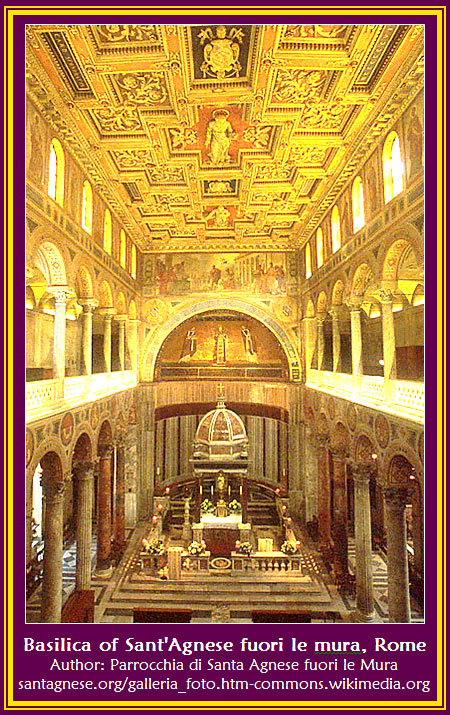
1) Basilica of St. Agnes Outside the Walls (Sant’Agnese fuori le Mura) is the present smaller basilica on the site of the saint’s grave at Catacombe di S. Agnese. Built and restored by Pope Honorius I (Reign: 625-638), Sant’Agnese fuori le Mura is partially below ground. It exists over the very spot of an older sacellum ad corpus (Chapel for the body) most likely erectedduring 337-366 when there was a rapid increase in the Christian community of Rome. That ancient shrine was subsequently restored by Pope Symmachus (498-514), a Sardinian convert who also built, among other edifices, the first papal residence next to S. Peter’s Basilica.
From the pontificate of Pope Paul V (Reign: 1605-1621) when the tomb of S. Agnes was exhumed to this day, the silver urn (given by Pope Paul V) containing the bones of S. Agnes is conserved beneath the high altar of Sant’Agnese fuori le Mura.
The same sarcophagus now contains the cache of bones of S. Emerentiana VM after her crypt (Chapel of theChair) was discovered in a catacomb in the land gifted to the Christian community by the wealthy Ostorii family. The relics of S. Emerentiana were also noted during the archaeological excavations of Giovanni Battista de Rossi carried out in 1876 during the longest verified pontificate of Pius IX (1846-1878).
2) A few meters from Sant’Agnese fuori le Mura is the once grandiose edifice erected to commemorate the spot where the lifeless body of Agnes was laid in c 304. This edifice was founded by Roman emperor Constantine the Great (c. 274-337) (3) at the behest of Constantina (Flavia Valeria Constantia/Costantiniana/Costantia, c. 320-354), his daughter from Empress Flavia Maxima Fausta (c 293-326), his second wife.
In 337, following the death of her husband Flavius Hannibalianus (Annibalianus), Rex Regum, Constantina had sought the healing attributed to S. Agnes to cure her persisting skin ailment. Legend has it that S. Agnes appeared to Constantina in a dream entreating her to become Christian. The miraculous cure that took place the following morning turned Constantina into an ardent devotee of S. Agnes and before long, a basilica in the saint’s honour was built near Sant’Agnese fuori le Mura. Years later, when Constantina died at Bithynia (Asia Minor) in 354, her brother Emperor Constantius II (Flavius Julius Constantius, 317-361) took initiative to honour Constantina’s wish to repose by S. Agnes’ side. Her mortal remains were brought to Rome and interred in the (now well-preserved) Mausoleo di Santa Costanza (referred as Church of S. Costanza since 865. 4).
According to contemporary Antiochian historian Ammianus Marcellinus, six years after the passing of Constantina in 354, the lifeless body of Helêna, another daughter of Constantine and wife of Emperor Julian ‘the Apostate ’(Flavius Claudius Julianus, 331-363) (5), was brought from Gaul in 360 during the Quinquennalia Games and entombed in this Mausoleo.
From very early times S. Agnes was regarded as a singularly loved figure among the heroines of the days of persecution. Although portions of the catacomb of that area are of an older date than S. Agnes, out of devotion for S. Agnes, many noble Roman families chose these grounds for their sepulchre – to be nearer to the burial site of this celebrated saint. As years rolled on, that entire old burial area became known as the Catacombe di S. Agnese, one of the largest and most celebrated of Christian Rome.
Jo (Continued in Part III)
Notes:
The Complesso Monumentale S. Agnese (current Sant’Agnese fuori le Mura) consists of the Catacombe Sant’Agnese, Sec. II-IV, Basilica Costantiniana Zona Archeologica Sec. IV, Mausoleo di Costanza Sec. IV and Basilica Onoriana Sec. VII. A trip to Rome is incomplete without savouring the fascinating ambiance of the Complesso Monumentale S. Agnese. A real gem in Rome – not to be missed by those who love ancient paintings, beautiful mosaic, unmodified architecture and history of the first ages of Christianity.
Sant’Emerentiana (Emerenzia/Emérentienne) is presumed to be a sister or foster-sister of S. Agnes. She was most likely one of the helpers during the burial of S. Agnes. Emerentiana’s feast-day is celebrated on January 23 but in the Martyrologium Hieronymianum she is mentioned under 16 September, with the statement: In cemeterio maiore;
Constantine the Great was responsible for building many Christian basilicas (S. Peter’s, S. Paolo, S. Lorenzo, etc). He is also associated with monuments outside city limits and also at the Catacombs where they are erected on the site of the tombs of the martyrs and saints.
The 4th century Mausoleo di S. Costanza, a sepulchral basilica (used as a baptistery for Sant’Agnese basilica and a popular chapel for wedding) has circular form similar to the Hadrian’s Mausoleum (Castel Sant’Angelo) and the Temple of Vesta, the Virgin goddess of the hearth and home in the Roman religion. This funerary complex was probably intended for Constantine I but his daughter Constantina inherited it after he was buried at the Church of the Holy Apostles in Constantinople. Together with the monumental red porphyry sarcophagus of S. Helena (Flavia Julia Helena, c. 250-c. 330), the mother of Constantine, the red porphyry sarcophagus of Constantina (Costantia) is presently preserved in the Museo Pio Clementino of Museo Vaticano Roma and a cast replica is kept in the Mausoleo di S. Costanza.
Helena’s death in Gaul in 360 was caused by the effects of poison, which, according to Ammianus Marcellinus, had been administered three years earlier in Rome, by Eusebia Augusta, the beautiful but jealous second wife of Emperor Constantius II. It was believed that this act was not so much to kill Helena but to prevent her from ever bearing an heir to the throne. The mystery concerning Helena’s death was used by the enemies of her husband Emperor Julian (Flavius Claudius Julianus) to tarnish his reputation at the time.
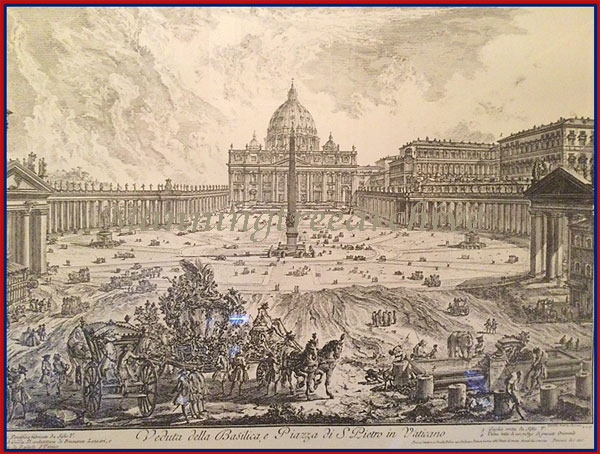
Rome is renowned as the “city of a thousand churches”. The first among them, St. Peter’s Basilica in Vatican (Basilica Papali di San Pietro Vaticano), the acknowledged focus of Christianity worldwide was consecrated by Pope Urban VIII (1568-1644) 395 years ago on November 18, 1626.
That day marked the 1300th anniversary of dedication of the old S. Peter’s Basilica (Constantine’s Basilica) on November 18, 326 by Pope Sylvester I (285-335). This basilica was the centre of Christian worship and focus of pilgrims from around the globe until the new S. Peter’s was raised on its very spot.
Ancient writings has described how the body of Simon Peter of Galilee, Prince of the Apostles, was exhumed from his simple earthen grave at this time and re-interred in a shrine of silver, enclosed in a sarcophagus of gilt bronze upon which was laid the great cross of gold – a gift of Constantine the Great (c. 272-337) and his mother S. Helena.
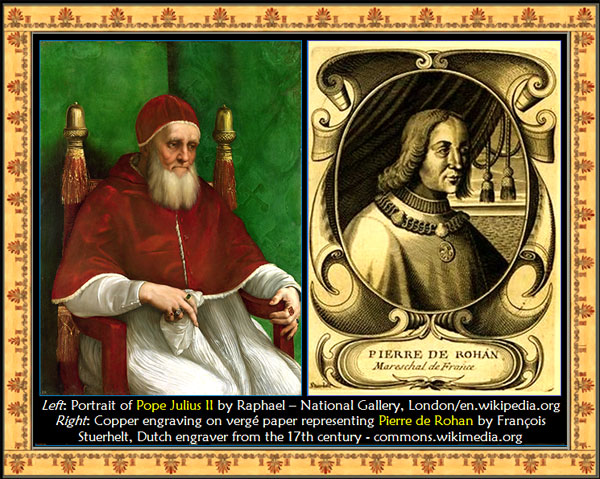
The rebuilding of the basilica was first planned during the pontificate of Nicholas V (1397-1455) who rebuilt the Vatican, restored St. Peter’s, and the Vatican Library during his pontificate. However, the work of the new basilica did not materialise till the time of the great Renaissance Pope Julius II (1443-1513). In April 1506, Julius II began the new S. Peter’s from designs of Donato Bramante (1444-1514). The first stone for this most beautiful and the most sublime edifice was laid on the spot where the present statue of S. Veronica (by sculptor Francesco Mochi, 1580-1654) is located.
Michelangelo Buonarroti (1475-1564) wanted the cupola to be immense so that it would “embrace all those in Christian faith around the earth”. Left unfinished by Michelangelo, it was completed by Giacomo della Porta (1541-1604) and Domenico Fontana (1543-1607) in 1590.
The two semi-circular colonnades of Gian Lorenzo Bernini (1598-1680) were added by Pope Alexander VII (1599-1667) in 1667. The enormous Baldacchino or canopy over the high altar made of bronze and adorned with gilt ornaments is the work of Bernini who completed it in 1633. The enormous talent involved in its creation and preservation has made St. Peter’s Basilica a sanctified ornament of the earth. Jo
Last night we re-watched Une Femme de Ménage (The Housekeeper) from Claude Berri, the Oscar-winner director of Le Poulet, (1965) who also brought to us: Jean De Florette (1986) and its sequel, Manon des Sources (1986), those French cinema classics based on the two-volume novel by French novelist/playwright/filmmaker Marcel Pagnol.
Une Femme de Ménage (2002, Color, French) is based on a novel by Christian Oster. The charming film is laced with attitude and style typical to the French and provides a bitter-sweet look at life in a mature perspective.
Synopsis: A depressed Parisian classical music engineer in his 50s, Jacques (Jean-Pierre Bacri) is recently single having separated from his wife Constance (Catherine Breillat) who had abandoned him few months earlier for another man. On a notice board in a neighbourhood bistro Jacques comes across an ad from a woman seeking employment as a housekeeper. Over an appointment he had arranged at a local cafeteria, he meets Laura (Émilie Dequenne), a beautiful twentyish suburban woman and hires her as cleaning lady to tidy up his messy apartment in Paris even though she admits that she is inexperienced but willing to learn such works.
As Laura’s initial engagement of few hours of work on every Fridays soon advanced to three days in a week, the lonely Jacques was confronted with the pleasure and intrusions of Laura’s seductively irresistible vitality and love. Their closeness takes an hasty progress when Laura’s boyfriend broke up with her and she has to move out. Warily, Jacques accedes to let Laura to temporarily move into his apartment, a prospect which empowers her to insinuate herself into his monotonous bachelor existence.
Pretty soon, his estranged wife turns up for a reconciliation which prompts Jacques to opt for a brief holiday at artist friend Ralph’s (Jacques Frantz) house in Brittany. Laura was resolute to join him on his trip to Brittany where, sure enough, her roving eye comes alive…
Writers for screen: Claude Berri & Christian Oster
Concentrate all your thoughts upon the work at hand.
The sun’s rays do not burn until brought to a focus.”– Alexander Graham Bell
All those days when David remained engulfed within the scaffolding following itsdelivery at Piazza della Signoria on May 18, 1504, it was guarded round the clock. Meanwhile, a case of influenza virus had broken out in Rome which quickly spread all through Italy and beyond. In effect, it lasted for several months and on its visit to Firenze, about 90 per cent of Florentines caught on to cough and fever while few died from it.
On June 8, 1504, David was placed at the Ringhiera – at the spot where until then Donatello’s Judith and Holofernes had stood (1). A few days ago, Judith was taken off its pedestal and temporarily set on the ground within the Palazzo where it remained until it’s installation in the Loggia on May 10, 1506.
According to a book, an Order to prepare the marble pedestal for David was given to II Cronaca and Sangallo only by June 11, few days afterDavid was installed. This indicates that David was placed on a plinth and the Order for pedestal implied only additional reinforcement of outer casing to the plinth to sustain the weight of David already on it.
In the days following the installation and it’s unveiling to the public on September 8, 1504, Firenze had days steeped in religious and cultural tradition. They celebrated the Festa di San Giovanni (Feast Day of St. John the Baptist), their Patron Saint, on June 24.
On August 10, the Florentines celebrated Festa di San Lorenzo (Feast Day of San Lorenzo) followed by the folkloric event, La Festa della Rificolona (Festival of the Paper Lanterns) on September 7, then a recently initiated tradition observed on the eve of the feast of the Nativity of the Virgin when Tuscan farmers and mountaineers carrying lanterns gather at the Piazza (transforming Piazza Santissima Annunziata into a giant market for their produce) fronting the Church of Santissima Annunziata in Firenze to celebrate the birth of the Madonna by singing hymns.
All through these days, Michelangelo was engaged with the finishing touches to the sculpture which remained surrounded by scaffolding. While the work on the pedestal also progressed, it was reportedly during this time David was provided with the sling, tree-stump support, and a victory-garland.
During one of these days Piero Soderini (Piero di Messer Tommaso Soderini, 1450-1522)(2),Florentine gonfaloniere di Giustizia who held Michelangelo in great esteem, thought David’s nose too thick and shared this observation with its creator. Giorgio Vasari relates about this occurrence in his book, Vite de’ più eccellenti pittori, scultori et architettori. Knowing that Soderini’s point of view from beneath David still within the confines of the scaffoldings prevented him from seeing properly, Michelangelo, who didn’t want to prolong a satisfactory response to the remark of Soderini who had contributed in no small measure to the development of Florentine art, mounted the scaffolding to the level of David’s head and pretended to chip away at the surface of David’s nose with his hammer and chisel while letting drop some marble dust concealed in the hollow of his palm. Soon after, leaving the surface of the nose untouched, Michelangelo looked down and said to Soderini: “Look at it now.”
Soderini appeared pleased: “I like it better. You have given it life.”
The unveiling of David was specifically done on September 8 which marks the Nativity of the Virgin Mary in whose honour Santa Maria del Fiore, the ecclesia maior of Firenze is dedicated – the edifice upon which David was originally meant to be put up.
In reality, the ecclesiastical and civic authorities have seen another righteous opportunity to honour the Virgin who is widely respected as a mediator between God and the Florentines – a belief once echoed by Girolamo Savonarola (1452-1498) as well, and that, looking further back, one could notice that the cornerstone of Santa Maria del Fiore was also laid on September 8, in 1296.
Unlike the happy-with-his-triumph posture of the elegant and slender David depicted in the statues by Donatello (1386-1466) and in Andrea del Verrocchio’s (ca. 1435-88) clothed version of David holding a short sword at a negligent angle; the pose and composition of the David by Michelangelo heralded a stately grandeur and dignified solemnity.
Raphael (Raffaello Sanzio da Urbino, 1483-1520) came to Firenze in 1504 after the installation of the David – during the time when a galaxy of eminent artists were congregated there amidst an artistic atmosphere caused by the potent rivalry between Leonardo da Vinci and Michelangelo. Raphael was one amongst the first to study the David(3) – the symbol of freedom and dynamism of the Florentine republic.
On a professional perspective, the sculpture looks different close up than it does when viewed from the ground. From the ground, one can see the rigid and turgid tendons of the neck – the sling resting on his shoulder – the forehead furrowed with threatening wrinkles, his flared nostrils and, that defiant look as David measures the distance of his antagonist – to throw the slingshot from the accuracy of his hand. At close up, the furrowed brows protrude from the forehead and there is variation in the gaze direction of the two eyes – all optimised for visual effect.
On that note, one could visualise Michelangelo’s great ability to look at things – of how he could take a thing in mind, turn it over and see so many facets and focused on the desired shape to carve out of the block of marble. A quote attributed to Michelangelo summarised his work: “I created a vision of David in my mind and simply carved away everything that was not David.”
While Michelangelo’s public sculpture remained outdoors for 369 years (4), by and by, it attained great prominence not only as one of the most historically and aesthetically significant sculptural works of the Renaissance but also turned itself into the second symbol of Firenze, next to the fleur-de-lis (giglio bottonato,the official emblem of Firenze).
With La Pietà in Rome and David in Firenze, Michelangelo’s pre-eminence was established as a sculptor. Even though he was accepting commissions for work even while working on David, (5), the latter half of 1504 saw Michelangelo, at the behest of Piero Soderini, embark on the creation of historical compositions on the wall of the Sala del Gran Consiglio in the Palazzo Signoria (Vecchio)(6) where Leonardo da Vinci was already engaged in the design of another cartoon on the opposite wall.
As it turned out, this work was left unfinished by Michelangelo early in 1505 having opted to proceed for his second journey to Rome at the invitation of Pope Julius II (Giuliano della Rovere, 1443-1513, pope from 1503)
Earlier, on August 12, 1502 while the work on David was in progress, Michelangelo was given a commission to make a copy of Donatello’s David within six months. This bronze figure was meant for Pierre I. de Rohan (Pierre de Rohan-Guéméné, 1451-1513), son of Marie de Montauban and Marechal de Gié, who greatly desired to own it. Rohan was highly favoured at the court of popular King Louis XII (Le Père du Peuple/Father of the People, 1462-1515) of France. Naturally, Signoria was eager to comply since an alliance with France was considered of the highest importance for the Florentine Republic.
During the next two years, while the bronze-casting of the statue was done with the assistance of special master, Benedetto da Rovezzano (Benedetto Grazzini, 1474-1552), unforeseen developments in France occasioned Pierre de Rohan to fall into disgrace having been charged with treason in 1504 after he became Duc de Nemours in 1503 as a result of his marriage with Marguerite, heiress of Armagnac and a sister of Louis d’Armagnac (1472-1503), Duc de Nemours.
Eventually, Florimond Robertet (1531-67), the Secretary for finance who was influential with King Charles IX (third son of Henry II and Catherine de’ Medici) was afforded the mental pleasure as well as spiritual benefit from this sculpture. After 1566, Robertet placed it in the courtyard of his Château de Beauregard, near the city of Blois until more than a century later, it was removed to Château de Villeroy (Villa regis), Sète (Cette), owned by great art lovers Nicolas IV de Neufville (1543-1617), Seigneur de Vlleroy and his wife Madeleine de L’Aubespine (1546-96, poet and lady-in-waiting to Catherine de Medici), from where it eventually disappeared. The only evidence left of this sculpture is a fine pen-and ink drawing by Michelangelo
Besides Michelangelo’s tomb at the Franciscan Basilica di Santa Croce, scattered around his city of Firenze are several of his creations. And what tribute more graceful and intimate to the memory of Michelangelo could be conceived than to visit and appreciate the creations of Michelangelo in the delightful radiance of Florentine ambiance? Ascribed to his atelier are: David at the Galleria dell’accademia; the Medici tombs at Basilica di San Lorenzo; mallet and chisel works at the Casa Buonarroti and Museo dell’Opera del Duomo; Tondo Doni in the Galleria degli Uffizi. Then, there is the site of his fortifications at San Miniato.
Although monuments, museums and galleries aren’t the only reason to visit Firenze, a stay in Firenze is incomplete without a look at the original David of Michelangelo. Its heightened reputation since its installationbefore Palazzo Vecchio overlooking the Piazza della Signoria, the center of political life in Firenze, has influenced successive generations – blazing a trail of appreciation amongst kings and emperors, dukes and marquise, knights and counts, scholars to the general public.
Of David’s influence, a book relates a diary entry of Ukraine-born ballet dancer Vaslav Nijinsky (1889-1950) mentioning about how he allowed French sculptor Auguste Rodin (1840-1917) to photograph and sketch him in nude to create a sculpture inspired by Michelangelo’s David. Then there were those who considered David a provocatively sexual portrayal of idealised male beauty. Sometime after its completion, Michelangelo was disgusted to witness a fig-leaf attaining a new use on a certain part of his David which remained unrectified until the early years of the 20th century.
A plaster cast (six metres in height) by Florentine cast-maker Clemente Papi based on the original statue of David presented by Leopold II (1797-1870), the Grand Duke of Tuscany in 1857 to Queen Victoria (Alexandrina Victoria; 1819-1901) was outfitted with a plaster cast of a fig leaf of appropriate size and hung at a certain place with clips during early years.
Then again, not to anyone’s surprise, there were also those contemporary rivals who squared their shoulders and detested the talent of Il Divino.
Foremost amongst such high-handers of malcontent tracking Michelangelo quietly and silently as a snake sloughing off its skin, was Florentine sculptor Baccio Bandinelli (1493-1560), son of a famous goldsmith and the prospective creator of Hercules and Cacus (Ercole e Caco), whose impending efforts to outdo Michelangelo Buonarroti would generally ricochet to strike back on himself – but that’s another story…. Jo
This concludes PART ONE.
Notes:
Commissioned by the Medici as a metaphor of their rule in Firenze, Judith and Holofernes was a freestanding companion figure to Donatello’s David. The original is presently in Sala dei Gigli in the Palazzo Vecchio.
Piero Soderini was appointed as Gonfaloniere di Giustizia for life August 1502 following completion of the regular two month period as Gonfaloniere.
A Study of Michelangelo’s David by Raphael (during 1504-08) is at the British Museum in London.
Although the sculpture was periodically taken care of and its surface waxed many times during its long exposure to all injuries of rain and frost, the left arm of David was broken by a huge stone during the popular riots of 1527. Giorgio Vasari relates how he and friend Cecchino Salviati gathered the scattered pieces, and the arm was restored in 1543 under the care of Cosimo I de’ Medici (1519-1574), first Grand Duke of Tuscany. As related in a book, there is photographic evidence suggesting that David was slightly moved forward from its original position in early 1870s to align the pedestal with the new stairs of the Palazzo. Upon David’s removal to Galleria dell’accademia in Firenze on July 31, 1873, the space where it stood at Piazza della Signoria lay empty for almost 37 years.
Due to lack of space, this series of posts cover only selected creations of Michelangelo in its chronological order. Thus, Madonna of Bruges (c. 1501-04) and some other works are omitted.
The frescoes created by Michelangelo and Leonardo da Vinci depicted Florentine victories in the battles of Cascina (Florentine victory over Pisa in 1364) and Anghiari (Florentine (League of Italian states) victory over Duchy of Milan in 1440). Michelangelo discontinued this work when he left for Rome to fulfil the commission granted to him by Pope Julius II (1443-1513) to do frescoes on the ceiling of the Sistine Chapel and to design the pope’s tomb. A fine copy from Michelangelo’s cartoon of Cascina by Aristotele (Bastiano) da Sangallo is at the Earl of Leicester Collection at Holkham Hall, Norfolk, England and a Study for Leonardo’s Battle of Anghiari is at Galleria dell’Accademia, Venice.














 Manningtree Archive
You must be logged in to post a comment.