Tag Archive | Mario Bava

Irène Papas for Remembrance

Everyone in your life will have a last day with you and you don’t even know when it will be…

In 1973, Irène Papas acted in the Biblical TV miniseries Moses the Lawgiver (Moses, 1974). A co-production of Sir Lew Grade’s British ATV-ITC consortium and Italy’s RAI (Radiotelevisione Italiana) Television, it was made at a cost of about $6 million.

This episodic biopic of the Old Testament Hebrew prophet and lawgiver Moses (Hebrew: Môsheh – c. 12th century BC) (1), well-written by British novelist Anthony Burgess (A Clockwork Orange) along with Vittorio Bonicelli and its director Gianfranco de Bosio, starts with the rescue of infant Moses while afloat on the Nile, by Princess Bithia (meaning: daughter of God), one of Pharaoh’s daughters.

The familiar story then chronicles the period Moses was brought up in the corrupt brilliance of the Pharaoh’s Court; his eventual encounter with the voice of the Lord in the Burning Bush; the Exodus when Moses led the people of Israel from slavery to freedom out of Egypt by way of Sinai; the iconic event when Moses received the tablets of the Ten Commandments from Yahweh (Jehovah) on Mount Sinai; and Moses’ death after setting his eyes on the Promised Land.

Zipporah (Sephora, meaning little bird), Irène’s character in this Teleplay series, is one of seven daughters of Jethro (Raguel/Reuel), a priest of the Midianite tribes, that Moses married and adapted to a quiet life of a shepherd. As I write this, I could particularly recall that scene when Moses bids goodbye to wife Zipporah and his son, before he returned to lead his people from bondage in Egypt.

Fifty-nine year old Burt Lancaster dominates the role of the title character with supporting turns by Anthony Quayle (Aaron), Ingrid Thulin (Miriam), Marina Berti (Eliseba), Mariangela Melato (The Princess Bithia), Laurent Terzieff (Pharaoh Mernefta), etc. Burt’s son by Norma Anderson, 25 year old William “Bill” Lancaster was tasked with the role of young Moses. Under director Gianfranco De Bosio, the filming which started in August 1973 at Rome’s Cinecittà Studio went on to continue on location in Israel which was briefly interrupted by the outbreak of Yom Kippur War, the 1973 Arab-Israeli War fought from 06 to 25 October and ended in an Israeli victory. After the war, some of the cast and crew returned to Israel from Rome and the shooting resumed.

It took a total of six months for entire filming to complete and the theatrical version of Moses the Lawgivercame out in March 1976. As part of the production crew was Mario Bava, a visionary always worth watching, who provided the special effects. The music was composed and orchestrated by Ennio Morricone with additional music, songs and dances by Dov Seltzer.

The two movies of director Moustapha Akkad in which Irène Papas starred are epics in scale, set in highly traditional cultures. Irène took on the role of Hind bint Utbah, wife of Abou Sufyan in The Message (Mohammad, Messenger of God/Al Risalah, 1976). Take note of Irène’s introductory scene in which she walks in the market with a gypsy swing of her hips.

Shot in Panavision on location in Morocco and Libya by Jack Hildyard, the spectacular film about the birth of the Muslim religion was filmed devoutly and with sensitivity by Syrian-American film producer/director Moustapha Akkad. The screenplay by H.A.L. Craig written from the point of view of Mohammed’s uncle Hamza, imparted more emphasis to action than religious angles. Anthony Quinn turns in a powerful, screen-filling performance as Hamza struggling to win religious freedom for Mohammad.

According to title credits, the film’s accuracy and fidelity have been approved by scholars and historians of Islam. In addition, as per Islamic tradition, the impersonation of the Prophet offends against the spirituality of Mohammad’s message, hence, the person of Mohammed is never shown although the audience see the world through his eyes as he sits high in the saddle of his camel as it strides into Mecca. The holiest shrine, Kaaba, was recreated for the film.

The Message was made in two versions with almost separate casts: one in English with well-known actors (3); and the other version in Arabic with actors of the same rank in the Egyptian/Syrian film world. Michael Ansara, Johnny Sekka, Michael Forest co-starred in the English version. Music was composed and conducted by Maurice Jarre.

Iphigenia (Ifigeneia, 1977), a stunning film interpretation of Iphigenia in Aulis by Euripides produced by Greek Film Center recounts the Greek legend of Agamemnon’s attempt to sacrifice his young first-born daughter Iphigenia on the altar of Artemis to obtain a fair wind for one thousand ships and also as atonement for having offended Artemis by killing her favourite stag. As Agamemnon prepares to sacrifice his daughter, Artemis at the last moment snatched her from the altar and carried her to heaven.

Billed as Eirini Papa in Iphigenia, Irène chewed the scenery as Clytemnestra, the faithless wife of Agamemnon and wounded mother. Directed by Michael Cacoyannis with eye-popping visuals by Giorgos Arvanitis, Irène’s principal scene-partners in Iphigenia included: Kostas Kazakos as Agamemnon, leader of the Greeks at the siege of Troy; young Tatiana Papamoskou/Papamoschou in an impressive performance as Iphigenia, daughter of Agamemnon and Clytemnestra; and Panos Mihalopoulos as Achilles, the hero of the Iliad, who, in this movie, is to be a match for Iphigenia. The film featured powerful music score by Mikis Theodorakis.

Iphigenia played at Cannes and Chicago International Film Festivals in 1977, and it won Best Film and Best Actress (Tatiana Papamoschou) awards at 1977 Thessaloniki Film Festival. Nothing was too great or too small to escape Cacoyannîs’ attention.

In an interview, Cacoyannîs once commented about Irène’s portrayal of Clytemnestra – that he “had identified Clytemnestra with her (Irène) before I made the film. She wasn’t really cast, she was part of the decision to make the him. I’d had no other image of Clytemnestra in my head. It’s that extraordinary physique of hers, and the power that goes with it. When Irène cracks, it’s like a stone that cracks. There is no sentimental self-pity. Her cries are not hysterical; they are defiant cries against the order of things….”

Although Iphigenia (Greece) was nominated for Oscar for the Best Foreign Language Film in the 50th Academy Awards 1978, it lost out to Israeli film director Moshé Mizrahi’s Madame Rosa (La vie devant soi, 1977, France) starring Simone Signoret and Samy Ben-Youb. At that time Irène was in the middle of a lawsuit initiated by her against the producers of The Greek Tycoon (1978) which starred Anthony Quinn and Jacqueline Bisset, and directed by J. Lee Thompson of The Guns of Navarone.

As per reports, initially, Irène was cast in The Greek Tycoon for a fee of US$55,000/- and she had kept herself free for its filming while the preproduction period stretched to a year during which her name was extensively used to attract investors to the movie. But when the production finally started rolling in the summer of 1977, another actress took over and portrayed the role meant for Irène. A book relates that her lawsuit for the contract amount was settled out of court. During this time, the dark-haired beautiful Irène was seeing Greek actor Nikos Verlekis, her young boyfriend.

Irène Papas was cast as Simonetta Palazzi in American writer Sidney Sheldon’s Bloodline (1979). With Terence Young of James Bond movies holding its directorial reins, this thriller told the story of Heiress Elizabeth Roffe (Audrey Hepburn). Neither daft bairn nor a silly-headed lassie, the protagonist Elizabeth was the smart head of the large Zurich-based Roffe & Sons Pharmaceuticals conglomerate who, mind now, finds her life endangered after inheriting the firm. Rated for graphic sex scenes, the movie is a tossed salad of international talent viz. Ben Gazzara, James Mason, Omar Sharif, Romy Schneider, Michelle Phillips, Claudia Mori, Beatrice Straight, Gert Fröbe, Wolfgang Preiss, etc. Music was by Ennio Morricone.

Irène took the role of Mabrouka in the historical epic, Lion of the Desert (El león del desierto, 1981) which recounts the last years of the real-life Omar Mukhtar (Anthony Quinn), the leader of Libyan rebels who resisted Italian rule and Mussolini’s forays into Libya between 1911 and 1931 to create a new Roman Empire.

A Libyan-British production directed by Moustapha Akkad (who began his cinema career as director Sam Peckinpah’s production assistant), and filmed by Cinematographer Jack Hildyard in Libya, it was funded by the assassinated Libyan leader Muammar Gaddafi (1942-2011).

Besides the talents of Quinn and Irène, the film also featured an impressive star-cast of Oliver Reed, John Gielgud, Raf Vallone, with Rod Steiger as Benito Mussolini (2). Maurice Jarre (Doctor Zhivago; Jesus of Nazareth) wrote the music score. Out of the three costume designers who did noteworthy costumes for this movie, it was Orietta Nasalli-Rocca who costumed Anthony Quinn as Pope in English director Michael Anderson’s The Shoes of the Fisherman (1968) based on novel by Morris L. West.

Eréndira, released in 1983, featured a cruel fable involving a wealthy but tyrannical grandmother Amadis who loses everything owing to a fire accidently set by her sleepwalking granddaughter Eréndira, an innocent, obedient maiden. To recoup Amadis’ losses worth over $1 million, she forced Eréndira to sell her virginity to the highest bidder in Mexico. The casting is exemplary. Irène Papas surpasses herself as Grandmother Amadis and Cláudia Ohana as heroine Eréndira, while Michael Lonsdale, Oliver Wehe, co-starred in this disturbing black comedy directed by Ruy Guerra. The screenplay is by Colombian novelist Gabriel García Márquez (4) from two of his own stories.

In The Assisi Underground (1985), Irène is the courageous Madre Maria Giuseppina Biviglia (1897-1991), the Mother Abbess of Monastero di San Quirico (le Clarisse, the cloistered Poor Clares), Assisi. It is adapted from the 1978 book, The Assisi Underground: The Priests Who Rescued Jews as told by Padre Rufino Niccacci to Alexander Ramati who also directed the movie. The film depicts true events occurred in 1943-44 during WW2 when Catholics in Assisi, Italy, gave refuge to Italian Jews in the city’s Franciscan monastery/convent, from Nazi Anti-Semitism. This Menahem Golan/Yoram Globus-The Cannon Group production co-stars: Ben Cross, James Mason, Maximilian Schell, etc.  

The Assisi Underground is the second collaboration of Irène with director Alexander Ramati. Nearly two decades ago, Irène starred as Ajmi in the Spanish-American production, The Desperate Ones (1967). This chase melodrama was scripted and directed by Alexander Ramati based on his novel, Beyond the Mountains, the title by which The Desperate Ones is sometimes known.

As the story goes, two Polish brothers, imprisoned in a Siberian labour camp escape and heads for Uzbekistan in Asiatic Russia where they contact smugglers who will guide them over the mountainous border to Afghanistan. During their onward progress, their various encounters include the suspicious head (Theodore Bikel) of the local N.K.V.D; a stunning blonde beauty Marusia (Maria Perschy); their benefactor’s wife Ajmi (Irène Papas), etc. Maximilian Schell, Raf Vallone, Fernando Rey, etc, co-starred. Despite the film’s exotic settings, costumes of Asian Russia and the impressive line-up of stars, adverse elements such as faulty scripting, uninspired direction, and soporific editing, badly affected the film’s success.

Irène portrayed the role of Penelope in the romantic comedy, High Season (1987) about a talented British photographer named Katherine residing in Rhodes, Greece and her involvement with obnoxious tourists, a spy, smugglers, etc. The film, with brief nudity and adult themes, marked the directorial debut of Clare Peploe (once married to Italian filmmaker Bernardo Bertolucci) and starred Jacqueline Bisset, James Fox, Kenneth Branagh, among others.

The year 1990 marked the release of TV movie, Un Bambino di Nome Gesù (A Child Called Jesus), directed by Franco Rossi. This life of Jesus is an Act of Faith. It compels attention and interest as an attempt to figure out Jesus’ missing years from age 3 to 12. Besides Irène in the role of old Maria, the film centred on Matteo Bellina as Jesus, María del Carmen San Martin as Maria and Bekim Fehmiu as Joseph. Vittorio Bonicelli co-wrote the script of Un Bambino di Nome Gesù which was mainly filmed in Yugoslavia.

Italian TV audiences may recall Yugoslavian actor Bekim Fehmiu (who flaunted shades of Porfirio Rubirosa in Harold Robbins’ The Adventurers) in the role of Ulysse (Ulysses/Odysseus), the wisest of the heroes, and Irène Papas as his faithful wife Pénélope (5) in Dino De Laurentiis production of the 1968 RAI TV Series, Odissea (L’Odyssée/Odyssey), based on Homer’s epic poem. This Teleplay featured an impressive array of popular beauties namely, Marina Berti (Arété), Marcella Valeri (Euryclée), Scilla Gabel (Hélène), Barbara Gregorini/Barbara Bach (Nausicaa), Juliette Mayniel (Circé), Kira (Kyra) Bester (Calypso), Michèle Breton (Athéna), Stefanella Giovannini (Cassandre), etc.

According to Messaggero Veneto, Irène’s last feature film was Portuguese director Manoel de Oliveira’s Um Filme Falado (A Talking Film) released in 2003. However, Ecuba, an Italian language film jointly directed by Giuliana Berlinguer and Irène Papas, was released subsequently in 2004.

Many lives progress in a more or less predictable path. Irène Papas’ journey has been different. Irène was never supposed to be what she became. Should her parents have succeeded to convince her to study architecture; her life would have been different. We all have our stories. The celebrity status of Irène Papas survives and prospers because the world still believes in the mystique of this austerely beautiful stage/movie/TV actress/singer for her talent and versatility. Theatregoers were equally impressed by her repertoire – by the wealth of her stage productions – adaptations and revivals. There really was something for everyone’s appetite. Like Irène, there were not many all-rounders who could sing, dance and act. She was one such trailblazer.

On 07 August 1998, Irène presented her first musical stage show as director of “Apocalipsis, voz de mujer” (Apocalypse, Woman’s Voice) at the International Music Festival at Castell de Peralada, Girona, Spain. Written by Greek author Yorgos Jimonás, the theme of this liturgical scenic act was reflection on the Mediterranean cultural tradition and the history of religions based on Apocalypse of St. John. The event was attended by Queen Sofía of Spain, her exiled brother Constantine II (1940-2023, former King of the Hellenes) and his Queen Anne-Marie of Denmark, Princess Irene (Queen Sofía’s younger sister), and other eminent dignitaries.

In 2018, there were media reports that Irène had been suffering from Alzheimer’s at least since 2013. For this reason she was not seen in public for some time. As her condition worsened with the passing of time, on one occasion, Constantine II, expressed his wish to visit Irène, who, I understand, was a close friend of the Royal family and also a board member of the Anna-Maria Foundation as of 2003. Such sociable visits had to be put on hold amidst fears that Irène might be unable to recognize visitors due to her illness.

Having been established herself securely in the popular imagination, and upon the strength of her national identity, Irène Papas was undoubtedly a source of admiration and inspiration to Greeks. The media wrote about her years in home care at her niece’s residence in Kifissia, a well-to-do green oasis in the northern shadow of Athens. Then again, nothing stays the same forever for there was sadness as the Alzheimer’s intensified towards the end of her life. Her last few years were spent in Chiliomodi, the place she always wanted everyone to remember she originated.

As the autumn of 2022 drifted into Greece and the nature gradually started to change the make-up, it was all suddenly over. Sadly, Irène Papas passed away on Wednesday, September 14, 2022 at the age of 93. Following a well-attended religious service at the Holy Church of Agios Georgios in Chiliomodi, Irène was buried in the village cemetery, next to her beloved parents. Death is emptiness. Antío, agápití mou Eiríni (6).        – All for now, Jo  

    Notes:

  1. The story of the Hebrew patriarch starring Charlton Heston as Moses is told in The Ten Commandments, the 1956 remake of director Cecil B. DeMille’s 1923 silent version of the story of Exodus. Read the book: Moses The Lawgiver by Thomas Keneally;
  2. This is the second time Rod Steiger portrayed Benito Mussolini. The first appearance was in the Italian war film, The Last Four Days (Mussolini Ultimo Atto/Last Days of Mussolini (1977)) co-starring Franco Nero and Irish-Italian beauty Lisa Gastoni;
  3. In March 1977, showings of this film were cancelled when a Muslim sect took nearly 150 people hostage in Washington, D.C. For more details on this hostage crisis: American Caliph by Shahan Mufti;  
  4. Gabriel García Márquez (1927-2014) was awarded the Noble Prize for Literature in 1982. Erendira was remade as Erendira Ikikunari (2008)
  5. Iliad, the epic poem attributed to Greek poet Homer, that master of energy of expression and fertility of invention, who lived in 8th century BC, recount the fall of Troy. Odysseus/Ulysses is a mythical king of Ithaca and one of the leading chieftains of the Greeks. He is the hero of Homer’s epic poem, Odyssey and therein he is depicted as wise, eloquent, and full of artifices. Penelope, the daughter of Icarius and Periboea of Sparta, is, according to Homer, the chaste and faithful wife of Odysseus, a model of all the domestic virtues. Some writers allege her being the reverse.
  6. Goodbye, my dear Irène.
  7. Due to constraints of space, the data compiled had to be chopped to keep the full text at a manageable size. I regret what has been left out and mean no disrespect to the subject of this 6-part episodic tribute. Irène Papas appeared in over 85 movies. The summary of movies stated herein relate only to those movies which are part of my collection;
  8. Up to now, the sources of reference for this concluding part of the tribute to Irène Papas are archives of the past including printed publications and visual media. DVD/Blu-ray of most of the movies mentioned in this write-up is available with some leading dealers.
  9. DVD sleeves/images shown here are only for promotional purpose. Source: Wikipedia, amazon.com, imdb, and from DVD sleeves.
  10. This illustrated article is an affectionate nosegay to the actress and movies referred above. Please refer to “About” of my webpage for more details.

 (© Joseph Sébastine/Manningtree Archive)

Telly Savalas in the Limelight

001

Part II of Mr. Telly Savalas, Back to the Limelight…., Please!

Kojak hoisted the 49 year-old Savalas to superstardom, bestowing on the Greek the status of a sex-symbol, whose trademark quip in his Graeco-Yiddish-Brooklyn accent: “Who loves ya, baby?” engaged wide attention. The title role also brought the actor with a mole on his left cheek an Emmy and two Golden Globes. (Telly revived Kojak in some TV episodes during 1985-1990.) image

As film after film came his way, his commitment to his career not only remained progressive, but Telly had also acquired a taste for wealth and the lifestyle that went with it – savouring the attention his fans bestowed on him. They fed his ego, reaffirming the appeal of Savalas the Star. Like in all aspects of his life, his self-indulgent lifestyle reflected on his stylish images, airbrushed to perfection, on the cover of glossy magazines to the licence plate of his car which flashed “Telly S”.

image

He met friendly receptions wherever he went for shooting movies or not. He had a great time in southwest Africa in 1975 shooting Killer Force (aka. The Diamond Mercenaries, D: Val Guest, 1976). Likewise, the German fans were happy to see him in West Berlin for the location work of Inside Out (aka. Hitler’s Gold/The Golden Heist, D: Peter Duffell, 1975). In Berlin, the children rolled up their sleeves to have their arm autographed by him while the girls greeted him with fresh red roses and handful of lollies which he often gave away.

image

Keeping up with the then trend in Hollywood for racehorses, Telly ventured into horse racing when actor Walter Matthau turned down an offer to invest in a racehorse. With producer/director Howard W. Koch taking half interest, Telly acquired the other half at $3000 in an American thoroughbred racehorse whom he named Telly’s Pop (either after the lollipops he devours or his late-father who took him to his first horse race as a boy in New York).

image

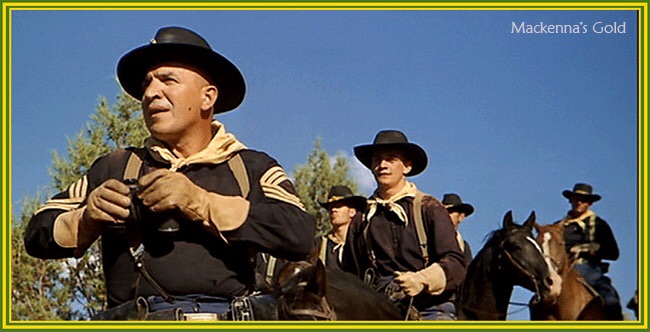
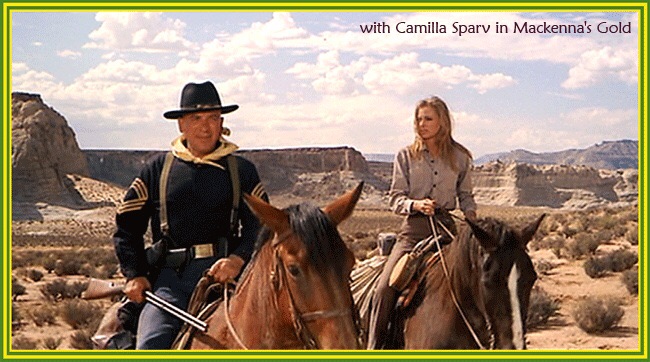
Although Telly later admitted on his CBS-TV show that he does not know anything about horses, audiences who had seen The Scalphunters, Mackenna’s Gold, etc, know that he could handle a horse.

image

Telly dipped his toes into championship gambling and promotion of brand products. Lifting himself into the line-up of singing stars of stage and screen such as Mae West, Ethel Merman, Noel Coward, Robert Mitchum, Jayne Mansfield, Harry Belafonte, Christopher Lee, he forayed into the music industry and had some chart success – tunes that would make Duke Ellington tap his shoes seven-feet under.

image

By the age of 54, Telly had won over audiences with his nightclub act in Lake Tahoe and Las Vegas where one of the highlights was a bouzouki dance he performed with his brother Constantine. In November 1975, at the wish of Her Majesty Queen Elizabeth II, Telly sang at her Royal Command Palladium concert where celebrities like Count Basie, Charles Aznavour, etc performed in spite of the bomb scare that autumn. During that time, the media reported him playing golf with world’s top golfer Tom Weiskopf on the Ailsa golf course at Turnberry in Scotland.

image

image

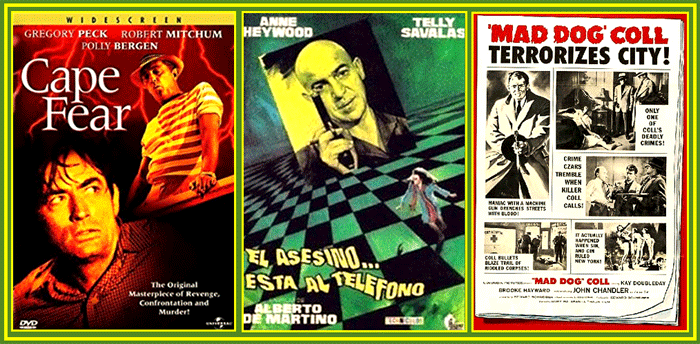
Often things in life simply don’t go according to set decisions. Telly never forgot the break he got from Burt Lancaster into movies which he reciprocated to the career of others. A 1975 newspaper reported actor Gene Hackman talking on the Douglas show about how Telly, while preparing to move from New York to start out his acting career in Hollywood, suggested to Hackman to “get his skates on” and head for the West Coast where the real action is – which resulted in Hackman’s entry into films on the Coast. Like Telly, the film Mad Dog Coll also marked the debut of Gene Hackman. Telly also played an active part in philanthropy and philhellenism. However, as always, there are different perspectives about Telly bordering on arrogance and rudeness I have also come across during my research.

image

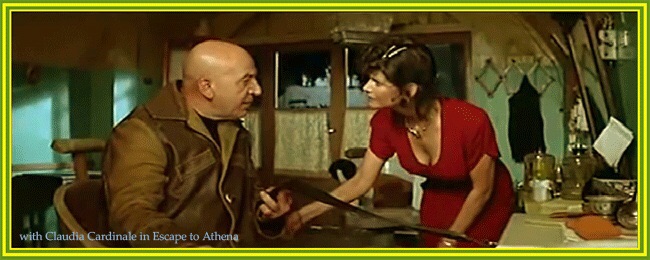
For the Greek-American icon who once said that he carried his Hellenism like a badge of merit, the opportunity to play a real Greek on Greek soil came in 1978 in the WW2 POW adventure film, Escape to Athena (D: George Pan Cosmatos, 1979) which had an all-star cast including Roger Moore, David Niven, and Claudia Cardinale.

image

In his autobiography, actor Roger Moore wrote about his location days for Escape to Athena on the isle of Rhodes when he brushed up on his gambling at the tables of the local casino which were also frequented by Telly. Stuntman Vic Armstrong’s autobiography also contains interesting pieces about the location shooting of this movie – about how, in the early hours, a bored Telly would phone him to play a game of poker.

image

Telly visited Greece again in early 1982 for location shoot in Laconia for My Palikari (American Playhouse, D: Charles Dubin). He turned this into a family affair and had his young son Nicholas from Los Angeles christened at the church in the village of Anogia, the birthplace of Telly’s mother.

image

Meanwhile, his career progressed with movies including Capricorn One (D: Peter Hyams, 1977), Beyond the Poseidon Adventure (D: Irwin Allen, 1979), Border Cop (aka. Blood Barrier, D: Christopher Leitch, 1979), Hellinger’s Law (D: Leo Penn, 1981), Fake-Out (aka. Nevada Heat, 1982), Alice in Wonderland (D: Harry Harris, 1985), The Dirty Dozen: The Deadly Mission (D: Lee H. Katzin, 1987), The Dirty Dozen: The Fatal Mission (D: Lee H. Katzin, 1988), Mind Twister (D: Fred Olen Ray, 1994), Backfire! (D: Dean Bell, 1995), etc.

image

Augmenting his taste for the international high life, he was regularly featured in forgettable European movies shot across the Atlantic. Some of them were as dull as a wet Good Friday but made pots of money. Having worked with European moviemakers earlier, Telly was at ease with the European way of shooting schedules and locations all over Europe. In the movie business, one gets to work closely with a lot of people. His further outings into Continental productions also gained him good rapport with more moviemakers as well as with industry professionals and eminent personalities.

image

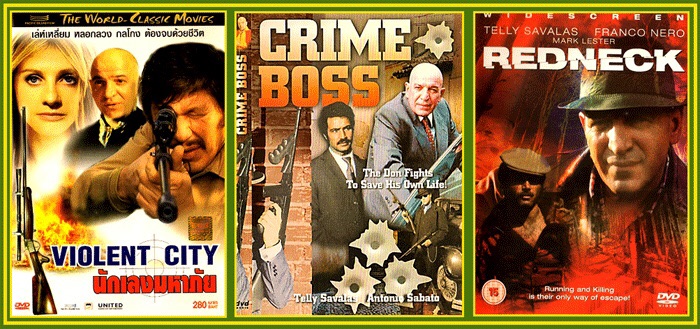
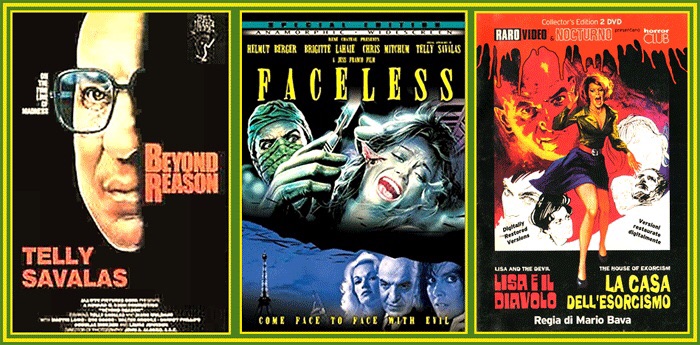
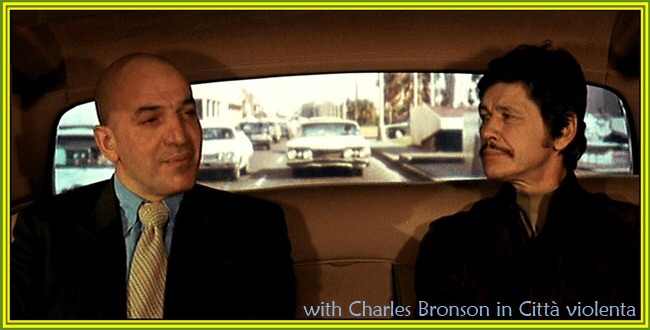
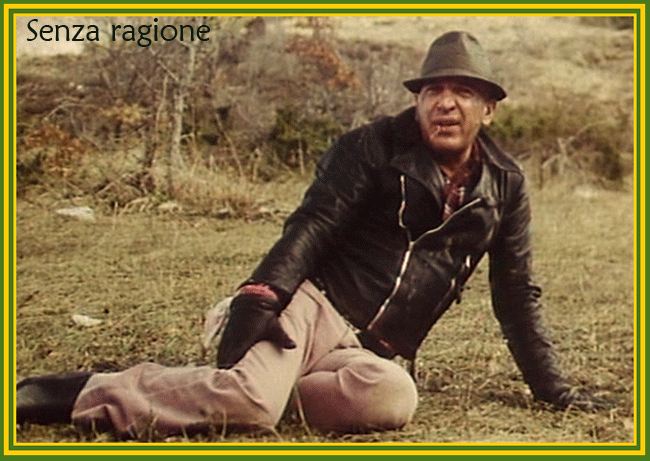
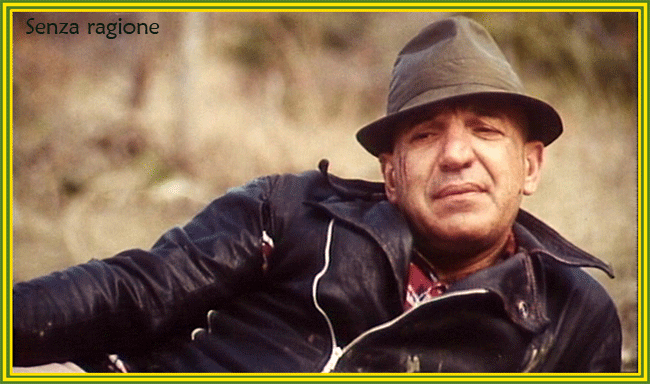
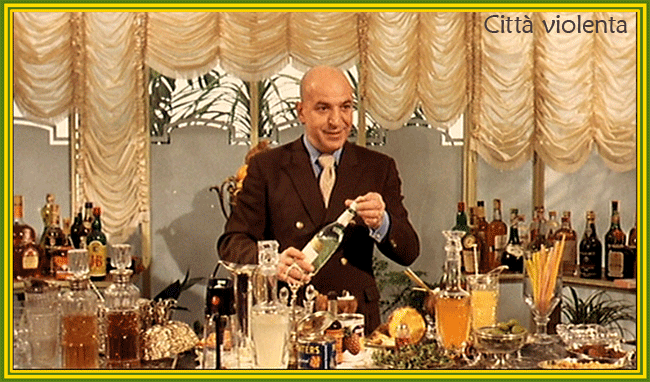
A Town Called Hell (D: Robert Parrish, 1971) and A Reason to Live, A Reason to Die (D: Tonino Valerii, 1972) were shot in spaghetti film locations in Almeria and Madrid. His repertoire of European productions also included the Charles Bronson-Jill Ireland vehicle Città violenta (aka: Final Shot/The Family/Violent City, D: Sergio Sollima, 1970), Crime Boss (D: Alberto De Martino, 1972), Senza Ragione (aka Redneck, D: Silvio Narizzano, 1973), Faceless (aka. Les prédateurs de la nuit, D: Jesús Franco, 1987).

image

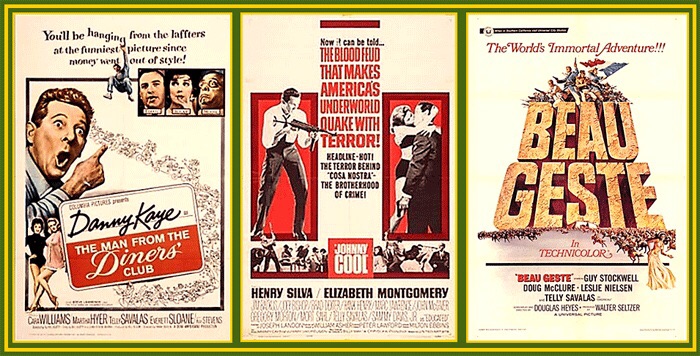
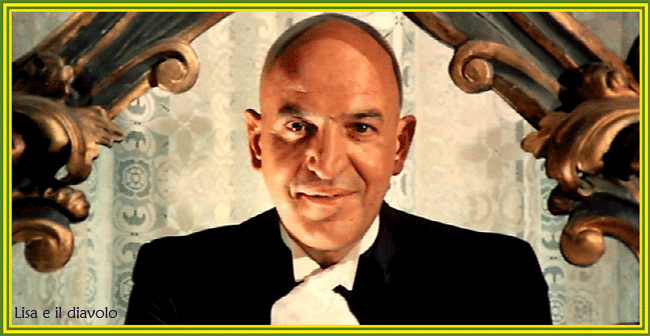
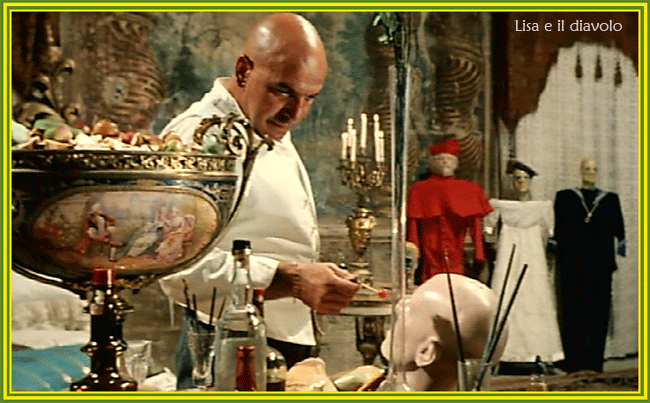
Besides Telly’s appearance in Horror Express (1972), Italian director Mario Bava and producer Alfred Leone cast him in Lisa and the Devil (Lisa e il Diavolo, 1973 – re-edited into The House of Exorcism (1975)) as the devious butler Leandro, the Devil who lured Lisa (Elke Sommer) into the Spanish villa of a blind Contessa and her deranged son. It is in this masterpiece of Mario Bava, mainly shot during the latter half of 1972 in Toledo, outside Madrid and Barcelona that Bava showed the lollipop sucking Telly to great effect, and the sucker became Telly’s trademark in Kojak by late 1973.

image

While his continuous interest in Continental filmmaking extended to the 1991-93 TV series  Ein Schloß am Wörthersee shot in Austria and Italy, Telly had also appeared in faraway locations like Australia where he shot Rose Against the Odds (D: John Dixon, 1991).

image

Hollywood Boulevard’s Walk of Fame awarded him his Star in 1983. The following year, Telly and his third wife Julie Hovland were married. Having promised to be together for richer, for poorer, in sickness and in health, they remained married until his death.

On Saturday July 23, 1988, the tragedy struck. Christina Savalas, Telly’s mother and a leading American artist whose “Picassolike” work received local and international exhibitions, died of heart failure at age 84 at Providence Saint Joseph Medical Center, Burbank, California.

image

On Saturday, January 22, 1994, one day after his 72 birthday, surrounded by wife Julie Hovland and family, Telly died of Prostate cancer at the suite he kept at the Sheraton Universal Hotel, Universal City. According to the death certificate, the cause is stated as Renal Failure/Metastatic Disease/Transitional Cell Cancer of Bladder.

image

After services at St. Sophia Greek Orthodox Cathedral in Los Angeles, Telly was buried at Forest Lawn Memorial Park, Hollywood Hills, Los Angeles, on January 25, 1994. The large marker on the lawn of his grave contains the header “Telly Aristotle Savalas” (a) followed by the quote from Aristotle:

The hour of departure has arrived,

and we go our ways –

I to die and you to live.

Which is better God only knows.

image

Telly has gone. Has he fulfilled his aims and ambitions? The question brings to mind a letter the French novelist and playwright Honoré de Balzac, when quite a young man, wrote to his sister about his aims and ambitions: “….. I have two and only two passionate desires – to be famous and to be loved. Will they ever be satisfied?”  As for Telly, maybe none may dispute that he had fulfilled both the desires Balzac was referring to.

Until next time, Jo

image

Notes:

  1. The spelling of the middle name on the marker and the Certificate of Death: 39419004248 dt. 22-1-1994 shown in a website differs.
  2. This article owes its source to various newspapers, books, magazines, visual media, etc.
  3. Films forming part of the collection of Manningtree Archive are marked in bold.
  4. Most of the movies and books referred to in this article are available with amazon.com, amazon.co.uk and other leading dealers.
  5. DVD sleeves credits: amazon.com, en.wikipedia, imdb and from my private collection.
  6. This illustrated article is an affectionate nosegay to the movies and performers of the past. Please refer to “About” of my webpage for more details.

001

(©Joseph Sébastine/Manningtree Archive)

Mr. Telly Savalas, Back to the Limelight…, Please!

1

Part I

Life with many beginnings and endings is a progression of cycles. Just like the years before, the New Year arrived in the cyclical order – ushering in the divisions of days, weeks, months, various seasons, in conjunction with personal social relationship events such as the dates of birthdays, weddings, anniversaries, etc. Within the past three weeks of January in the present calendar, there were few birthdays (including mine on 18th) and anniversaries of people I have had the privilege of knowing – and also a reminder of more to come as the year progresses – a good number of which must be reinforced by remembrance.

2

Those with nostalgic longing for movies of the second half of the 20th century would not have to jog their memory much to remember the late Telly Savalas, the Film/Television actor, TV show host and Singer. Telly shared his birth and death in January – on consecutive days of 21st and 22nd. In many of us, the image of Telly Savalas was moulded not only from the characters he portrayed in a string of movies or from his presentations in Television, or the music albums but also from the wide attention he generated to himself by display of his images in a wide range of American-International magazines.

3

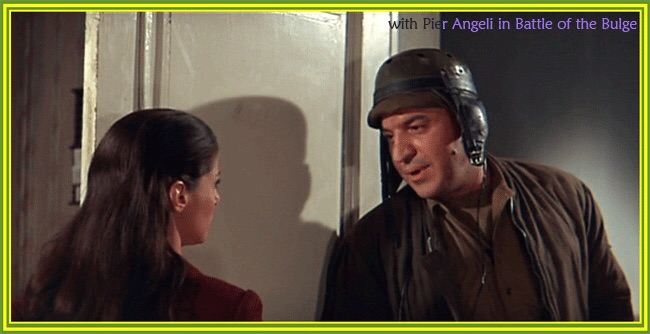
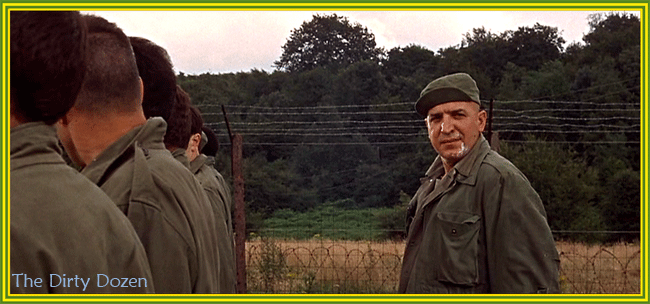
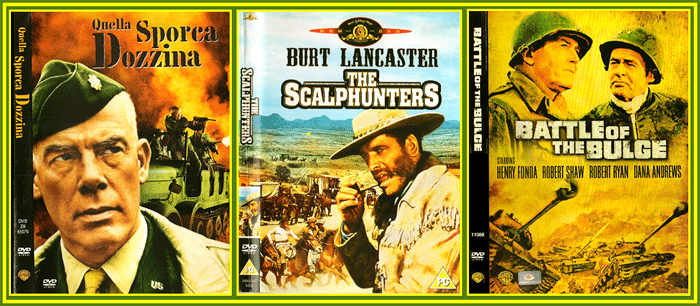
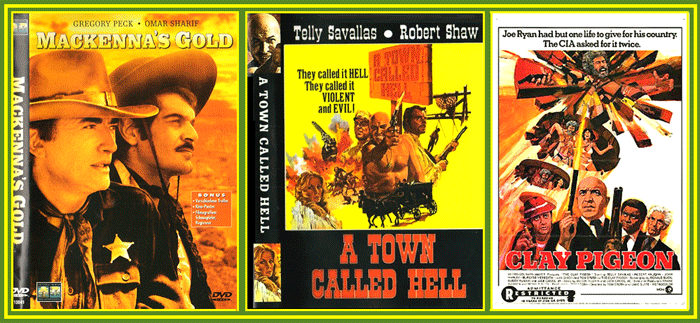
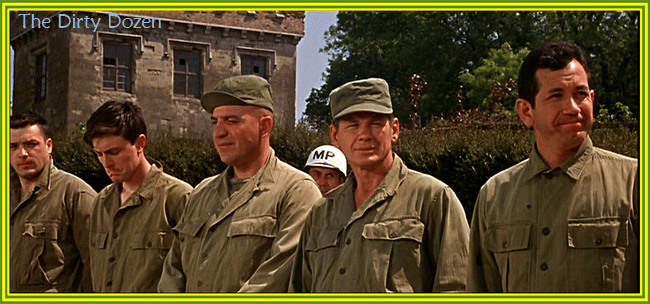
Of those movies featuring him in a succession of devious characters, one could easily think of the box-office hit, The Dirty Dozen (D: Robert Aldrich, 1967) which presented Telly as a convict and brutal rapist; he was an earthy renegade killer whose frumpy mistress (Shelley Winters) described him as having “as much feelin’s as a bald-headed hog” in The Scalphunters (D: Sydney Pollack, 1968); a black marketer in Battle of the Bulge (D: Ken Annakin, 1965); a no-good army sergeant in Mackenna’s Gold (D: J. Lee Thompson, 1969), a sadistic bandit leader in A Town Called Hell (D: Robert Parrish, 1971); a crooked narcotics agent in Clay Pigeon (D: Tom Stern, 1971); the cold-blooded assassin in L’assassino… è al telefono (D: Alberto De Martino, 1972)….. and so the list goes on until he came across his alter ago Kojak.

4

Like the bald headed Hollywood actor Yul Brynner, it is difficult to fully fathom the real story of Telly Savalas since he told a different story in every other interview – a phenomenon I had noticed while researching for this article.

5

Aristoteles Savalas (a) was born in Garden City, New York, on January 21, 1922 (b). He was the second son of artist Christina Kapsalis (a former Miss Greece beauty queen from the Greek village of Anogia) and to Nicholas Constantine Savalas (originally spelled Tsavalas – hailing from the village of Gerakas), who made a fortune in tobacco, lost the lot and made another fortune in the bakery business. As teenagers, both his parents had emigrated to America in the early 1900s.

6

The second of five children (three brothers: Constantine Socrates, George Demosthenes, Theodore Praxiteles and sister: Katherine), in his earlier days, Aristoteles who spoke fluent Greek, had to sell newspapers, shine shoes and work as a lifeguard to help support the family. Somewhere along the way, he became regularly known as Telly. Having enrolled in the army in 1941 and following four years of service during the World War II he was discharged duly decorated with a Purple Heart for injuries sustained. How he was wounded in the war is unclear – quite similar to the ambiguity about how his left index finger got slightly mangled.

7With the intention to pursue a career in the diplomatic service, Telly graduated in psychology from Columbia University where he had met Katherine Nicolaides. After his father’s death, Telly married Katherine in 1948 and together they had Christina. Following few years work with the Near East Information Services branch of the U. S State Department as host of the Your Voice of America series, ABC (American Broadcasting Company) News hired him as a producer. Having left ABC in January 1959, he had his first TV acting role in And Bring Home a Baby, of Sunday Armstrong Circle Theatre (1950–1963). Burt Lancaster saw his work and drew him to California to appear in episodes of the CBS TV series The Witness (1960-61).

8

About the age of 39, Telly had forayed into acting in feature films, debuting with Mad Dog Coll (D: Burt Balaban, 1961) which chronicled the career of the Irish American gangster, Vincent “Mad Dog” Coll. Telly portrayed the role of another Lieutenant in the crime drama film The Young Savages (D: John Frankenheimer, 1961), the first of Burt Lancaster’s four picture deal with United Artists (the other three being Birdman of Alcatraz (1962), The Train (1964) and The Hallelujah Trail (1965)).

9

Luck played into his hands when, impressed by his performance in the roles of Al Capone and “Lucky” Luciano in The Witness in which the life and crimes of America’s notorious rogues are investigated at a committee of inquiry; and also in The Young Savages shot in New York, Lancaster provided him the important role of the solitary row prisoner Feto Gomez of Leavenworth Prison in the prison biography, Birdman of Alcatraz. This breakthrough role earned Telly an Academy Award nomination as Best Supporting Actor.

Following his divorce from Katherine, in early 1960s when his film roles were mainly villainous, he got married for the second time to Marilyn (Lynn) Gardner.

10

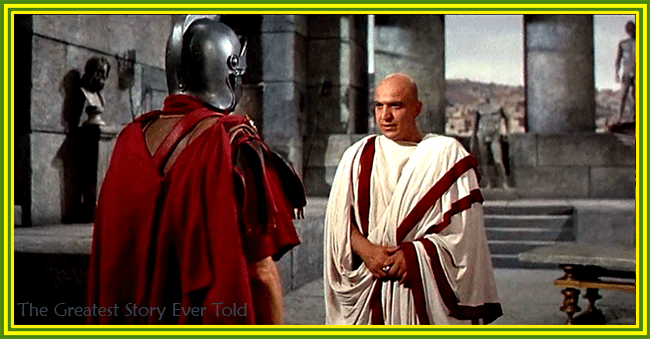
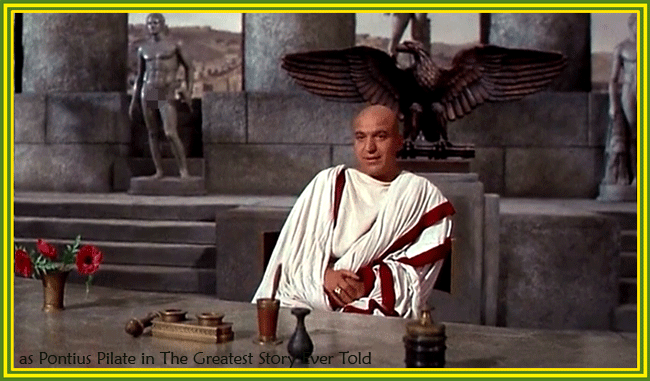
When director George Stevens’ cameo-packed dramatization of the life of Jesus Christ, The Greatest Story Ever Told (1965) was announced, many eyebrows were raised at the parade of famous actors in unexpected roles. The casting of Telly as Pontius Pilate drew smiles from those who thought that a Brooklyn accent has no place in a Biblical epic.

11

Stevens thought that the 6’1” Telly would look more virile and powerful in the role of the Roman prefect (governor) of Judaea if he shaved his head. Telly found the proposition extremely attractive and decided to go on with life as it was before retaining his signature bald look he took for his role in this Bible epic. Whyever not?

12

He simply chose to shave his head for the look. By the way, men generally don’t grow beards because they dislike shaving – but because they think their whiskers make them look better and give them a distinctive image.

13

He is on record in an interview as saying about the time Telly told his mother Christina vis-à-vis his casting in The Greatest Story Ever Told. She had rounded things off with the remark: “You are joking!” and she continued, “You’ll make a Marvellous Jesus!” She must hold the world record for being the world’s most optimistic mother.

14

Telly had a memorable role as James Bond’s notorious arch-rival Ernest Stavro Blofeld in On Her Majesty’s Secret Service (D: Peter Hunt, 1969) in which stuntman Joe Powell nearly got killed doubling him in the bobsleigh in Switzerland. Two of his co-stars of The Greatest Story Ever Told, Donald Pleasance and Max von Sydow also played Blofeld in You Only Live Twice (D: Lewis Gilbert, 1967) and in Never Say Never Again (D: Irvin Kershner, 1983).

15

Of his bald head, he once said that “everyone’s born bald.” In spite that Telly was typecast as a villain for being entirely bald, audiences took him to their hearts – believing that in the baddie they saw onscreen rested a sweet nature. His strong features and ethnic look came handy for the role of Shan in Genghis Khan (D: Henry Levin, 1965).

16

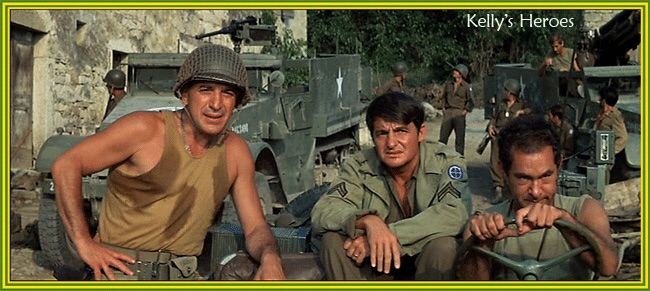
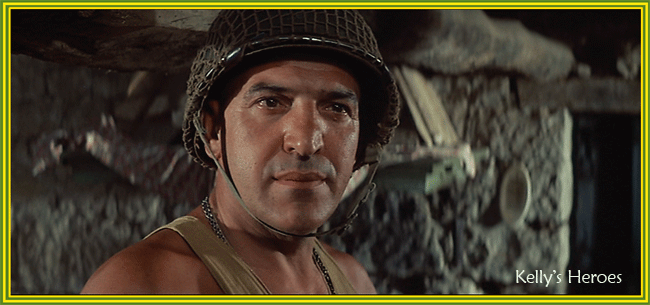
The success of that film gave his career further fillip earning him roles in Buona Sera, Mrs. Campbell (D: Melvin Frank, 1968), The Assassination Bureau (D: Basil Dearden, 1969), Kelly’s Heroes (D: Brian G. Hutton, 1970); Pretty Maids All in a Row (D: Roger Vadim, 1971), etc.  For the title role of Pancho Villa (1972), the bald look was vindicated by the shaving of his head in prison during the opening sequence.

17

Since 1974, after a long separation Telly and Marilyn were divorced. According to the mini documentary “Telly Savalas: The Golden Greek”, he had met the beautiful Sally Adams while working on the movie, On Her Majesty’s Secret Service  (c). In 1973, Cojack with ‘c” hit the TV screens and his luck seems to improve.

18

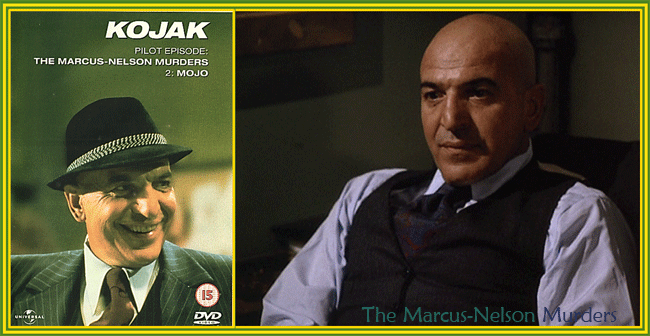
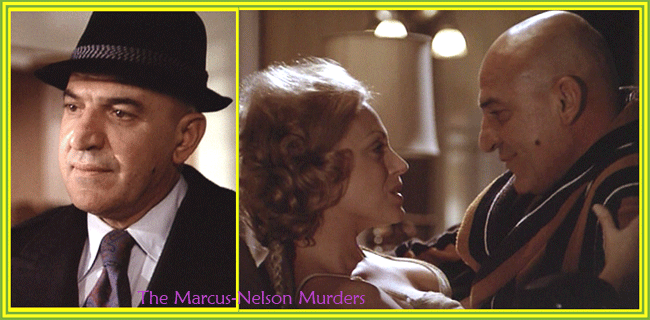
Although the bald-headed, deep, gravel-voiced Telly had been acting since the late 1950s, real popularity came looking for him in the title role of the famous CBS TV series Kojak (October, 1973-April, 1978) which was a spun-off from the made-for-TV pilot, The Marcus-Nelson Murders (D: Joseph Sargent, First American Broadcast: March 8, 1973).

19

Few initial instalments showed him wade through a stereo-typed routine of law-and-order claptrap. But soon Kojak became a prime program as the series turned tough and reasonably true – taking on the look, sound, feel, taste, and smell of the New York crime investigations.

20

Working out of a Precinct of Manhattan, Telly’s Lieutenant Theo Kojak, in fabulous three-piece suit, displayed a more credible human being. Much of the vicious power and toughness Telly had displayed in his earlier villainous roles were there. But the exception was that, in his new persona as the stubborn and tenacious good guy Kojak with a deep concern for people and justice, his wrath was targeted against the crooks, spooks and killers. Audiences related to Kojak’s passionate belief in equality and fairness and his vehement opposition to police bureaucracy. Well, you know the rest.

21

While Telly reigned supreme in the role of the chrome-domed streetwise cop’s cop with a sweet tooth for sucking lollipops and a penchant to wisecrack snazzy lines, Telly soon became indelibly identified with the character of Kojak. “Telly and Kojak are one and the same,” Telly said in a TV interview, drawing a parallel between him and Kojak.

22

His love for the suckers, I mean, his serious attitude towards the lollipops, reportedly to replace Telly’s addiction for long thin cigars, was initially featured in Episode eight “Dark Sunday” of Kojak in December 1973. This addiction for suckers could have its origins in Toledo, Spain and to Italian director Mario Bava, the father of Italian horror films.

This concludes Part I.  Part II will follow. Jo

23

Notes:

  1. The spelling of first name is based on Certificate of Death: 39419004248 dt.22-1-1994 shown in a website although the name on his tombstone differs;
  2. The date is based on his death Certificate;
  3. Some sources maintain that Telly met Sally while working on the movie, The Dirty Dozen.
  4. This article owes its source to various newspapers, books, magazines, visual media, etc.
  5. Films forming part of the collection of Manningtree Archive are highlighted in bold.
  6. Most of the movies and books referred to in this article are available with amazon.com, amazon.co.uk and other leading dealers.
  7. DVD sleeves credits: amazon.com, en.wikipedia, imdb and from my private collection.
  8. This illustrated article is an affectionate nosegay to the movies and performers of the past. Please refer to “About” of my webpage for more details.

24

(©Joseph Sébastine/Manningtree Archive)